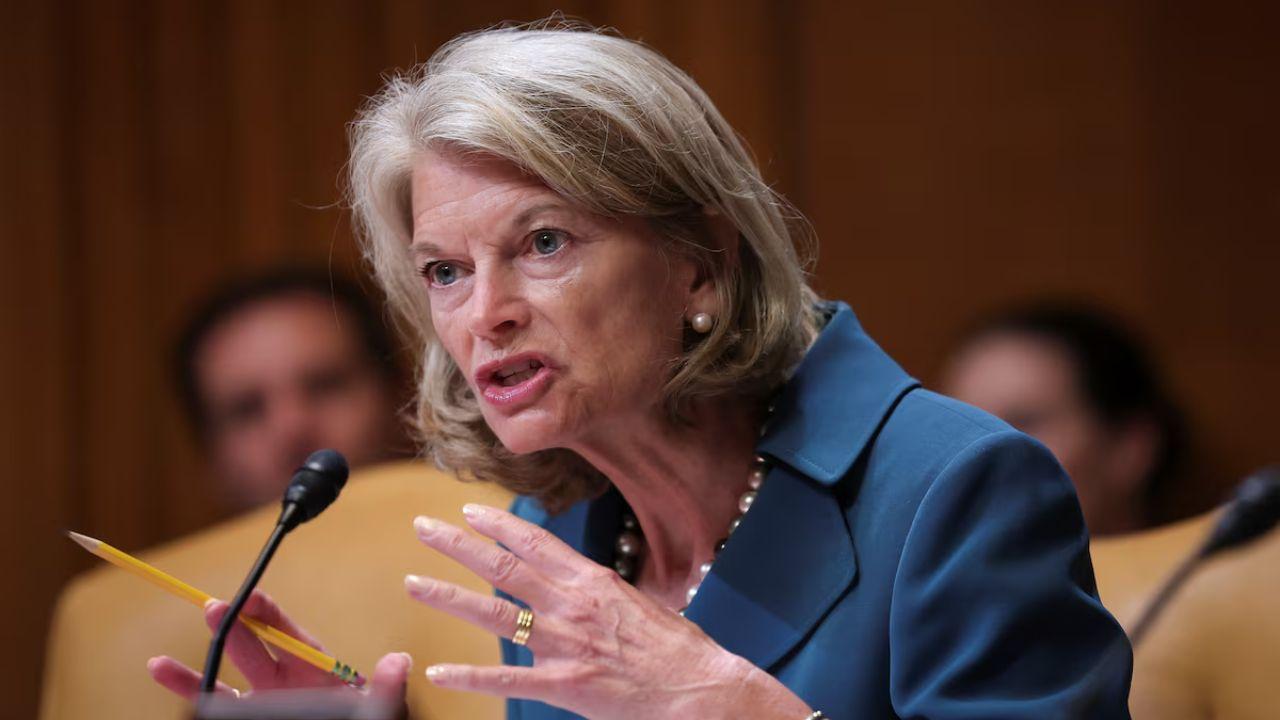
Photo:reuters
Trump’s “51st State” Remark Draws Criticism from U.S. Senator During Diplomatic Visit to Ottawa
Tensions between Canada and the United States deepened after U.S. President Donald Trump again made remarks suggesting that Canada could become America’s “51st state.” The inflammatory comments, which have resurfaced multiple times during Trump's second term in office, have provoked strong reactions across Canada’s political spectrum and, notably, within Trump’s own party. One of the most prominent rebuttals came from U.S. Senator Lisa Murkowski of Alaska during her recent diplomatic visit to Ottawa, where she characterized Trump’s remarks as “not constructive.”
Senator Murkowski, along with three other American senators, arrived in Canada as part of a broader effort to stabilize and rebuild bilateral ties that have been increasingly strained by aggressive trade policies, nationalism, and repeated rhetorical provocations from Washington.
The Context of the Controversy
Trump’s repeated suggestion that Canada would be better off joining the United States as its 51st state is not new, but its recurrence amid sensitive trade talks, growing security cooperation, and complex global alliances has alarmed Canadian officials and citizens alike. Although Trump has couched the idea in economic terms—referring to the value of trade integration, resource sharing, and border cooperation—many Canadians see the proposal as an affront to their national identity and sovereignty.
According to Trump, Canada’s reliance on the U.S. economy and its geographic and political proximity make it a “natural candidate” for statehood, even joking that “it would fix everything” in terms of cross-border logistics and trade negotiations. His opponents argue that the idea isn’t only unserious—it’s dangerous.
Prime Minister Mark Carney has repeatedly rejected Trump’s remarks, saying that “Canada is a sovereign, independent nation, not for sale now or ever.” Leaders from all major Canadian political parties have condemned the notion, and public opinion polling indicates near-universal disapproval. Yet, Trump’s rhetoric continues to unsettle not only Canada’s leaders but also U.S. lawmakers.
Senator Murkowski Pushes Back
During a high-level meeting with Canadian officials in Ottawa, Senator Lisa Murkowski spoke candidly about the damage such comments could inflict on the bilateral relationship.
“I understand people have different views on how to shape diplomacy, but I can say firmly that rhetoric like that is not helpful,” she told reporters after a meeting with Prime Minister Carney. Murkowski emphasized that mutual respect should be the cornerstone of any U.S.-Canada negotiation, not bluster or political theatrics.
This visit by the U.S. congressional delegation, which also included Senators Ron Wyden, Maggie Hassan, and Catherine Cortez Masto, was scheduled as part of an effort to renew discussions on key cross-border priorities: softwood lumber, clean energy, Arctic security, and border infrastructure. However, much of the attention quickly shifted to damage control following Trump’s statements.
Bipartisan Pushback in the United States
Though Senator Murkowski is a Republican, her statement reflects a growing unease even within her party about Trump’s approach to diplomacy. Several Republican and Democratic lawmakers have begun expressing concern that Trump’s bombastic style—while effective at galvanizing his base—may ultimately hinder America's credibility abroad.
In fact, Murkowski’s remarks are consistent with a broader pattern of institutional resistance within Washington, where many senators and House members have grown increasingly wary of Trump’s go-it-alone approach to international relations.
Implications for Canada–U.S. Trade
At the heart of the controversy is not merely a diplomatic spat but a tangible impact on trade negotiations that are crucial to both economies. Canada and the U.S. share over $800 billion in annual trade. The economies are deeply integrated across sectors—automotive, energy, agriculture, and technology. Disrupting this relationship through political grandstanding can have material consequences.
Trump’s administration has already imposed significant tariffs on Canadian aluminum, lumber, and other exports. Canada retaliated in kind. These tit-for-tat measures were damaging for both sides and eroded decades of economic cooperation. Though some tariffs were lifted after diplomatic negotiations, others remain, and new ones have been threatened.
With the Biden-era USMCA deal still in effect but under review, there’s little room for recklessness. Senator Murkowski made it clear that Trump's rhetoric could make it more difficult to negotiate in good faith, particularly when Canada views the comments as a challenge to its sovereignty.
Canada’s Firm Rejection and Domestic Response
Prime Minister Mark Carney and Deputy Prime Minister Chrystia Freeland both issued stern rebukes following Trump’s remarks. Carney reminded Canadians that Trump has made similarly outlandish suggestions in the past and urged the public not to take the bait. However, he also noted the seriousness of the situation.
“Words matter. And when those words come from a sitting president of our closest ally, they must be addressed,” Carney said. “Canada is not a bargaining chip. We are a partner. If the United States wishes to renegotiate terms, they can do so with respect.”
The backlash in Canada wasn’t confined to the halls of Parliament. Across social media, editorial pages, and university campuses, Canadians expressed a mix of outrage and satire. Memes mocking the “51st state” idea went viral. Local leaders issued statements reinforcing pride in Canadian independence. Artists and activists began organizing campaigns under the slogans #Not51 and #StandWithCanada.
Cultural and Historical Undercurrents
Part of the reason Trump’s comments cut so deeply is rooted in history. Canada has long asserted its identity in contrast to its more powerful neighbor. Although culturally and economically intertwined, the two nations maintain distinct legal, political, and philosophical systems.
Canadians are fiercely proud of their universal healthcare, parliamentary democracy, and multicultural social fabric—elements often seen as standing in contrast to American individualism and partisanship. The idea of merging with the United States not only appears logistically implausible but culturally unpalatable.
Throughout history, Canada has had moments of nationalist revival often sparked by perceived U.S. overreach—from resisting involvement in the Vietnam War to standing apart during the 2003 Iraq invasion. Trump's remarks have triggered another such moment.
Diplomatic Fallout and Long-Term Impact
International observers are watching this situation closely. Canada’s role as a NATO member, a G7 economy, and a key participant in global climate diplomacy makes it a valuable ally. Undermining its sovereignty—even rhetorically—risks alienating a partner essential to U.S. strategic interests, especially in the Arctic and in countering Chinese economic influence.
Experts warn that such careless remarks could have a chilling effect on bilateral cooperation in sensitive areas such as:
-
Joint military exercises and NORAD operations
-
Intelligence sharing on North American security threats
-
Collaborations on climate targets and environmental policy
-
Arctic sovereignty and natural resource management
Canada’s Restraint—and its Limits
For now, Canada has chosen diplomacy over escalation. The Prime Minister’s Office continues to work closely with the State Department and Senate committees to ensure negotiations remain intact. However, there is an underlying recognition that patience has limits.
Canadian Foreign Minister Mélanie Joly noted that while Canada welcomes engagement with all branches of the U.S. government, “engagement must be built on mutual recognition, not forced assimilation.” The Foreign Ministry has requested a formal clarification from the U.S. State Department, but no official response has been issued.
Public Opinion: Canada Not Amused
Recent polling conducted by Ipsos and Léger reveals that approximately 88% of Canadians oppose any discussion of annexation. Among those polled, 64% found Trump's remarks “deeply offensive,” while 71% said such comments reduce their trust in U.S. leadership.
Interestingly, the controversy appears to be strengthening Canadian unity across political divides. Voters who normally disagree on fiscal or cultural issues expressed solidarity in defending Canada’s independence. This rare moment of national consensus may have long-term implications for Canadian politics and foreign policy.
Senators Signal the Path Forward
Despite the current turbulence, Murkowski and her colleagues expressed optimism that Canada–U.S. relations can weather this moment of strain. They emphasized the importance of continuing work on issues like:
-
Modernizing NAFTA-era trade elements
-
Creating a joint border infrastructure modernization strategy
-
Collaborating on electric vehicle production and lithium mining
-
Expanding cross-border climate resilience plans
To do so, however, both sides will need to avoid distractions and focus on tangible solutions.
Diplomacy Requires Discipline
Trump’s “51st state” comments are not simply offhand jokes—they are diplomatic flashpoints that reveal deep fractures in how different leaders view international relationships. Senator Lisa Murkowski’s rebuke, though mild in tone, represents a critical inflection point. It underscores that diplomacy between democratic allies must be rooted in mutual respect and a shared commitment to sovereignty.
As Canada pushes back and U.S. lawmakers seek to contain the damage, the hope remains that a more constructive path will emerge. Words may be temporary, but trust is hard to rebuild once broken. For now, the message from both Ottawa and many in Washington is clear: rhetoric must give way to responsibility.