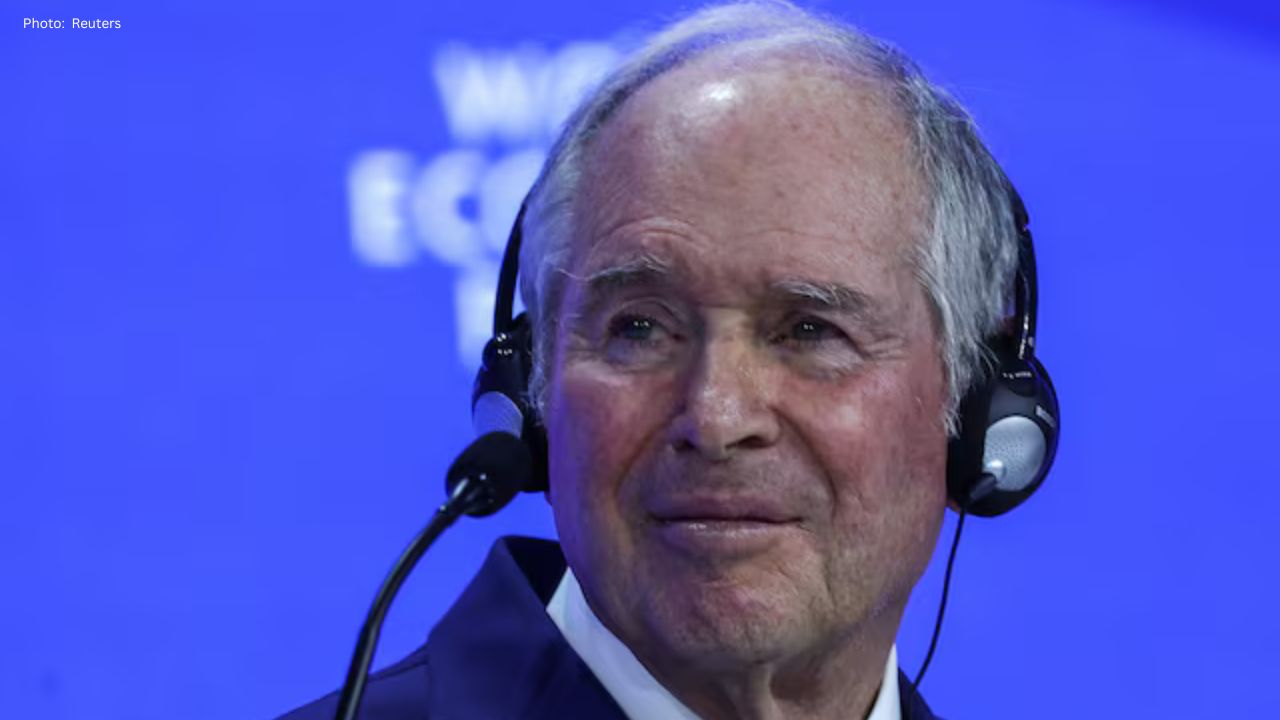
At Abu Dhabi Finance Week, Stephen Schwarzman, Blackstone's CEO, countered rising worries about private credit posing risks to the financial system. He argued against the trend of blaming recent auto sector bankruptcies on private credit.
Private credit allows companies to seek funds from private investment firms rather than conventional banks. This segment has expanded significantly, drawing substantial investment from institutional players. As it grows, many are anxious that it could become a vulnerability in the global financial landscape.
Notable bankruptcies, like that of auto parts manufacturer First Brands and subprime lender Tricolor, have fueled these fears. These events led to a decline in investor confidence, prompting some to lessen their stakes in auto and consumer lending, which hindered a positive momentum in credit market rally.
Schwarzman firmly opposed the notion that private credit was to blame for these bankruptcies, asserting that traditional banks were primarily responsible. He pointed out that the deals at the center of these failures were managed by banks, which conducted the necessary research, funding, and sales, while private credit lenders were minimally involved.
He highlighted the contrasting risk profiles of banks and private credit firms. Banks, according to Schwarzman, often operate with high leverage, borrowing up to ten times their own capital, whereas private credit firms typically engage with much lower leverage, approximately one and a half times their capital. This difference, he argued, positions private credit as a more prudent alternative to traditional banking.
This discussion is crucial as private credit has become integral to the global financial ecosystem. With increased regulations on banks, many companies are now seeking funding through private lenders, marking private credit as a significant capital source for expanding businesses, yet also a point of concern for regulators and market observers.
Some analysts suggest that the real scenario is more nuanced. While it’s valid that banks are implicated in numerous high-risk ventures, the rapid expansion of private credit still raises questions that demand careful scrutiny. As investment pours into this sector, increasing transparency and enforcing proper risk management practices are essential.
The recent wave of bankruptcies signals potential vulnerabilities within the credit market. Regardless of whether the risks lie more with banks or private lenders, the repercussions impact investors, employees, and affiliated companies.
To sum up, Schwarzman emphasized that private credit shouldn't be scapegoated for these recent failures. Instead, he views it as a more reliable and cautious lending option. However, as financial complexities rise, a commitment from both banks and private credit firms to responsibly manage risks is crucial to safeguard the broader economy.
Reporting by Utkarsh Shetti and Tala Ramadan in Abu Dhabi; Editing by Alexander Smith