Photo:AP
Congress Moves to Rescind $9 Billion in Public Broadcasting and Foreign Aid
In a high-stakes fiscal maneuver, Congress has approved a sweeping Republican-led bill that rescinds approximately $9 billion in previously authorized spending. This legislative action—executed through the rarely used Impoundment Control Act—includes deep cuts to both the Corporation for Public Broadcasting (CPB) and multiple foreign aid programs. The legislation, titled the Rescissions Act of 2025, reflects a significant shift in the federal government’s budgetary priorities and reopens a decades-old debate over the scope of U.S. public funding.
Narrow Passage Reflects Partisan Divide
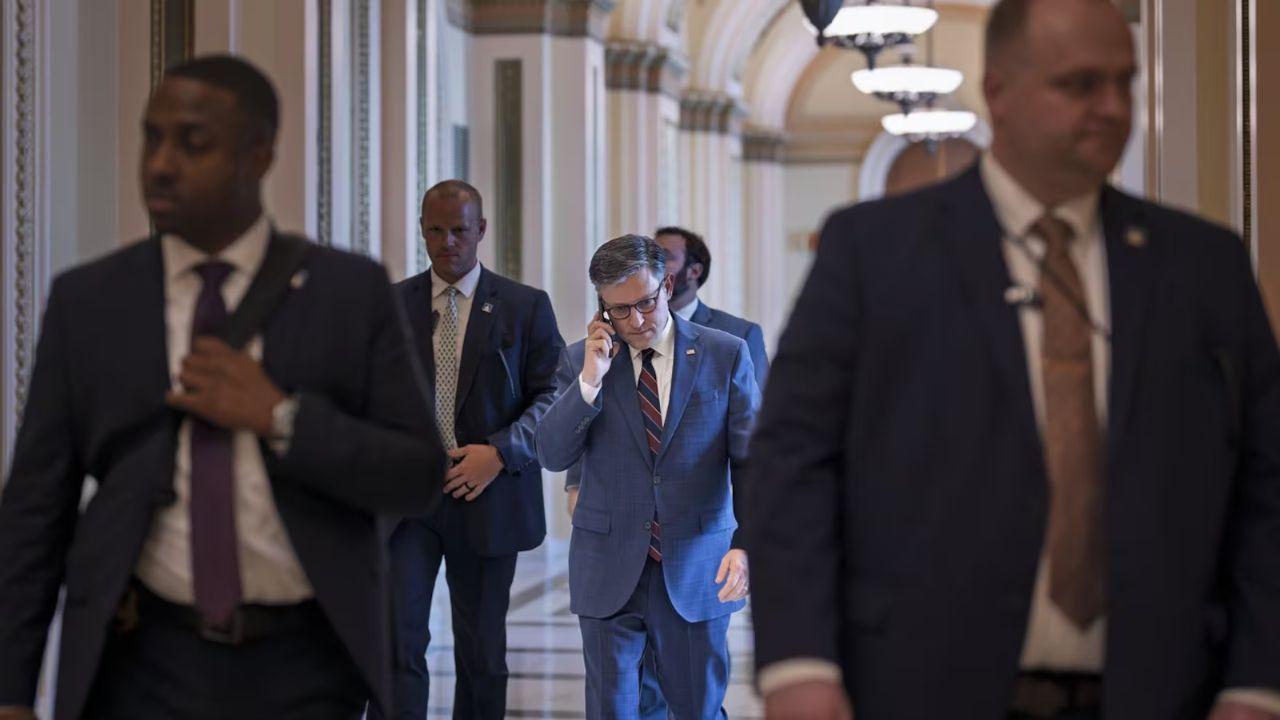
The bill passed the U.S. House with a razor-thin 216–213 vote and later cleared the Senate 51–48 after Vice President J.D. Vance cast a tie-breaking vote. Two Republican senators, Susan Collins of Maine and Lisa Murkowski of Alaska, defected from their party to join Democrats in opposition, citing concerns about the bill’s lack of transparency and the erosion of congressional appropriations authority.
Defunding Public Media: A Blow to NPR, PBS, and Rural Stations
Among the bill’s most controversial elements is a $1.1 billion rescission targeting the Corporation for Public Broadcasting. The CPB supports over 1,500 public radio and television stations, many in rural and underserved communities. Critics warn that these cuts will lead to service reductions, station closures, and a loss of vital programming that includes local news, educational children’s shows, and emergency broadcasting.
Local stations, particularly those without access to large urban funding bases, are expected to be hit hardest. In Alaska, for instance, public broadcasters provide essential emergency alerts for weather events and natural disasters in remote communities with limited infrastructure.
Political Motivations and Content-Based Criticisms
Former President Donald Trump, who championed the bill, previously criticized public broadcasting for airing programming on racial equity, gender diversity, and LGBTQ+ issues—claiming such content promotes a liberal political agenda. His supporters argue that public media no longer serves a neutral educational purpose and instead operates as a taxpayer-funded partisan outlet.
Opponents call these criticisms ideologically driven censorship attempts, pointing to decades of bipartisan support for NPR and PBS as nonpartisan public goods. Many stress that CPB’s share of the federal budget is minuscule—less than 0.01%—yet its services reach tens of millions of Americans every week.
Massive Foreign Aid Rollbacks with Global Ramifications
The lion’s share of the rescinded funds—about $8 billion—comes from foreign aid allocations. These include funds meant for humanitarian relief, economic development, and global health programs. While some money, such as $400 million for the PEPFAR AIDS relief program, was protected through last-minute Senate amendments, much of the targeted aid had bipartisan support in previous years.
Key cuts include:
-
$800 million from refugee repatriation and disaster relief programs
-
Nearly $500 million from international disaster response initiatives
-
Hundreds of millions earmarked for democracy promotion and conflict prevention
-
Roughly $361 million allocated for U.N. peacekeeping operations
Development experts warn that such drastic cuts could destabilize regions dependent on U.S. assistance, increase humanitarian crises, and erode American influence in favor of rivals like China and Russia, who have ramped up their own global aid programs.
Congressional Process Raises Constitutional Questions
The rescission process allows the president to unilaterally propose budget rollbacks, placing Congress in a reactive position. Legal scholars and lawmakers have raised alarms about the erosion of legislative control over federal spending. Several GOP senators expressed frustration over the opaque nature of the proposed cuts, stating they received minimal details about what specific programs were being zeroed out.
This raises concerns about executive overreach and whether rescission requests are being used for policy manipulation rather than budget discipline.
Mixed Reactions from Across the Political Spectrum
-
Supporters view the bill as a long-overdue act of fiscal responsibility. They argue that eliminating programs with questionable efficiency or political bias is a legitimate function of government reform.
-
Critics, however, highlight that both public media and foreign aid have historically delivered strong returns on investment—enhancing national security, public health, and civic education.
Senator Murkowski underscored the life-saving role of rural public radio, noting that during a recent 7.3-magnitude earthquake in Alaska, public broadcasters were the only reliable channel for distributing tsunami warnings.
Impact on U.S. Global Standing and Domestic Communities
Humanitarian agencies stress that the cuts will disrupt vaccine distribution, refugee resettlement, food aid, and clean water access in regions hit by war or disaster. Domestically, the cuts are likely to weaken the fabric of local journalism and cultural programming—especially in rural areas that rely disproportionately on CPB funding.
Future Spending Showdowns Expected
Analysts believe this bill may set the tone for future executive attempts to reclaim appropriated funds. With fiscal year-end negotiations approaching, observers predict further efforts to trim federal programs—potentially extending to education, housing, and climate-related spending.
Public Sentiment Remains Divided
Polling on the bill has shown a polarized public. Many Republican voters support cutting foreign aid and what they perceive as politicized media, while independent and Democratic respondents favor retaining funding for global health and neutral journalism.
Conclusion: A Rescission with Broad Consequences
This $9 billion rollback is more than just a line-item revision—it reflects a broader ideological shift in how America views its role both at home and abroad. While supporters see it as a necessary correction, critics argue it weakens the nation’s moral and civic infrastructure. Whether this measure will become a precedent or remain a political outlier remains to be seen.