Photo:AP
A Humanitarian Catastrophe Unfolds at Afghanistan’s Border
As international focus shifts to rising global tensions and domestic politics, a silent catastrophe continues to brew at the eastern border of Iran. The International Federation of Red Cross and Red Crescent Societies (IFRC) has sounded a grave alarm: up to one million additional Afghan nationals could be expelled from Iran by the end of 2025. This forecast follows an already overwhelming mass return of more than 1.2 million Afghans earlier this year.
For Afghanistan—a country already battered by decades of conflict, economic collapse, natural disasters, and an unstable government—this influx represents far more than a logistical challenge. It is a full-scale humanitarian crisis that threatens to break the country’s already-fragile systems and could have ripple effects across South Asia and beyond.
The Scale of the Crisis: A Tidal Wave of Returnees
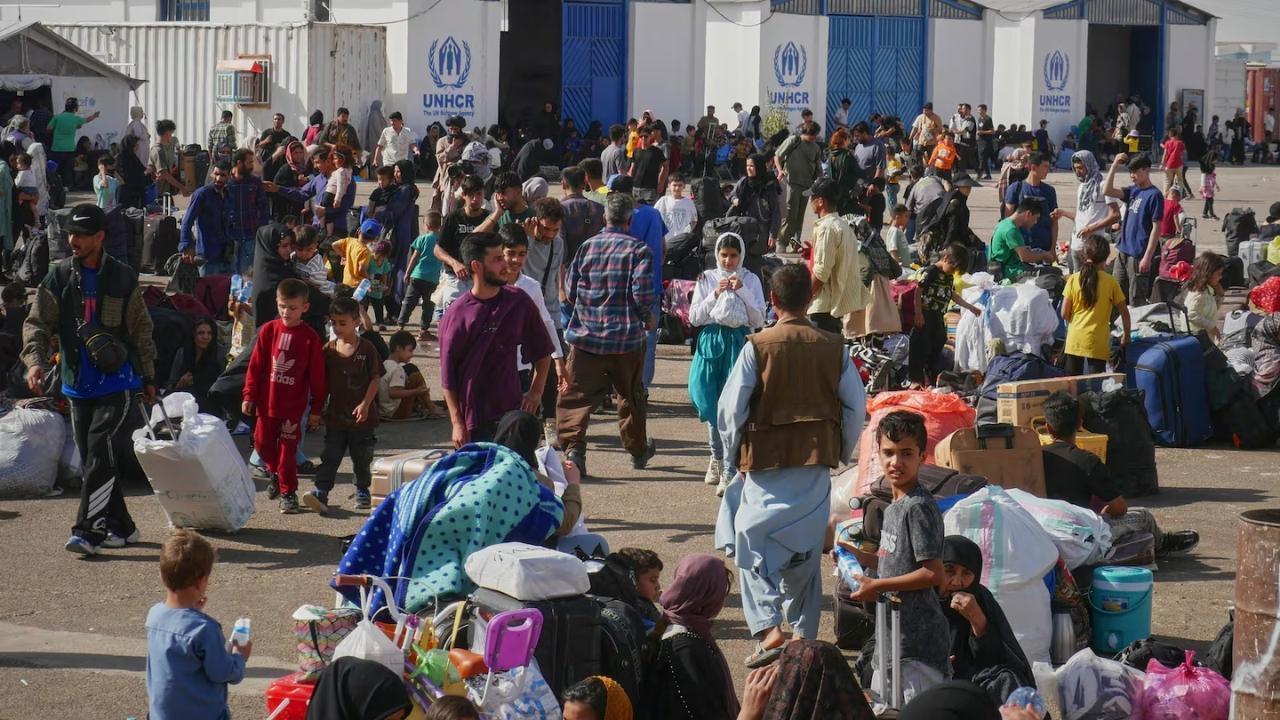
Iran, long a host to millions of Afghan refugees and economic migrants, has dramatically escalated its deportation campaign in 2025. With more than a million Afghans already expelled, daily crossings have surged into the tens of thousands. The deportations have been hasty and brutal—many individuals were removed with little notice, forced to leave behind homes, livelihoods, and personal belongings.
This is not merely a matter of migration. The number of returnees is so high that Afghanistan’s border provinces—such as Herat and Nimroz—are operating at full capacity, with makeshift shelters, overcrowded camps, and humanitarian aid stretched thin. Emergency services, local authorities, and international NGOs are working around the clock to prevent the complete collapse of health, sanitation, and nutrition systems.
Why Is Iran Deporting Afghans Now?
Multiple layers of complexity lie behind Iran's sudden and aggressive push to expel Afghans.
Security Concerns
Tensions between Iran and Israel escalated significantly in the first half of 2025. Amid this geopolitical turmoil, Iranian authorities cited security fears and began accusing undocumented Afghan migrants of espionage, fueling mass detentions and deportations. The targeting of Afghans—many of whom have lived in Iran for decades—has been described by human rights groups as collective punishment and xenophobic scapegoating.
Domestic Pressures and Economic Strain
Iran is grappling with internal economic woes, high unemployment, and inflation. Afghan migrants—often working in informal sectors—have become an easy target in the narrative that blames foreign labor for economic hardship. Public pressure to reduce the refugee population and reclaim economic opportunities for Iranian citizens has grown, leading to state-sanctioned expulsion orders.
Legal Crackdowns
A July deadline saw Iranian authorities issue a nationwide mandate for all undocumented Afghans to leave the country voluntarily or face forced removal. The policy applied harshly and indiscriminately, even impacting those awaiting asylum documentation or working legally.
The Human Toll: Stories of Loss, Trauma, and Fear
The consequences of these mass deportations are devastating on a human level.
Forced Journeys in Extreme Conditions
Families, many with young children and elderly members, are forced to travel on foot for hours or days in temperatures exceeding 50°C. Many arrive at the Afghan border severely dehydrated, malnourished, or suffering from heat exhaustion. Some carry infants with no shade or water. Tragically, deaths have already been reported during transit.
Separation of Families
There have been countless accounts of families being torn apart. Husbands remain in Iran to salvage possessions or earn money, while wives and children are forcibly returned. With communication severed, many families may never reunite. The psychological toll on these families, especially children, is incalculable.
Women Face Unique Dangers
Women and girls are particularly vulnerable. Under Taliban rule, Afghan women cannot travel unaccompanied by a male guardian. Many returnees have no mahram, leaving them at risk of exploitation, forced marriages, and violence. Without access to jobs, shelter, or aid, women face a bleak and dangerous future.
Returnees With Nowhere to Go
Many deportees were born and raised in Iran. For them, Afghanistan is a foreign country. They arrive with no home, no family, and no ties. The disorientation and trauma of being uprooted so violently are profound. The sense of alienation fuels mental health issues that go largely unaddressed due to the lack of psychiatric care in the country.
A System on the Brink: Afghanistan’s Collapsing Infrastructure
The timing of this mass return could not be worse. Afghanistan, now under the full control of the Taliban, is experiencing a critical collapse of essential services.
Healthcare
Hospitals are under-resourced, understaffed, and lacking basic supplies. Malnutrition is rampant, especially among children. With tens of thousands arriving weekly, the healthcare system cannot cope. There are outbreaks of waterborne diseases, respiratory infections, and untreated chronic illnesses among returnees.
Water and Sanitation
The majority of deportees arrive at unofficial crossing points or makeshift shelters. Clean water is scarce. Sanitation facilities are insufficient. The risk of disease outbreaks—cholera, dysentery, typhoid—is increasing daily.
Education
Afghanistan’s education system is already dysfunctional. Most girls beyond sixth grade are banned from schools. With tens of thousands of new children entering the system, schools are overwhelmed. In many cases, education is simply not possible.
Housing and Shelter
Shelters at border entry points are overcrowded. Families sleep under tarps or makeshift tents, exposed to the elements. Some are placed in abandoned schools or community centers, but these are not long-term solutions. The growing number of displaced families is increasing tensions with host communities, leading to competition for scarce resources.
Aid Agencies Under Enormous Strain
The Red Cross has launched a $31.4 million emergency appeal to support the escalating crisis. However, only 10% of this has been funded. Other international organizations, such as the UNHCR, World Food Programme, and IOM, are struggling to keep up with demand. Despite valiant efforts, aid distribution is inconsistent and insufficient.
Border regions are seeing the brunt of this crisis, particularly Islam Qala, the main crossing point from Iran into Herat province. Here, thousands arrive daily. Aid workers describe scenes of heartbreak—mothers cradling starving children, elderly men collapsing from heatstroke, and unaccompanied minors crying for their families.
With the summer heat intensifying and aid pipelines stretched thin, the situation grows more desperate with each passing day.
Regional Implications: Pakistan’s Parallel Crisis
Iran’s actions are not occurring in isolation. Pakistan has similarly undertaken mass deportations of Afghan migrants. Since late 2023, more than 1.2 million Afghans have been expelled from Pakistan. An additional 3 million could be next. Some of these individuals had lived in Pakistan for generations, held legal documents, and contributed to the local economy.
With both neighbors deporting en masse, Afghanistan is facing a refugee return on a scale not seen since the Soviet withdrawal in the 1990s. These returns come without preparation, planning, or the support structures needed to absorb such a mass.
This triple crisis—internal instability, regional deportations, and inadequate humanitarian support—could push Afghanistan to the brink of social collapse.
Consequences Beyond Afghanistan’s Borders
The implications of this crisis go beyond Afghanistan.
Destabilization of South Asia
Neighboring countries, already grappling with economic challenges, fear that Afghanistan’s collapse could trigger secondary displacement. Smugglers are already exploiting the chaos to funnel desperate families into Iran, Turkey, and Europe. Regional instability could deepen, especially in areas near the Afghan border, where militancy and radicalization could flourish in lawless zones.
Global Migration Pressures
European nations are bracing for another wave of asylum seekers. While many Afghans are too poor to afford such journeys, those who can are attempting dangerous land routes through Turkey and the Balkans. With anti-immigrant sentiment on the rise in many EU countries, this migration crisis could exacerbate domestic political tensions and create international friction.
Loss of Progress Made Over Two Decades
Afghanistan made significant development gains between 2001 and 2021. Much of that progress—especially in health, education, and women’s rights—has been rolled back since the Taliban takeover. The mass return of Afghans to a country with no capacity to help them threatens to erase even the smallest remaining remnants of progress.
What Needs to Be Done: The International Community’s Responsibility
This crisis, while rooted in regional politics, demands a global response. The Afghan people, caught between hostile borders and an authoritarian regime, deserve compassion, assistance, and justice.
1. Immediate Humanitarian Funding
Donor nations must step up. The Red Cross and UN agencies need funding now—not later. Without immediate support, thousands could die unnecessarily from hunger, exposure, and preventable disease.
2. Diplomacy with Iran and Pakistan
International pressure must be applied to slow or halt the deportations. Repatriation should only occur voluntarily and with safeguards. Iran and Pakistan must be held accountable to international norms and refugee conventions.
3. Support for Host Communities
Within Afghanistan, communities hosting returnees need food, water, housing, and infrastructure. International aid should not only focus on camps but also bolster towns and villages absorbing the influx.
4. Protection for Women and Girls
Women and girls must be prioritized. The international community should push for humanitarian exemptions that allow NGOs to provide services to women, even under Taliban rule.
5. Long-Term Solutions
Temporary fixes will not be enough. Investment is needed in sustainable infrastructure—schools, clinics, livelihoods—to help returnees rebuild. Without this, Afghanistan will remain in perpetual crisis.
The Brink of a New Tragedy
Afghanistan is standing at a perilous crossroads. With Iran threatening to deport another million people, Pakistan following a similar path, and humanitarian agencies overwhelmed, the world faces a critical choice. Act now—or bear witness to another forgotten tragedy.
The Afghans being forced back into a collapsing state are not just statistics. They are mothers, children, grandparents, teachers, farmers—people who had lives, dreams, and stability, however fragile, in neighboring lands. That has now been taken from them. Their future depends on whether the world listens to the warnings or turns away.