Photo:AP
A powerful appeal from a prison cell reignites hopes for peace
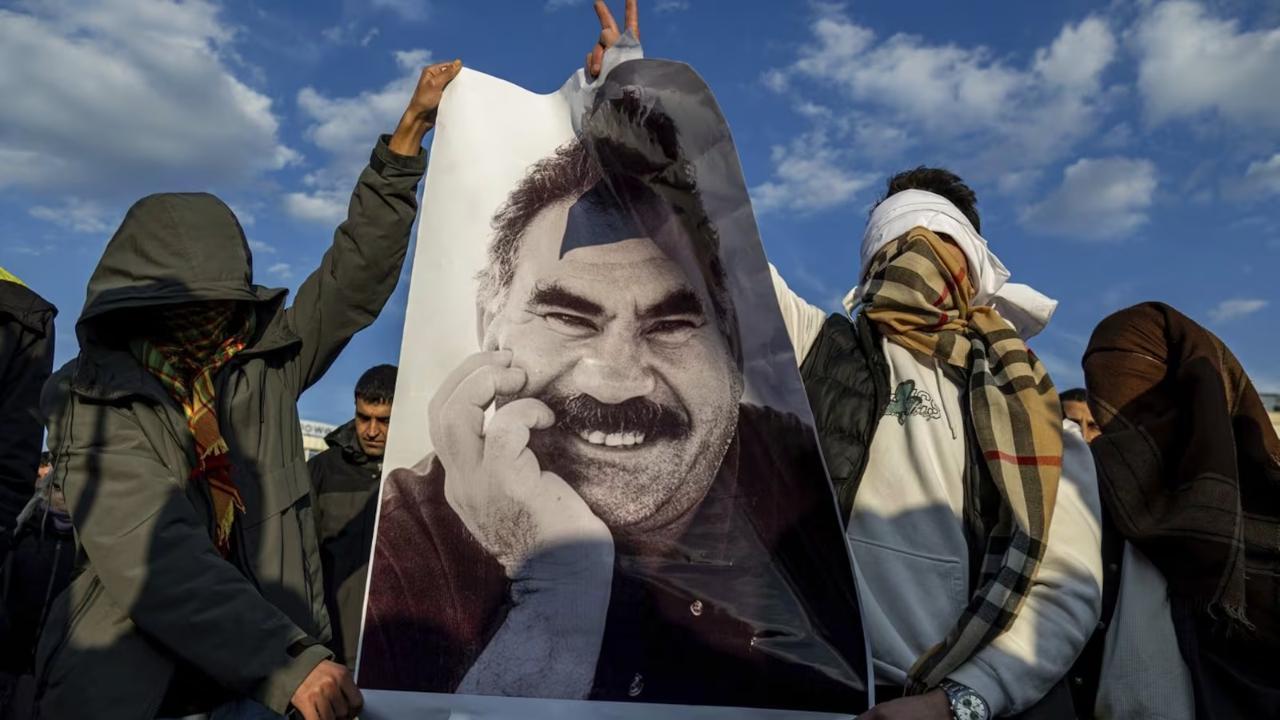
In a landmark moment that could reshape the future of Turkish-Kurdish relations, Abdullah Öcalan, the long-imprisoned founder of the Kurdistan Workers’ Party (PKK), issued a powerful video statement urging PKK fighters to lay down their arms. This unexpected development comes just days before a symbolic disarmament ceremony in Sulaymaniyah, northern Iraq, where PKK combatants are set to publicly surrender their weapons in what Öcalan and Kurdish leaders have framed as a pivot toward democratic and peaceful political engagement. The speech, Öcalan’s first public appearance in years, comes amid a fragile ceasefire and heightened anticipation among regional stakeholders, who see the initiative as a critical test of Turkey’s evolving policy toward its Kurdish population.
Decades of insurgency and bloodshed set the stage
Founded in the late 1970s and launching an armed campaign in 1984, the PKK has waged a decades-long insurgency against the Turkish state, demanding greater autonomy, cultural recognition, and equal rights for Kurds. The conflict has resulted in over 40,000 deaths and created deep political, social, and economic divisions. Once designated a terrorist organization by Turkey, the United States, and the European Union, the PKK’s trajectory has seen periods of intense violence punctuated by sporadic peace efforts, ceasefires, and failed negotiations. Öcalan, captured in 1999 and sentenced to life imprisonment on the prison island of İmralı, has remained a spiritual leader and ideological anchor for the movement despite his isolation. His influence, while limited by incarceration, continues to shape PKK policy and broader Kurdish sentiment in the region.
Öcalan’s message: a new strategy for Kurdish empowerment
In his recorded message, Öcalan called on all PKK fighters and commanders to embrace the democratic process and voluntarily disarm in advance of the ceremony in Sulaymaniyah. He declared that the era of armed struggle had achieved its objectives in terms of bringing Kurdish issues to the national and international agenda, and now was the time to transition toward peaceful, political participation. He framed disarmament not as surrender, but as evolution—a sign of ideological and moral strength. His statement emphasized that democratic legitimacy and civilian governance should replace guerrilla warfare, allowing Kurds to take their rightful place within a pluralistic, reformed Turkish republic.
Sulaymaniyah ceremony: symbolism with strategic intent
The symbolic disarmament ceremony is scheduled to take place in Sulaymaniyah, a city within Iraq’s semi-autonomous Kurdish region that has long been a logistical base for PKK activity. Approximately 30 fighters will lay down their weapons in front of an audience including civil society leaders, regional observers, and media outlets. This event, though largely symbolic, marks the most tangible act of PKK de-escalation in over a decade. The choice of location carries political weight, emphasizing Kurdish unity beyond national borders while also asserting the legitimacy of Iraqi Kurdistan as a peaceful staging ground for reconciliation. Kurdish groups in Iraq, including the Patriotic Union of Kurdistan (PUK), have supported the initiative and pledged to help mediate further disarmament.
Reactions from Turkish leadership and government strategy
Turkish President Recep Tayyip Erdoğan cautiously welcomed the development, stating that the disarmament effort was a “step in the right direction” and expressing hope that it would usher in an era of peace and mutual respect. While maintaining Turkey’s firm stance against terrorism, Erdoğan highlighted the need to “heal wounds, rebuild trust, and promote unity” among all ethnic groups. The Turkish government has long demanded the disarmament and expulsion of PKK militants from Iraq’s Qandil Mountains. In the weeks leading up to Öcalan’s statement, Turkish intelligence officials held secret talks in Baghdad to coordinate security measures, indicating that Ankara was informed in advance and may be quietly facilitating this new peace initiative.
The role of DEM and Turkey’s evolving Kurdish politics
The legal pro-Kurdish political party in Turkey, now rebranded as the Peoples’ Equality and Democracy Party (DEM), has played a crucial role in enabling this peace effort. DEM representatives have championed the symbolic ceremony and have used parliamentary platforms to call for permanent political solutions to the Kurdish question. They have proposed the formation of a parliamentary peace commission to oversee the disarmament process and initiate legislative reforms that address Kurdish language rights, education, and local governance. While DEM remains under constant scrutiny by Turkish authorities—who often accuse it of harboring sympathies for the PKK—it has distanced itself from militant activity and rebranded as a democratic vehicle for peaceful change. The party’s future success will likely hinge on whether disarmament gains broader public support and trust within both Kurdish and Turkish communities.
What does disarmament mean for the PKK’s identity?
Within the PKK itself, disarmament presents a profound identity shift. For decades, the movement has defined itself through resistance, sacrifice, and military discipline. Transitioning into a nonviolent political force will require more than just laying down arms—it will demand the reintegration of thousands of fighters, the realignment of ideological frameworks, and the establishment of institutional credibility in the civilian world. PKK leaders have acknowledged that disarmament must be accompanied by legal protections for returning fighters, socio-economic reintegration programs, and robust guarantees of cultural autonomy. Öcalan’s video has sparked internal debates among commanders, particularly those based in northern Syria and the Qandil Mountains, some of whom remain skeptical of Ankara’s intentions and demand international mediation.
International reactions and geopolitical implications
The international response to Öcalan’s appeal has been broadly supportive. The United Nations has called the move “a hopeful signal in a historically volatile region,” while the European Union emphasized that sustainable peace requires inclusive dialogue, democratic reforms, and respect for human rights. The United States, long criticized for its ambiguous position on Kurdish forces, praised the symbolic disarmament and reiterated its support for Turkey’s sovereignty while encouraging reconciliation efforts. In Iraq, the central government has pledged to remove any remaining PKK military installations on its territory in coordination with Turkey and the Kurdistan Regional Government (KRG), marking a rare moment of trilateral cooperation in a region often defined by fragmentation.
Potential hurdles and trust deficits
Despite the symbolic power of the upcoming ceremony, multiple challenges remain. Trust between the Turkish state and Kurdish actors is still fragile, with past peace processes—most notably the one collapsed in 2015—serving as cautionary tales. Kurdish activists demand constitutional recognition, amnesty for ex-combatants, and improved prison conditions for Öcalan himself. Ankara has yet to formally commit to any of these demands. Additionally, elements within Turkey’s nationalist establishment oppose the peace effort, viewing any concessions to Kurdish groups as a threat to national unity. Analysts warn that without clear, enforceable timelines and third-party verification mechanisms, the peace process could stall, allowing fringe elements to resume violence and derail negotiations.
The strategic role of Abdullah Öcalan in the new era
While imprisoned, Öcalan remains central to any resolution of the Kurdish issue. His transformation from insurgent leader to peace advocate has made him both a polarizing and indispensable figure. Many Kurds continue to regard him as a hero and a legitimate voice for their aspirations, while many Turks view him as a terrorist whose crimes cannot be forgotten. Yet it is precisely his unique standing that gives him leverage. Analysts suggest that improving his prison conditions—even without granting full amnesty—could help stabilize the peace process and demonstrate good faith on Ankara’s part. Öcalan’s ability to steer PKK factions away from militancy hinges not just on his ideological authority but also on the perception that his appeal is taken seriously by Turkish and international actors alike.
Reintegration and transitional justice
For peace to be lasting, Turkey must develop a comprehensive reintegration strategy for ex-combatants. This includes vocational training, psychological counseling, and housing assistance, as well as legal amnesties for those not implicated in violent crimes. Models from Colombia, Northern Ireland, and South Africa could inform the process. Transitional justice mechanisms such as truth commissions or reconciliation forums may also help heal long-standing wounds between Kurdish civilians and the Turkish state. Civil society organizations have called for public apologies, reparations, and the reexamination of past abuses by both sides.
Shifting narratives in Turkish media and public discourse
The framing of the disarmament effort in Turkish media has shifted significantly over the past month. Once vilified, Kurdish fighters are now portrayed in some outlets as misguided but redeemable citizens. Pro-government newspapers have cautiously echoed Erdoğan’s emphasis on “inclusive national unity,” while opposition media have called for transparency and broader democratic reforms. Social media platforms have amplified voices from both camps, but the general tone has moved away from belligerence toward curiosity and cautious hope. For any peace process to succeed, this transformation in public narrative is critical.
Youth movements and the next Kurdish generation
Among Kurdish youth, the response to Öcalan’s appeal has been mixed. Many are inspired by the possibility of peace and are eager to see an end to militarization. Others, shaped by years of marginalization, express skepticism and warn that political solutions often fall short of real change. Kurdish student organizations and young political leaders are now at the forefront of building a post-conflict identity, emphasizing language revitalization, environmental activism, and gender equality. Their involvement could determine whether peace becomes embedded in daily life or remains confined to political spectacle.
Conclusion: a crossroads between war and peace
The upcoming symbolic disarmament ceremony in Sulaymaniyah, combined with Abdullah Öcalan’s unprecedented call for peace, marks a critical juncture in Turkish-Kurdish history. For the first time in decades, there is a coordinated, visible, and strategic effort to shift the dynamics from military confrontation to political engagement. While significant hurdles remain—ranging from legal reform and public trust to reintegration and international monitoring—the opportunity for a lasting resolution has not looked this promising in years. If stakeholders approach the process with sincerity, vision, and patience, this could be remembered as the beginning of the end of one of the region’s most intractable conflicts—and the start of a future defined by mutual recognition, justice, and peace.