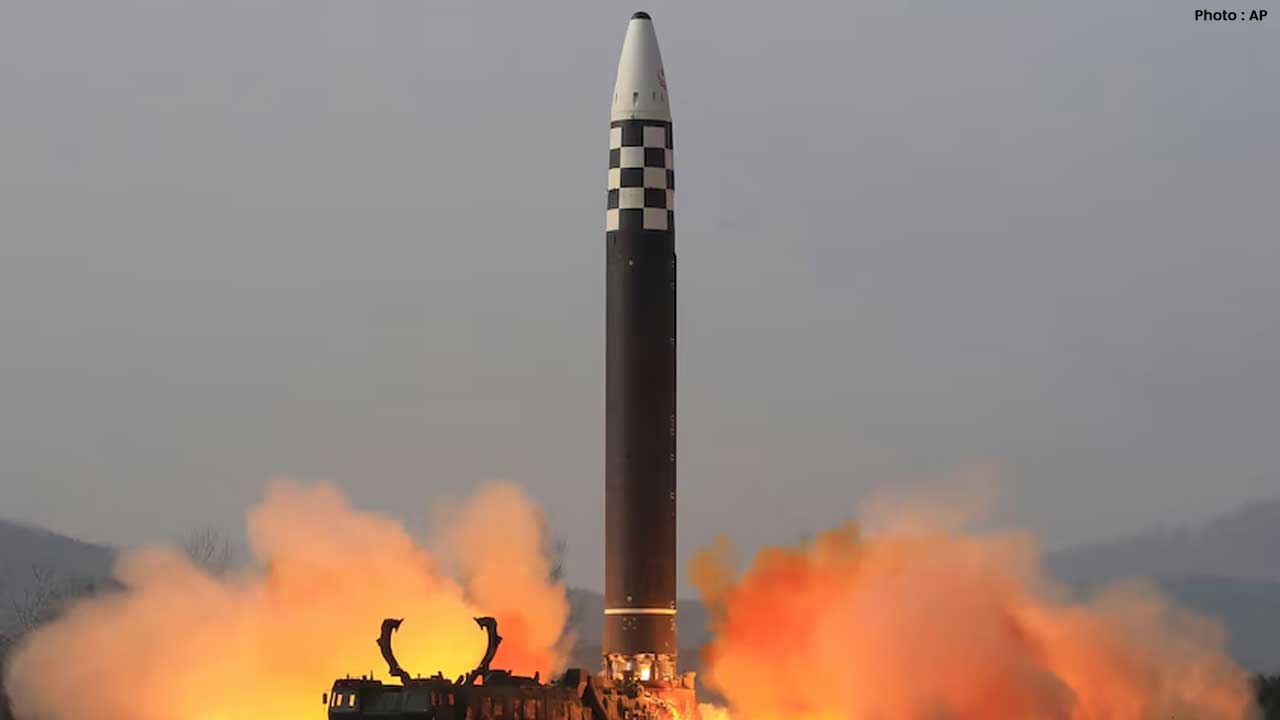
North Korea launched a ballistic missile towards the Sea of Japan on Friday, confirmed by both South Korea and Japan, marking another rise in regional tensions. This missile test follows several others in recent weeks, coinciding with U.S. President Donald Trump’s open invitation to renew discussions with Pyongyang.
According to military sources in South Korea, the missile — believed to be of the short-range type — was fired from a northwestern area near the Chinese border and traveled around 700 kilometers (approximately 435 miles) before landing in the sea. The event was tracked in real-time by surveillance systems from South Korea and the U.S., with immediate data sharing with Japan.
Officials in Japan confirmed the launch, noting that the missile likely landed outside of their exclusive economic zone. Prime Minister Sanae Takaichi stated that no damages or casualties occurred as a result of the incident.
This missile firing is consistent with North Korea’s pattern of launching tests during diplomatic overtures from the U.S. Last week, during his visit to South Korea, Trump reiterated his readiness to meet with Kim Jong Un, amplifying speculation regarding a potential diplomatic breakthrough. However, a meeting has yet to be arranged.
Trump, who previously met Kim in 2019 at the Panmunjom truce village, expressed his willingness to return to the region for further discussions. Although Kim has yet to respond to Trump’s latest engagement, he has mentioned having “fond memories” from their past encounters and showed a readiness for dialogue, contingent on the U.S. softening its stance on complete denuclearization.
In a sharp response, North Korea's foreign ministry claimed on Thursday that the Trump administration was “antagonizing” them through continued sanctions against its officials and institutions over suspected money laundering. The ministry indicated a willingness to retaliate but did not clarify what actions they would take.
The missile launch followed U.S. Defense Secretary Pete Hegseth’s visit to Seoul, where he reaffirmed an “ironclad commitment” to the U.S.-South Korea alliance. Hegseth underscored that American forces in South Korea are committed to deterring threats from North Korea while maintaining strategic flexibility to handle broader regional challenges.
In the past month, North Korea has executed multiple short-range ballistic and cruise missile tests, including one described as a hypersonic weapon, preceding a significant regional summit with Trump and Chinese President Xi Jinping.
The escalating frequency of missile tests signifies Pyongyang’s ongoing drive to bolster its military capabilities and secure leverage amid renewed diplomatic calls. As events develop, regional players remain poised for any further provocations or indications of negotiation.