Photo:AP
A Life of Power: Military Coup and Civilian Presidency
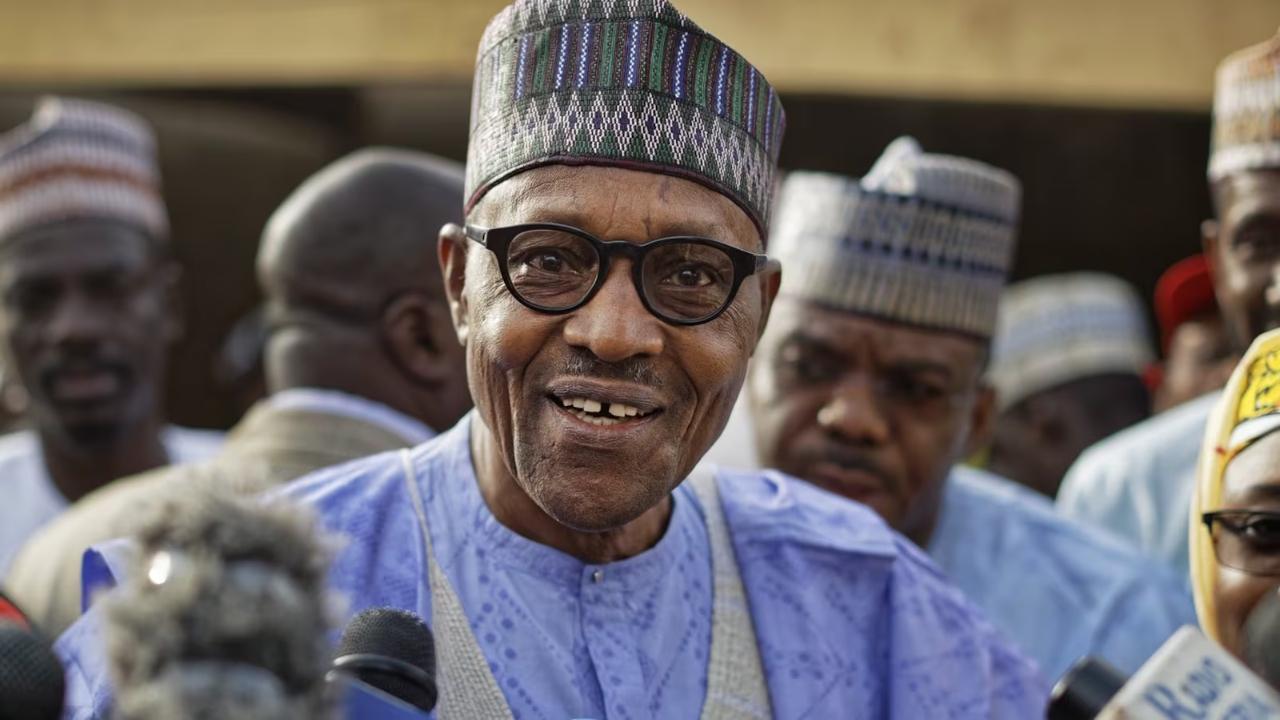
Muhammadu Buhari's political journey spanned decades of turmoil, power struggles, and an enduring quest for reform. Born on December 17, 1942, in Daura, in what is now Katsina State, he came from a modest Fulani Muslim background. Buhari joined the Nigerian Army in 1961 and rose quickly through the ranks, participating in several critical operations during the Nigerian Civil War. His military background earned him recognition for discipline, loyalty, and a reputation for incorruptibility—qualities that would later shape his political identity.
On December 31, 1983, amid deepening economic crisis and widespread corruption, Buhari led a successful military coup that overthrew President Shehu Shagari. As Nigeria’s new military ruler, he initiated a highly disciplined regime focused on combating indiscipline and restoring national order. His most notable policies during this era included the infamous “War Against Indiscipline” campaign, which imposed strict behavioral codes, promoted punctuality, and enforced civic responsibilities. His regime also enacted harsh penalties for drug trafficking, including the execution of convicted offenders, and detained political opponents without trial.
A Controversial Military Era
Buhari's time as head of state from 1983 to 1985 was marked by authoritarianism. Civil liberties were curtailed, with press freedoms stifled and the judiciary effectively sidelined. The administration's attempt to kidnap former Transportation Minister Umaru Dikko in London—a move that failed spectacularly—further damaged Nigeria’s international reputation. While supporters viewed Buhari’s regime as necessary to combat the moral decay and mismanagement of the Shagari years, critics labeled him a despot.
In August 1985, Buhari was ousted in a bloodless coup led by his Chief of Army Staff, General Ibrahim Babangida. Following his removal, Buhari was imprisoned for over three years. During this time, he largely retreated from the public eye, emerging sporadically as a commentator on national issues and a figure of symbolic resistance to corruption.
Democratic Reinvention and 21st-Century Politics
In the early 2000s, Buhari began his transformation from military autocrat to democratic statesman. He ran for president unsuccessfully in 2003, 2007, and 2011 under various opposition banners. Each campaign increased his national profile, as he drew support from Nigeria’s Muslim north and younger voters disillusioned with the People’s Democratic Party (PDP), which had dominated Nigeria’s post-military democracy.
In 2015, he finally triumphed, becoming the first opposition candidate to defeat an incumbent president in Nigerian history. His victory over President Goodluck Jonathan marked a watershed moment for Nigerian democracy. Buhari ran under the All Progressives Congress (APC), a coalition of opposition parties unified under the banner of change, anti-corruption, and national security. His re-election in 2019 reaffirmed his popularity among segments of the population, although voter turnout declined significantly.
Anti-Corruption Crusade: Mixed Results
A cornerstone of Buhari’s presidency was his pledge to eradicate corruption. While he initiated high-profile investigations and recovered looted funds, critics noted selective prosecution and a lack of comprehensive institutional reform. Some former allies and cabinet members were protected from scrutiny, prompting accusations of double standards.
The Economic and Financial Crimes Commission (EFCC) and the Independent Corrupt Practices Commission (ICPC) saw renewed vigor under Buhari, but overall transparency remained elusive. Nigeria’s ranking on Transparency International’s Corruption Perception Index saw modest improvements but failed to meet the lofty expectations set during his campaigns.
Security Challenges and the Boko Haram Insurgency
When Buhari took office in 2015, Boko Haram controlled large swaths of northeastern Nigeria. He pledged swift action, and in his first year, military gains were made. Several key towns were reclaimed, and many abducted Chibok girls were rescued in coordinated operations. However, Boko Haram splintered into factions, most notably the Islamic State West Africa Province (ISWAP), which proved more tactically advanced and increasingly deadly.
Despite government assertions of success, insecurity remained rampant. The northwest experienced a surge in banditry, with villages terrorized by armed gangs. In the southeast, separatist movements such as IPOB (Indigenous People of Biafra) intensified, while clashes between herders and farmers escalated across the middle belt. Mass abductions of schoolchildren, particularly in Zamfara and Kaduna states, became an alarming trend under his watch.
Economic Hurdles and Recession
Buhari's economic policies were widely criticized. His administration maintained a fixed exchange rate despite mounting pressure to devalue the naira, creating black market disparities and discouraging investment. Inflation surged, unemployment hit record highs, and Nigeria entered recession twice—in 2016 and again during the COVID-19 pandemic in 2020.
The president’s efforts to diversify the economy away from oil dependence made little headway. Agriculture received attention, with government support for rice production, but the broader economy remained vulnerable. Infrastructure projects like railways and power plants saw progress, yet millions remained in poverty.
Civil Liberties and Authoritarian Accusations
Throughout his civilian rule, Buhari was accused of reverting to authoritarian tendencies. The #EndSARS protests against police brutality in 2020 culminated in a deadly crackdown at Lekki Toll Gate in Lagos, with military involvement leading to civilian casualties. The government’s denial and slow response ignited international outrage.
Further controversies included a 2021 Twitter ban following the removal of one of Buhari’s tweets. Activists condemned the act as censorship, pointing to increased surveillance, arrests of journalists, and the targeting of critics under the guise of national security. While some policies aimed to stabilize the nation, the methods often raised alarms about human rights violations.
Health and Absentee Leadership
Buhari’s extended absences for medical treatment in the UK became a hallmark of his presidency. In 2017 alone, he spent over 150 days abroad, delegating leadership to Vice-President Yemi Osinbajo. These absences, often shrouded in secrecy, fueled conspiracy theories and public frustration. Many questioned why the president refused treatment within Nigeria, given the country’s underfunded health system.
Retirement and Legacy Debates
After stepping down in May 2023, Buhari retired to Daura, his hometown, where he remained largely out of the spotlight. His health continued to decline, and he passed away on July 13, 2025, at a private medical clinic in London. Official statements confirmed he died of complications related to a long-term illness. His death sparked nationwide mourning and political reflection.
President Bola Tinubu described Buhari as “a patriot whose love for Nigeria was unquestionable,” ordering flags to be flown at half-mast for a week. International tributes came from across Africa and global leaders, recognizing his efforts to bring reform and security to one of the world’s most complex nations.
Public Reactions: Mourning and Skepticism
Though many Nigerians expressed sorrow, public sentiment was deeply divided. Some praised his integrity, citing his commitment to reducing corruption and restoring pride to the military. Others criticized his failure to improve living conditions, end violence, or uplift the poor. Tributes poured in from political elites, but social media reflected a broader and more nuanced range of opinions.
His funeral in Daura was attended by dignitaries, military personnel, and thousands of mourners. Islamic clerics led prayers as Nigeria bid farewell to one of its most influential and controversial figures.
Scholarly Assessments and Historical Context
Academics and political analysts have noted Buhari’s unique place in Nigerian history. He stands as one of the few African leaders to have ruled both as a military and civilian head of state. His legacy, they argue, illustrates the tension between authoritarian control and democratic aspirations. While he succeeded in stabilizing the political landscape during his first term, his failure to reform the economy and fully address insecurity diminished his stature.
Historians may remember him as a transitional figure—a bridge between the old guard of post-colonial strongmen and the new generation of elected reformers. Whether that bridge was sturdy or faltering remains a matter for future debate.
Conclusion: An End to a Defining Era
Muhammadu Buhari’s death closes a significant chapter in Nigerian history. His dual reign as a military ruler and elected president captured the paradoxes of Africa’s largest democracy. He symbolized both hope and disappointment, order and repression, simplicity and complexity.
While his policies and governance sparked varied opinions, few doubt the impact he had on shaping Nigeria’s political identity. The debates over his legacy will endure, but his imprint on the nation is permanent. As Nigeria moves forward, the Buhari era serves as a sobering reminder of the challenges and responsibilities that come with leadership in a country of over 200 million people.