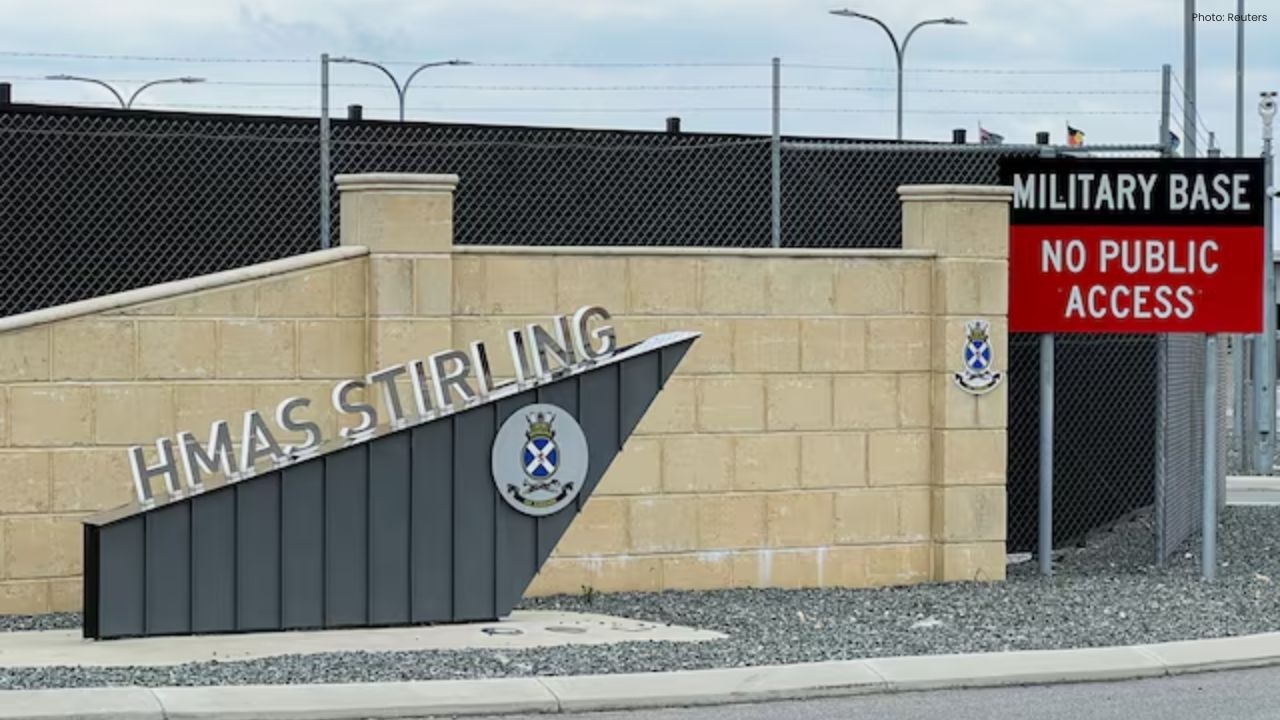
The AUKUS submarine base on Australia’s western shore is evolving into a key digital hub. This transformation is bolstered by new undersea internet cables from Google and Australian operator SUBCO, which are converging discreetly near HMAS Stirling, poised to accommodate U.S. nuclear submarines.
Documents reviewed by Reuters indicate that three substantial undersea cables will connect Australia to Africa and Asia, landing near Rockingham, south of Perth. This development aligns with the intensified cooperation between Canberra and Washington under the AUKUS framework, aimed at strengthening digital and military capabilities amidst rising geopolitical tensions with China.
SUBCO has confirmed that its upcoming high-capacity cable, purposely designed to connect Australia’s two coastlines, will include a direct branch to HMAS Stirling. Official communications only reference a landing site located 60 kilometers north in Perth. Bevan Slattery, the company’s founder, underscores the significance of this network for regional security and Australia’s advancing AI framework.
Meanwhile, Google aims to extend its reach with plans for two major routes from Western Australia: one directed toward Christmas Island and another headed west to Africa, with landfall anticipated at Madora Bay, conveniently accessible to the AUKUS base. This enhances Australia’s position in global data connectivity.
This connection promises to significantly improve secure communications between Australia, the U.S., and allied nations. In preparation for the arrival of four Virginia-class submarines in 2027, approximately 1,000 U.S. Navy personnel are slated to relocate to Rockingham and nearby Mandurah next year.
Experts caution that while the growth of subsea networks offers enhanced speed and resilience for defense and commercial purposes, it also increases vulnerability to sabotage. Australia’s navy has already indicated that undersea cables, although critical for digital infrastructure, pose significant risks.
Although construction progresses, Australia’s environmental authority has paused evaluations of the proposed Google Western Australian cables to assess their potential impacts on marine ecosystems. Google asserts it will fully comply with all environmental safeguards.
The emergence of these cables represents more than a mere technological advancement; it signifies Australia’s expanding role in a new digital and defense landscape within the Indo-Pacific.