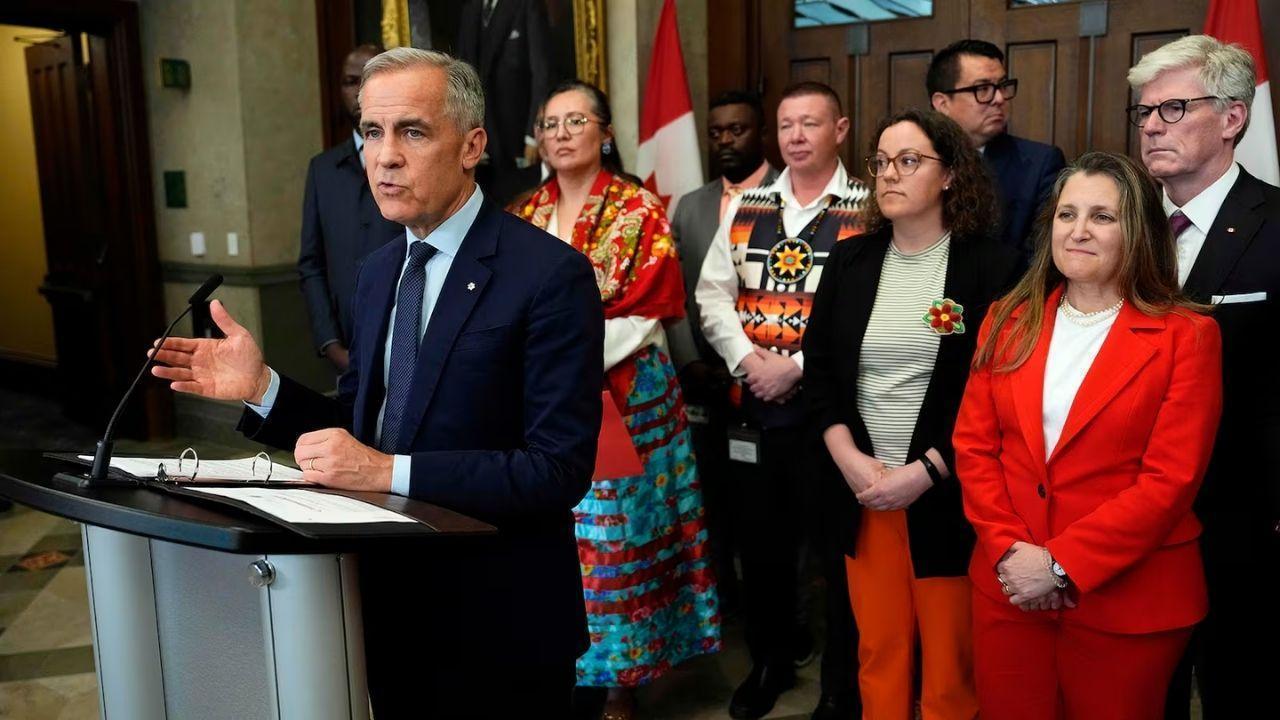
Photo:AP
On June 26, 2025, Canada’s Parliament passed Bill C‑5, also known as the One Canadian Economy Act, which aims to make trade and building projects across provinces easier and faster.
Soon after the vote, the Treaty 6 Confederacy, a group representing many First Nations in central Alberta and Saskatchewan, issued a strong message. They said, “Our Nations are not opposed to economic development. We welcome opportunity when it is grounded in respect, equity and sustainability.”
This means these First Nations are not saying no to jobs, new roads, or clean-energy projects. They simply want to make sure that any project follows important rules—like caring for the environment, including Indigenous voices, and being fair to everyone.
Before Bill C‑5 passed on June 26, the Confederacy had raised concerns. They worried the bill might give too much power to the government without fully consulting them or respecting their treaty rights . Treaty 6, signed in 1876, is a historic agreement about land, resources, and rights in both provinces .
Even though the bill includes some promises to consider Indigenous interests and to consult communities before approving big projects , Treaty 6 leaders felt the consultation wasn’t strong enough. They called for better, clearer communication and proper steps to protect their rights .
Here are the main ideas the Treaty 6 Confederacy shared:
-
They are not against building roads, bridges, pipelines, or other projects that create jobs.
-
They want those projects to be mindful of the earth, fair to people, and recognize their rights.
-
They want to be included in decisions—not just told what will happen.
Now that Bill C‑5 is law, both sides should work together. The government must truly talk with Treaty 6 Nations before moving forward. Treaty leaders are ready to help guide these discussions—but they will stand up if their rights and their land are overlooked.
This story is important for all of Canada because it shows how people can work together to build things while caring for the planet and respecting everyone’s history and culture. It reminds us that laws and projects don’t just affect buildings and roads—they affect people and their homes.