Photo:AP
Introduction: A Battle for the Soul of a City That Never Sleeps
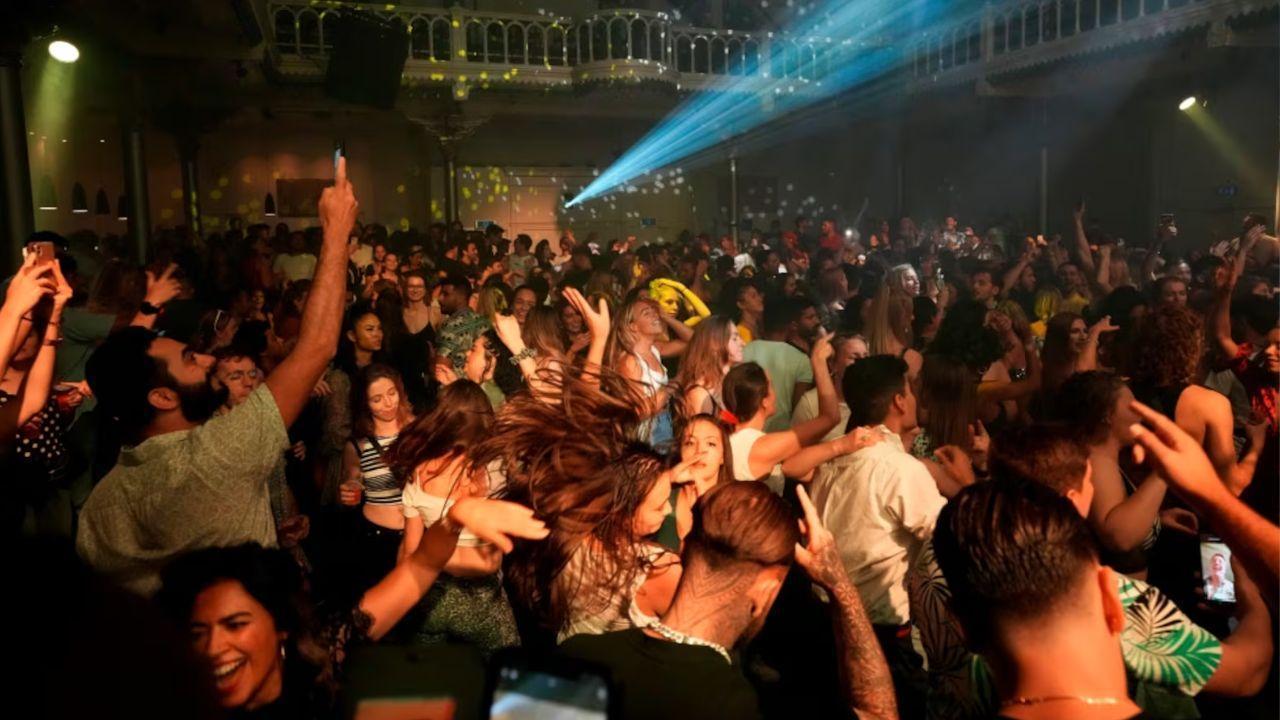
Montreal, a city celebrated globally for its unique cultural tapestry, its world-class festivals, and its famously vibrant nightlife, is now at the center of a fierce battle over its very identity. A new set of noise regulations proposed for its core downtown boroughs has sent a shockwave through the city's music and event scene, igniting a unified and powerful backlash from the very community that fuels its late-night economy. Venue owners, artists, and nightlife advocates are sounding a desperate alarm, arguing that the proposed changes for the Ville-Marie and Plateau-Mont-Royal boroughs are not a reasonable update to outdated rules but a "draconian" and punitive assault that could prove to be the "nail in the coffin" for many small and medium-sized venues still struggling to find their footing in a fragile post-pandemic world. With proposals for crippling fines, expanded police powers, and mandatory surveillance, many fear the city is on the verge of silencing the beat that makes it one of North America's most exciting destinations.
The Proposed Bylaw: A "Draconian" Toolkit of Enforcement
The proposed overhaul of the noise bylaw, which dates back to the 1970s, introduces several radical changes that critics argue are disproportionate, vague, and designed to punish rather than manage.
-
Astronomical Fine Increases: The most immediately alarming proposal is a jaw-dropping increase in the financial penalties for noise violations. Currently, a first-time offense carries a fine of around $1,500. Under the new rules, this minimum fine would skyrocket to $10,000 for a first offense, with the potential to climb as high as $20,000 for subsequent infractions. For a small music venue or bar that might only clear a few thousand dollars in profit on a good weekend, a single $10,000 fine is not just a penalty; it is an existential threat that could force them to close their doors permanently. "You're looking at 30 G's in a weekend," lamented Sergio Da Silva, owner of the Turbo Haus venue. "Why would you ever get involved in that?"
-
Arbitrary and Expanded Police Powers: The new bylaw would grant police officers responding to a single noise complaint the discretionary power to immediately shut down a live show, party, or event on the spot if they personally deem it to be too loud. This power would not require a decibel meter reading or any objective proof of a violation. Critics argue this creates a dangerous potential for arbitrary and inconsistent enforcement. An officer "having a bad day" or with a personal bias against a certain type of music or venue could unilaterally end an event, causing significant financial loss and reputational damage to the venue, even if it is operating within the law.
-
Mandatory Surveillance and Data Demands: The proposed rules would also allow the city or the police to compel a venue to install a continuous sound monitoring system at its own expense. The authorities could then demand access to the data from this system at any time. This has raised serious concerns about privacy, data security, and the potential for "fishing expeditions." Venue owners fear this data could be used to issue fines retroactively, even in the absence of a public complaint, creating a state of constant surveillance and anxiety.
A Community Unites in Opposition
The reaction from Montreal's nightlife community has been one of shock, anger, and unified resistance. They argue that the proposed bylaw fails to recognize the immense cultural and economic value they bring to the city and instead treats them as a public nuisance to be controlled.
-
The Chilling Effect on Culture and Investment: Sergio Da Silva and other venue owners warn that the sheer financial risk created by the bylaw will have a chilling effect on the entire ecosystem. "I could literally say there's nothing positive that they're proposing," he stated. No sane investor would risk opening a new live music venue or cultural space in Montreal if they could be bankrupted by a couple of noise complaints. This could lead to a cultural hollowing-out of the downtown core, with independent venues being replaced by soulless corporate chains that can more easily absorb the financial risk.
-
A Step Backward for Nightlife Advocacy: The advocacy group MTL 24/24, which has long championed a more progressive and supportive approach to nightlife management, sees the proposal as a giant leap backward. Spokesperson Max Honigmann points out that while the city claims the massive fines would be a "last resort," this is not written into the law, leaving venues completely vulnerable. MTL 24/24 has advocated for models used in other global cities, like a "Night Mayor," to foster dialogue, but these proposals create a purely adversarial relationship between venues and the city.
The City's Rationale and a Crippling Provincial Complication
The City of Montreal has publicly stated that it wants to "recognize the special contribution of performance venues" and "wants venues to thrive." The bylaw is part of a larger, necessary effort to modernize regulations and to strike a better balance between the needs of a growing residential population in the downtown core and the realities of a vibrant nightlife economy. The new rules are based on a technical concept called "spectral emergence," which is designed to measure how much a specific sound (like the bass from a nightclub) stands out from the ambient background noise of the city.
However, venue owners argue that even if the municipal bylaw were perfect, their operations are still at the mercy of a far more powerful and unpredictable provincial authority: Quebec's liquor board, the Régie des alcools, des courses et des jeux (RACJ). Da Silva refers to the RACJ as the "morality police," an agency with the sweeping power to sanction venues for a wide range of infractions, including having unpermitted karaoke or even allowing patrons to dance in an area not designated for it. A single noise complaint can trigger an investigation by the RACJ, which can result in a venue's liquor license being suspended or revoked—a death sentence for any bar or club. This creates a situation of double jeopardy, where a venue owner must simultaneously navigate complex municipal bylaws and the often-opaque and punitive regulations of a provincial board.
A Different Path Forward: A Call for Mediation Over Enforcement
Instead of a framework built on punishment and enforcement, the nightlife community is calling for a radically different, more collaborative approach. Both Honigmann and Da Silva have championed the idea of creating a specialized municipal department, staffed by people who understand the city's culture and economy, to act as mediators. In this model, a single noise complaint would not trigger a police response and the threat of a crippling fine. Instead, it would initiate a process of dialogue, where mediators would work with the resident and the venue to find a practical solution, whether it's adjusting sound levels, improving soundproofing, or simply fostering better communication.
This approach, successfully implemented in other global nightlife capitals, is based on the idea of co-existence and problem-solving. It recognizes that in a dense, vibrant city, a certain level of noise is inevitable, and that the goal should be to manage it collaboratively rather than trying to eliminate it through force.
The deadline for public feedback on the proposed bylaw is the end of Friday, July 25, 2025, creating a narrow window for the community to make its voice heard.