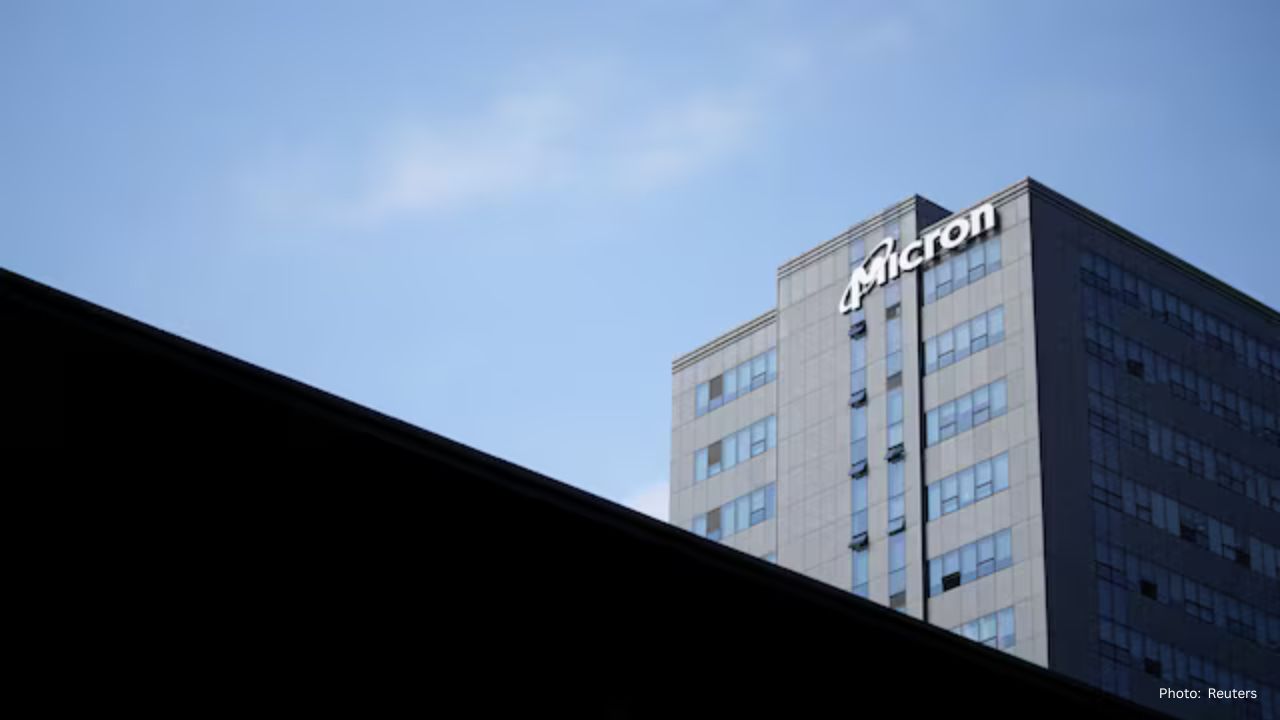
Micron Technology, a leader in memory chip solutions, is gearing up for a significant investment in Japan amid soaring global demands for artificial intelligence (AI) technologies. A report from the Nikkei reveals that the U.S.-based company plans to allocate 1.5 trillion yen (approximately $9.6 billion) to establish a state-of-the-art memory chip production facility in Hiroshima. This endeavor marks one of the largest semiconductor investments ever seen in Japan.
The upcoming facility will specialize in high-bandwidth memory (HBM) chips, crucial for AI functions and large data centers. These chips are instrumental in facilitating rapid data processing, thereby becoming integral to AI training and sophisticated cloud services.
Construction is anticipated to commence in May of next year, with production and shipments expected to roll out around 2028. This new plant will be located on a current Micron site in Hiroshima, bolstering Japan's expanding role within the global chip supply network.
Revitalizing Japan’s Semiconductor Industry
Once a powerhouse in the semiconductor realm, Japan's prominence has diminished over the years, contending with the rise of competitors from South Korea, Taiwan, and the U.S. In response, the Japanese government is actively working to rejuvenate its semiconductor sector, offering generous incentives to attract international firms and reinforce its standing in advanced chip manufacturing.
For this project in Hiroshima, Japan’s Ministry of Economy, Trade, and Industry is predicted to contribute up to 500 billion yen in support, signaling the government's commitment to regarding the semiconductor industry as vital to its economic and national security strategy.
Japan has engaged with major companies such as Taiwan Semiconductor Manufacturing Co. (TSMC) and IBM to establish new plants and advance next-gen chip technologies. The objective is to restore Japan's status as a central manufacturing hub.
Soaring Demand for AI Processing Power
This expansion arrives at a period marked by escalating demand for HBM chips. With the rise of AI applications, smart devices, and data centers, firms are in need of more powerful and efficient memory products. Micron views this as an exceptional opportunity to boost its production capacity and enhance competition with other major players, particularly South Korea's SK Hynix, the reigning leader in HBM technology.
The Hiroshima facility will also facilitate Micron's efforts to diversify its production avenues away from Taiwan. With increasing geopolitical tensions and supply chain vulnerabilities in the region, businesses are seeking more stable and secure locations for manufacturing vital technology components. Japan stands out as a reliable choice with substantial government backing.
Implications for Technology and Global Supply Chains
If executed as planned, this $9.6 billion investment will significantly influence the future of AI technology. By enhancing the availability of advanced memory chips, Micron will address the global demand for sophisticated, swift, and energy-efficient computing solutions.
This initiative also reinforces Japan’s position as a trustworthy and competent player in advanced tech manufacturing, bringing forth new job opportunities, research initiatives, and a stronger presence in the global semiconductor competition.
Ultimately, the new plant supports the creation of a more balanced and secure chip supply chain—an objective pursued by many nations and corporations following past disruptions.
Micron's strategic move underscores confidence in Japan’s long-term investment vision and the trajectory of AI-powered technologies. As countries vie for supremacy in chip manufacturing, such initiatives are set to shape the upcoming decade of technological progress.