The conflict in eastern Democratic Republic of Congo has taken a perilous turn as the M23 rebel group solidifies its grip on the crucial town of Uvira. Eyewitnesses noted that rebels advanced further into the town on Thursday, just a day after their initial entrance, representing a significant setback for the Congolese government and undermining ongoing peace discussions.
Strategically situated on the banks of Lake Tanganyika, Uvira also borders Burundi. For several months, it had acted as a temporary headquarters for South Kivu’s provincial administration following M23's capture of Bukavu, the provincial capital, back in February. Losing Uvira means the government has forfeited yet another critical center of governance, allowing M23 to advance even further.
This situation is generating alarm for millions in the region, as sporadic gunfire has created panic in Uvira. Many residents were forced to hide indoors or seek refuge in the surrounding countryside. Despite the threats, some bravely ventured out on Thursday morning in search of food, though the uncertainty looms large.
Local educator Godefroid Shengezi articulated the fear and confusion now overwhelming the town. He voiced concerns regarding the government’s assurances that Uvira would remain safe, now rendered hollow as the rebels have taken control. He also mentioned his desperate search for his three children, whom he fears may have crossed into Burundi—a country already hosting tens of thousands of Congolese refugees.
The rebel alliance, Alliance Fleuve Congo (AFC), which includes M23, claims that Uvira's residents are safe and can return to their routines. However, many families remain separated and food-insecure, uncertain about their future.
The United Nations has expressed grave concern regarding the deteriorating situation. Secretary-General Antonio Guterres condemned the recent offensive and warned that the unfolding conflict poses a risk of expanding regional involvement. He advocated for an immediate cessation of hostilities.
The fall of Uvira places Burundi in a precarious position, being located merely 30 kilometers from Bujumbura, Burundi’s largest urban center. For years, Burundian forces have been engaged in Congo to combat their own rebel groups while supporting Congolese troops against M23. Earlier in the year, up to 12,000 Burundian troops were reported to be stationed in the region, although this number appears to have diminished.
Officials from M23 allege that some Burundian forces have retreated from South Kivu, whereas others are entrenched in mountainous locales. There have also been unverified claims from M23 regarding the use of heavy artillery by Burundian forces, which has reportedly harmed civilians. The Burundian government has yet to issue a response to these accusations.
A United Nations representative acquainted with the situation indicated that while M23 prefers Burundian troops to withdraw entirely from Congo, direct military action against Burundi itself is unlikely. This hesitation stems from Burundi's heavy reliance on Uvira for essential supplies. Instead, M23 might aim to influence Burundi through diplomatic avenues.
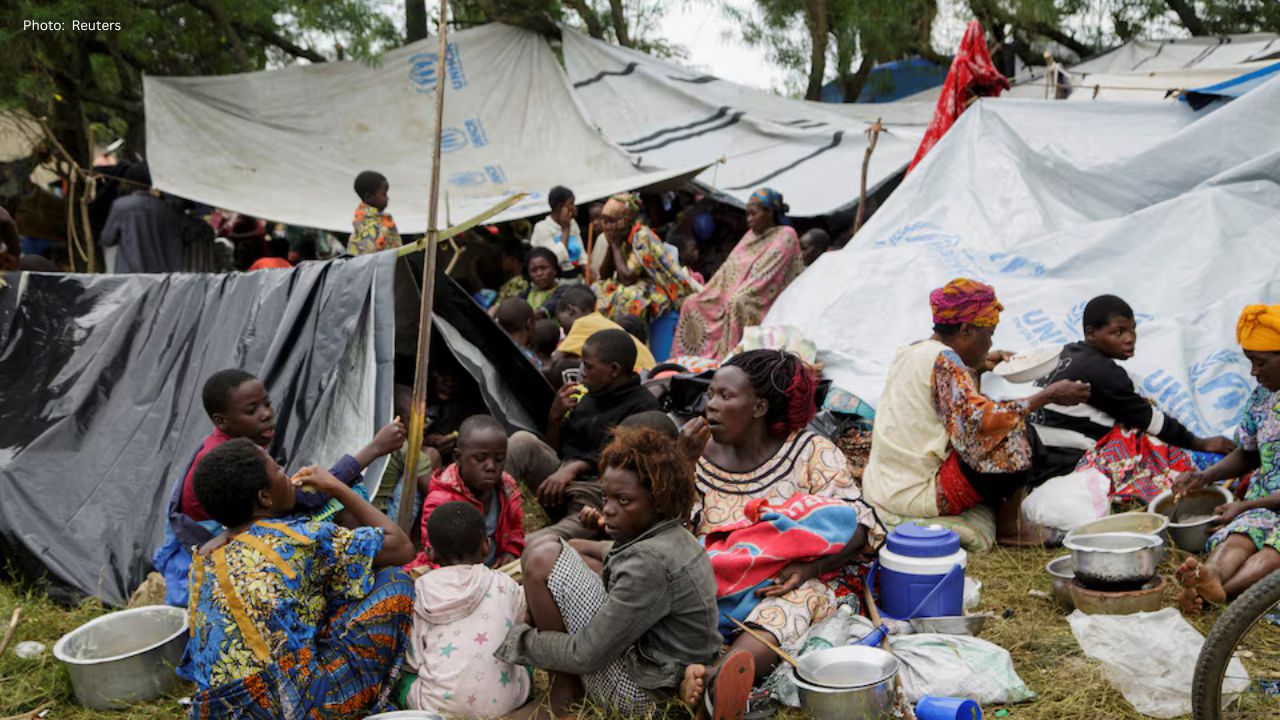
The humanitarian situation is rapidly deteriorating. Almost 25,000 individuals fled into Burundi between December 5 and December 8, arriving exhausted and fearful. Some crossed rivers following the shutdown of official border crossings due to security issues.
The timing of M23's actions is noteworthy, as just a week prior to Uvira’s fall, Congo's President Felix Tshisekedi and Rwanda's President Paul Kagame met with U.S. President Donald Trump in Washington to reaffirm their commitment to a U.S.-mediated peace agreement. The Congolese government now warns that these new rebel advancements jeopardize the entire peace initiative and has urged the international community to take swift action, accusing Rwanda of aiding the rebels—a charge Rwanda refutes.
In contrast, M23 is not part of the U.S.-led peace talks and has opted to negotiate separately with Congo in discussions facilitated by Qatar, raising concerns about the likelihood of a successful peace agreement without the direct involvement of those actively engaged in the conflict.
Experts suggest that the takeover of Uvira highlights the ongoing challenges in finding a lasting resolution. Jervin Naidoo from Oxford Economics noted that the peace framework fails to address the fundamental issues at the heart of the conflict and warned that meaningful progress will only be achievable if M23 is included in the negotiation process.
With conflict spreading and increasing numbers of people displaced, eastern Congo remains entrenched in a cycle of violence, fear, and political instability. The loss of Uvira signifies not just a local defeat but a troubling indication for the broader region, now facing the threat of escalating instability.