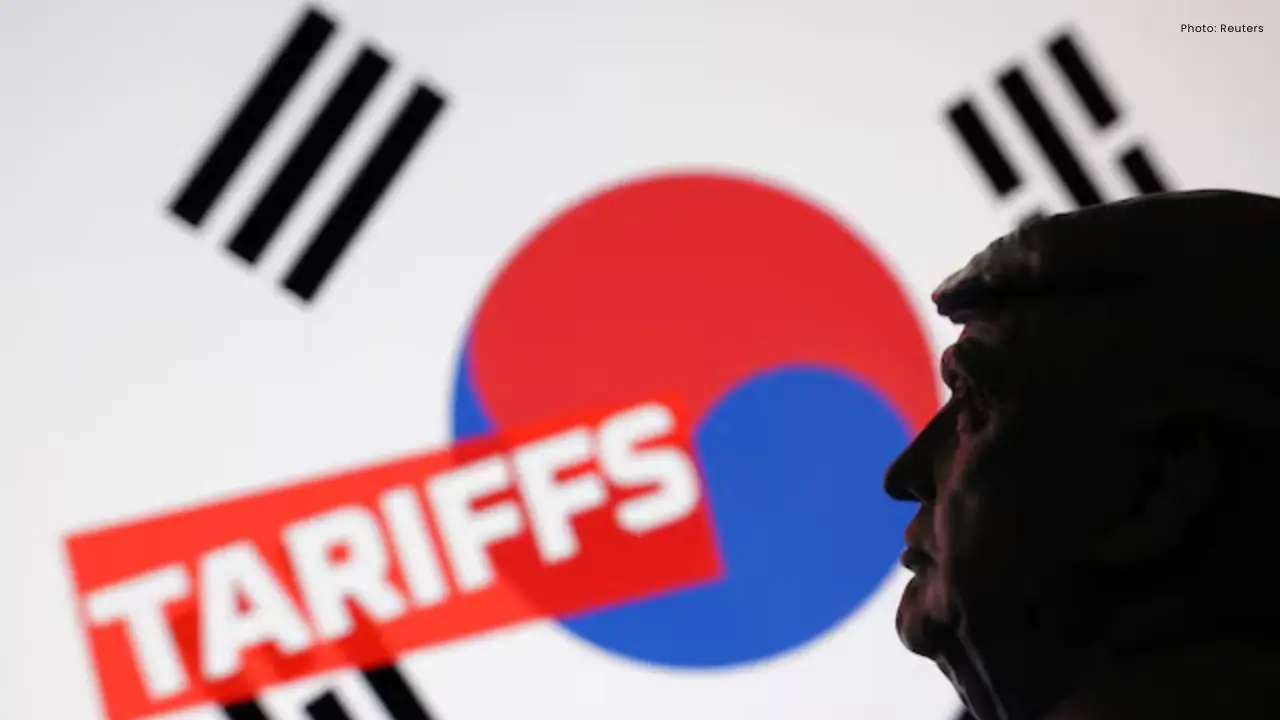
South Korea has indicated that the new US tariffs on specific advanced AI chips are not anticipated to significantly impact its businesses in the short term. Nonetheless, officials in Seoul are closely monitoring developments, cautioning that future measures could pose greater risks.
Trade Minister Yeo Han-koo stated that the initial phase of US tariffs targets high-performance chips from Nvidia and AMD, utilized for artificial intelligence and advanced computing. South Korean exports primarily consist of memory chips, which are excluded from the current tariff list, suggesting limited immediate repercussions for South Korea’s semiconductor industry.
However, Minister Yeo warned that it may be premature to feel completely assured. He highlighted the uncertainty regarding potential expansions of tariffs in a future phase, which could encompass additional chip types and related products. The South Korean government is actively collaborating with local manufacturers to brace for any shifts and safeguard their interests.
These tariffs, implemented by US President Donald Trump, follow a nine-month investigation under national security regulations. The White House has clarified that the tariffs specifically do not target chips used in US data centers, consumer electronics, industrial applications, or public sectors.
Nevertheless, more stringent measures could be forthcoming. US Commerce Secretary Howard Lutnick warned that South Korean and Taiwanese firms that neglect to invest in manufacturing within the US could face tariffs as high as 100 percent in the future. This implies that Washington is leveraging trade regulations to promote domestic chip production.
The newly imposed tariffs form part of a wider US strategy aimed at bolstering domestic chip production and diminishing reliance on foreign suppliers, particularly from Taiwan. For South Korea, a leading chip exporter, the scenario presents a careful balance between short-term comfort and long-term uncertainties.
While the initial impact appears minor, South Korea remains watchful, aware that any escalation of US tariffs in the future could have critical consequences for its global semiconductor trade. The government is dedicated to monitoring developments and providing support to its chip industry amid potential challenges.