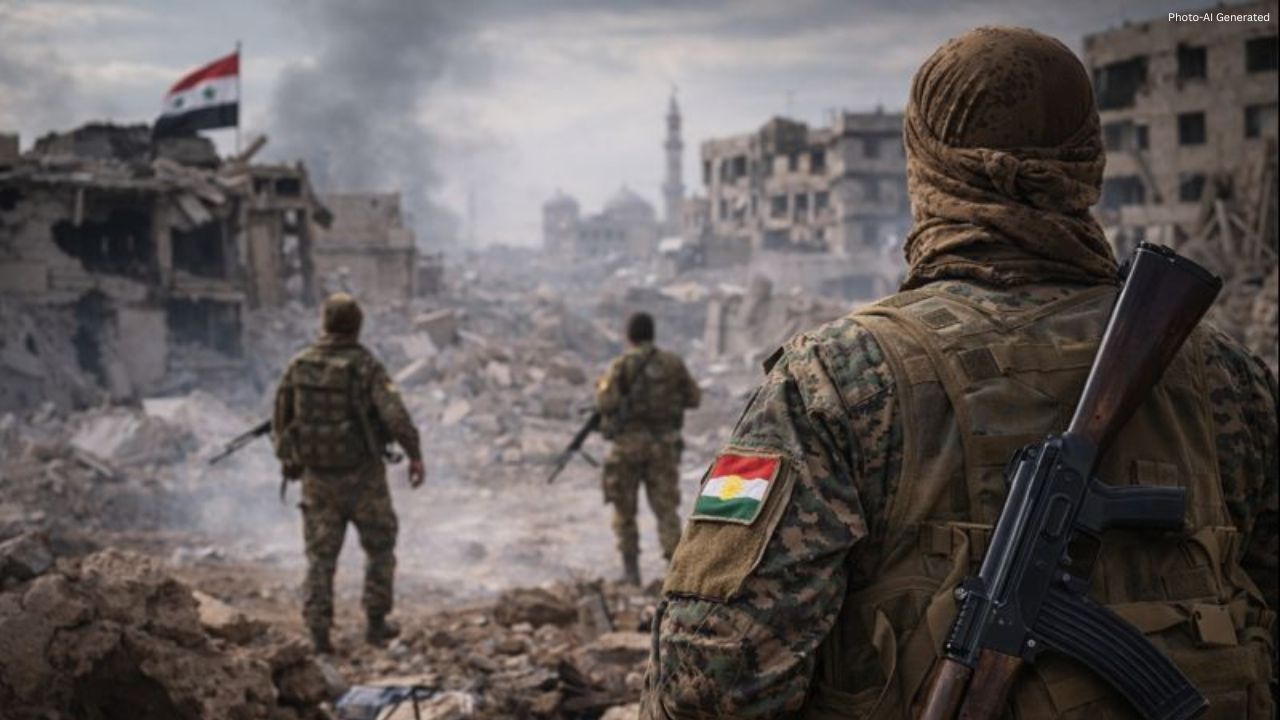
Syrian Kurdish forces are facing a significant strategic setback as several countries that once supported them pivot toward backing Syria’s new leadership, accelerating their retreat on multiple fronts in the conflict-torn country. The developments reflect a major realignment in the region’s geopolitics, as foreign powers reassess priorities and seek rapprochement with Damascus after years of civil war and fragmented alliances.
For more than a decade, Kurdish militias — primarily the Syrian Democratic Forces (SDF) and affiliated groups — were key partners of the United States and its allies in the fight against the extremist group ISIS. Kurdish fighters gained control of large swaths of northeastern Syria and helped establish semi-autonomous governance structures in predominantly Kurdish areas. Their contribution was widely lauded among Western officials and analysts alike.
However, the calculus in Washington and among regional capitals appears to be changing. Reports indicate that some U.S. partners, including regional states, are recalibrating their positions in response to the evolving political landscape and broader diplomatic engagements involving the Syrian government. This has left Kurdish forces increasingly isolated at a time when they are already contending with pressure from Damascus, Turkey, and rival armed groups.
The shift is being felt particularly in areas where Kurdish fighters previously held tactical advantage. With diminished external backing, Kurdish units are reportedly ceding territory or withdrawing to consolidate defensible positions, reducing their footprint in key contested zones. Observers say this retreat underscores how dependent the Kurdish movement has been on international support — especially U.S. backing — for its military and political viability.
The growing rapprochement between some Western and Middle Eastern governments with the Syrian regime has also intensified diplomatic pressure on Kurdish leaders. Damascus has long viewed Kurdish autonomy efforts as a threat to Syria’s territorial integrity, and renewed engagement by Western allies with President Bashar al-Assad’s government complicates the Kurds’ aspirations for political recognition.
Meanwhile, Turkey continues to regard Kurdish forces — particularly those linked to the Kurdistan Workers’ Party (PKK) — as a security threat and has launched military operations across the border into Syria to counter Kurdish control. Turkey’s operations have further strained Kurdish defensive efforts, especially as partnerships with former allies wane.
As Kurdish forces adjust to the shifting geopolitical environment, analysts warn that the future of Kurdish autonomy in Syria is increasingly uncertain. The retraction of external support, changing alliances, and intensified pressure from regional actors could reshape the balance of power in northern Syria and undermine long-standing Kurdish political projects that emerged during the country’s prolonged conflict.