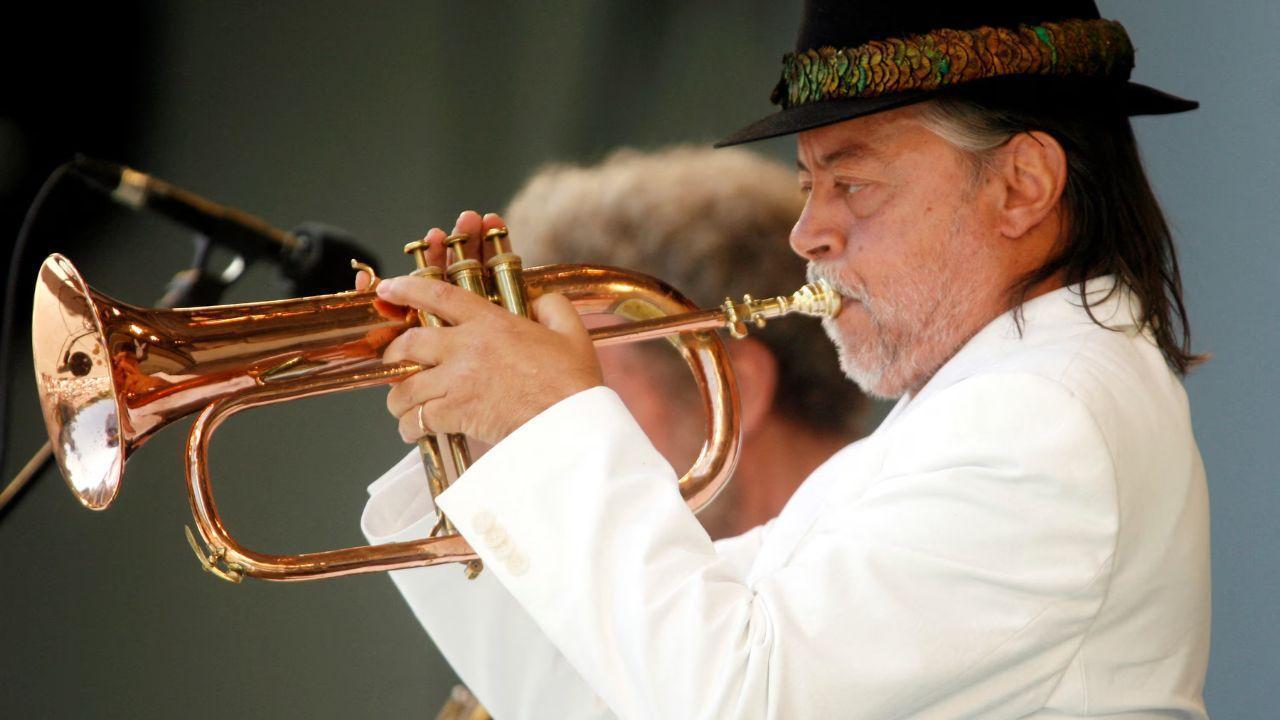
Photo:reuters
Introduction: The Final, Graceful Note of a Jazz Pioneer
The world of music has lost a true original with the passing of Chuck Mangione, the beloved Grammy-winning flugelhornist, composer, and bandleader whose signature sound became a joyful soundtrack for millions. Mangione died peacefully in his sleep on Tuesday, July 22, 2025, at his home in Rochester, New York, at the age of 84. His family confirmed his passing, bringing to a close a luminous career that spanned more than five decades, produced over 30 albums, and successfully bridged the worlds of authentic jazz and mainstream pop music.
Mangione was a master instrumentalist, but it was his 1978 megahit, "Feels So Good," that immortalized him. The irresistibly smooth and uplifting melody made him a household name and an icon of the burgeoning smooth jazz movement. Yet, his career was far more than a single song. He was a dedicated musician, an innovative educator, and a warm, approachable public figure known for his iconic felt hat and his genuine connection with his audience. Later in life, he endeared himself to a new generation with a recurring self-parodying role on the animated series King of the Hill. His death has prompted a wave of tributes celebrating his immense talent, his pioneering spirit, and the sheer happiness his music brought to the world.
A Rochester Childhood Steeped in Jazz
The Formative Years
Charles Frank Mangione was born on November 29, 1940, in Rochester, New York, into a vibrant Italian-American family. His parents, Frank and Nancy Mangione, ran a grocery store, but their home was a cultural hub, filled with music and the aroma of home-cooked Italian food. Frank Mangione was a passionate jazz enthusiast, and his love for the art form created an extraordinary environment for his two sons, Chuck and his older brother, Gap. The Mangione home became a regular gathering spot for jazz legends performing in Rochester.
As a young boy, Chuck Mangione found himself sitting at the dinner table with titans of the industry. Musicians like Dizzy Gillespie, Miles Davis, Sarah Vaughan, Carmen McRae, and Art Blakey were frequent guests. These weren't just fleeting encounters; they were deep, formative experiences. Gillespie, in particular, became a mentor and a lifelong friend. He saw the prodigious talent in the young Mangione and famously gifted him one of his own custom-made "upswept" trumpets, an instrument that became a treasured possession and a symbol of his direct lineage to jazz royalty. This upbringing was a unique conservatory, providing Chuck with an education in jazz that no formal institution could replicate.
Formal Education and The Jazz Brothers
While his informal education was unparalleled, Mangione also pursued rigorous formal training. He began playing the trumpet at age 8 and attended Rochester's prestigious Eastman School of Music, where he earned a bachelor's degree in 1963. During these years, he and his pianist brother Gap formed their own group, the Jazz Brothers. The band recorded three albums for Riverside Records, showcasing the brothers' burgeoning talent and their hard-bop influences. The Jazz Brothers were a fixture in the local Rochester scene and gave the Mangiones their first taste of recording and leading a band. After graduating from Eastman, Chuck's path led him to one of the most revered ensembles in jazz history.
Forging a Career with the Giants
The Art Blakey and the Jazz Messengers Era
In the mid-1960s, Mangione's talent was recognized by Art Blakey, the legendary drummer and bandleader, who invited him to join his iconic group, the Jazz Messengers. This was a "post-graduate" education for any young jazz musician. Following in the footsteps of trumpeters like Lee Morgan and Freddie Hubbard, Mangione spent two and a half years with the Messengers, touring the world and honing his craft. The experience was invaluable, sharpening his improvisational skills and teaching him the discipline and dynamics of playing in a world-class ensemble. It was during this period that he began to develop his own compositional voice.
A New Sound and a New Instrument
After leaving the Jazz Messengers in 1968, Mangione returned to his alma mater, the Eastman School of Music, as an educator. He founded and directed the Eastman Jazz Ensemble, a role that allowed him to shape a new generation of musicians while exploring his own musical ideas. It was around this time that he began to gravitate towards the flugelhorn. Its warmer, mellower, and more voice-like tone was a perfect match for the lyrical, melodic style he was cultivating. He formed a new quartet featuring saxophonist and flutist Gerry Niewood, a partnership that would define much of his most successful work.
Throughout the early 1970s, Mangione released a series of acclaimed albums, including Friends and Love (1970), a live concert with the Rochester Philharmonic Orchestra that showcased his ambition to blend jazz with classical forms. His 1975 album Chase the Clouds Away earned him a Grammy nomination and further refined his accessible, melodic sound, setting the stage for the global phenomenon that was just around the corner.
"Feels So Good": The Song That Defined an Era
The Making of a Megahit
In 1977, Chuck Mangione and his quartet entered the studio to record the album Feels So Good. The title track, an instrumental piece running nearly ten minutes, was not initially seen as a potential hit single. It featured a simple, hummable melody carried by Mangione's flugelhorn, a memorable guitar line from Grant Geissman, and an extended, virtuosic saxophone solo by Chris Vadala. The song was a perfect storm of musicality and accessibility.
At a time when disco and rock dominated the airwaves, an instrumental jazz track was a long shot for pop success. However, radio programmers began playing an edited version of the song, and the public response was immediate and overwhelming. The melody was infectious. "Feels So Good" climbed the Billboard Hot 100 chart, peaking at an astonishing #4 in June 1978. It became one of the most successful instrumental hits of all time.
Cultural Impact and Stardom
The success of the single propelled the album of the same name to #2 on the Billboard 200 chart, where it was kept from the top spot only by the cultural juggernaut that was the Saturday Night Fever soundtrack. The album went double-platinum, a rare feat for a jazz record. The album's cover, featuring Mangione in a white jacket and his signature brown hat, became iconic.
Suddenly, Chuck Mangione was a bona fide superstar. "Feels So Good" was everywhere—on the radio, in stores, at sporting events. It became the unofficial anthem of the burgeoning smooth jazz genre, a sound that he helped to create and popularize. He had achieved the near-impossible: he had made instrumental jazz a mainstream pop phenomenon without compromising his musical integrity.
Accolades, Olympics, and Lasting Influence
Grammys and Recognition
Mangione's commercial success was matched by critical acclaim. He was nominated for 14 Grammy Awards during his career, winning two. His first win came in 1977 for Best Instrumental Composition for "Bellavia," a beautiful ode to his mother. His second Grammy came in 1979 for Best Pop Instrumental Performance for his score to the 1978 film The Children of Sanchez, which starred Anthony Quinn.
An Olympic Anthem
His status as a beloved American composer was further solidified when he was chosen to create music for the 1980 Winter Olympics in Lake Placid, New York. His composition, "Give It All You Got," became the official theme of the games. Its upbeat, triumphant melody perfectly captured the spirit of the event and was heard by a global television audience, cementing his place in the cultural fabric of the nation.
The Man in the Hat: A Pop Culture Icon
The Signature Look and Fan Connection
As his fame grew, Chuck Mangione's image became as recognizable as his music. He was rarely seen without his distinctive brown felt hat, which became his trademark. He was a warm and generous performer, known for connecting with his audience. His family's statement after his passing poignantly recalled his "pure joy that radiated from the stage." He was famous for sitting at the edge of the stage after every show, signing autographs for every single fan who waited, a practice that endeared him to his legions of followers. In a testament to his cultural significance, he later donated his iconic hat to the Smithsonian National Museum of American History.
A Second Act on King of the Hill
In 1997, Mangione was introduced to a new generation in a most unexpected way. He began a recurring guest role on Mike Judge's popular animated sitcom, King of the Hill. He voiced a fictionalized, self-deprecating version of himself who served as a celebrity spokesman for the "Mega Lo Mart." Clad in the familiar white and red jacket from his Feels So Good album cover, his character would pop up at the most inopportune moments, often breaking into a spontaneous flugelhorn performance of his famous hit. This running gag became one of the show's most beloved elements, showcasing his sense of humor and his willingness to embrace his own celebrity status. He appeared in eleven episodes, and for many younger viewers, the "Mega Lo Mart guy" was their first introduction to the man and his music.
Final Years and Enduring Legacy
After decades of touring and recording, Mangione slowed his pace in later years, but the love for his music never waned. He passed away from natural causes, leaving behind a legacy of music that continues to bring joy to listeners around the world. Tributes poured in from fans and fellow musicians, mourning the loss of a "jazz legend" and a "true gentleman." Many fans noted on social media that the news certainly did not "feel so good," a bittersweet nod to the song that will forever be his anthem.
Chuck Mangione was a musical innovator, an educator, and a cultural ambassador. He broke down barriers between genres, proving that music rooted in the jazz tradition could have universal appeal. He created melodies that were sophisticated yet simple, complex yet comforting. From the intimate jazz clubs of his youth to the grand stages of the Olympics and the animated streets of Arlen, Texas, his music was a gift of pure, unadulterated joy. While the man in the hat has played his final melody, the beautiful sound of his flugelhorn will continue to feel so good for generations to come.