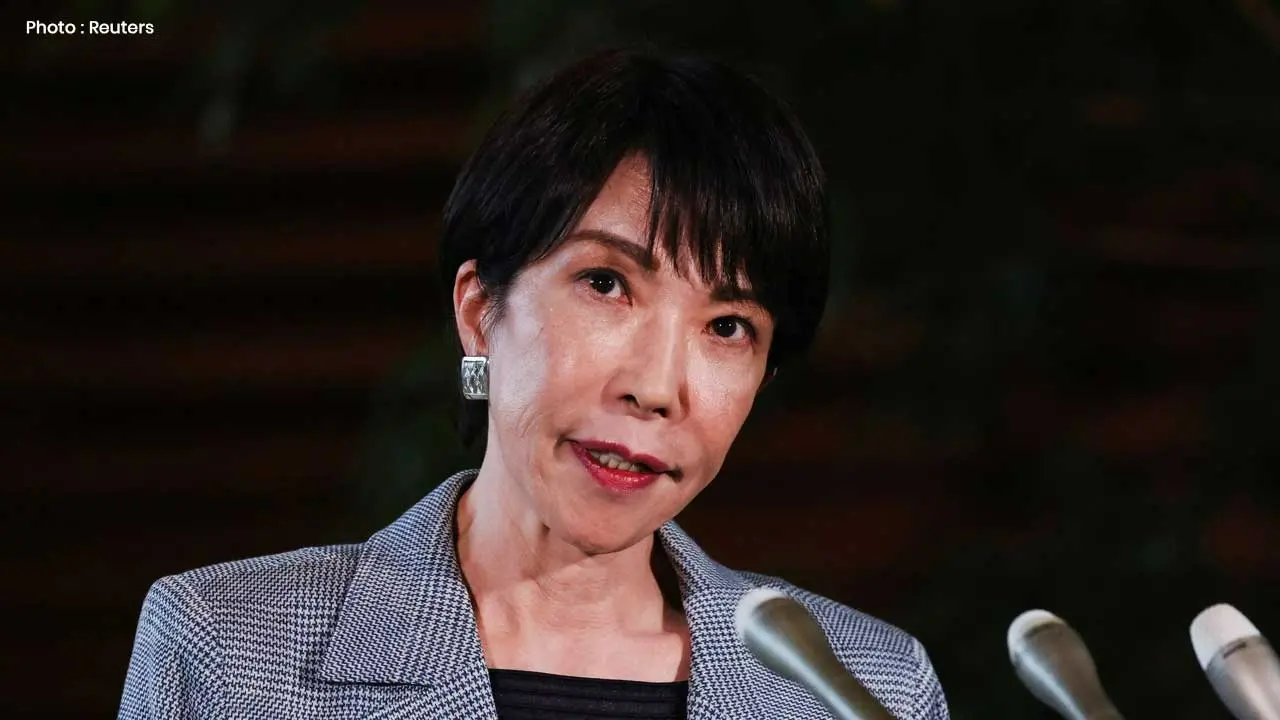
On November 25, 2025, Japan’s Prime Minister Sanae Takaichi announced her recent conversation with former U.S. President Donald Trump, who offered his support amid escalating tensions with China. Trump assured her with a message, saying, “Call me anytime,” providing reassurance for Japan in these challenging times.
This phone call followed Takaichi’s comments to Japan’s parliament, suggesting that a potential Chinese invasion of Taiwan could provoke a military response from Japan. Such remarks triggered a serious backlash from China, which views Taiwan as part of its territory and has not ruled out the use of force. China subsequently responded with travel restrictions against Japan.
Situated just 100 kilometers from Japan, Taiwan has consistently rejected China's claims, asserting that its destiny lies in the hands of its citizens. This precarious situation places Japan, a key ally of the U.S., in a tight spot amid the rising tensions.
Following their discussion, Takaichi shared with the media that Trump praised their friendship and encouraged her to maintain open lines of communication. During their conversation, Trump also provided updates on U.S.-China relations as well as his discussions with Chinese President Xi Jinping. Xi reportedly emphasized that Taiwan’s “return to China” is central to China’s vision of the global order. However, Trump has remained silent publicly regarding Taiwan in the context of his talks with Xi.
The U.S. administration has not released a statement concerning the phone call between Trump and Takaichi. Japan continues to strive for stable relations with both the U.S. and China, understanding that peaceful ties are crucial for regional stability.
Encouraged by the U.S., Japan has been enhancing its military capabilities in recent years to counter China’s increasing assertiveness. Recently, Japan disclosed its plans to position a medium-range missile unit on Yonaguni Island, located near Taiwan. This move was met with criticism from Beijing, which labeled it provocative and a source of increased regional tension. Additionally, Japan has scrambled its fighter jets in response to a Chinese drone sighting near Yonaguni.
Despite rising tensions, Japan has expressed a willingness to engage in dialogue with China to mitigate the conflict. Japan’s vice foreign minister recently met with China's ambassador in Tokyo to address ongoing concerns. However, China declined the opportunity for a meeting between Takaichi and Chinese Premier Li Qiang during the recent G20 summit.
Having taken office last month, Takaichi is recognized as a firm nationalist and enjoys significant public support in Japan. Her decisive stance on Taiwan and China hints at potential prolonged challenges in Japan-China relations.
Concerns linger within Japan regarding Trump’s position on Taiwan, with some officials apprehensive that he may prioritize trade agreements with China over Taiwan’s security assurances. Experts warn this could lead to increased Chinese aggression in the region.
Japan is closely monitoring the developments, seeking to balance its alliance with the U.S. while navigating the complexities of its relationship with China and supporting Taiwan’s right to self-determination.
This ongoing diplomatic saga underscores the delicate and complex dynamics in East Asia, where powerful nations and regional actors grapple with issues of security, diplomacy, and economic interests.