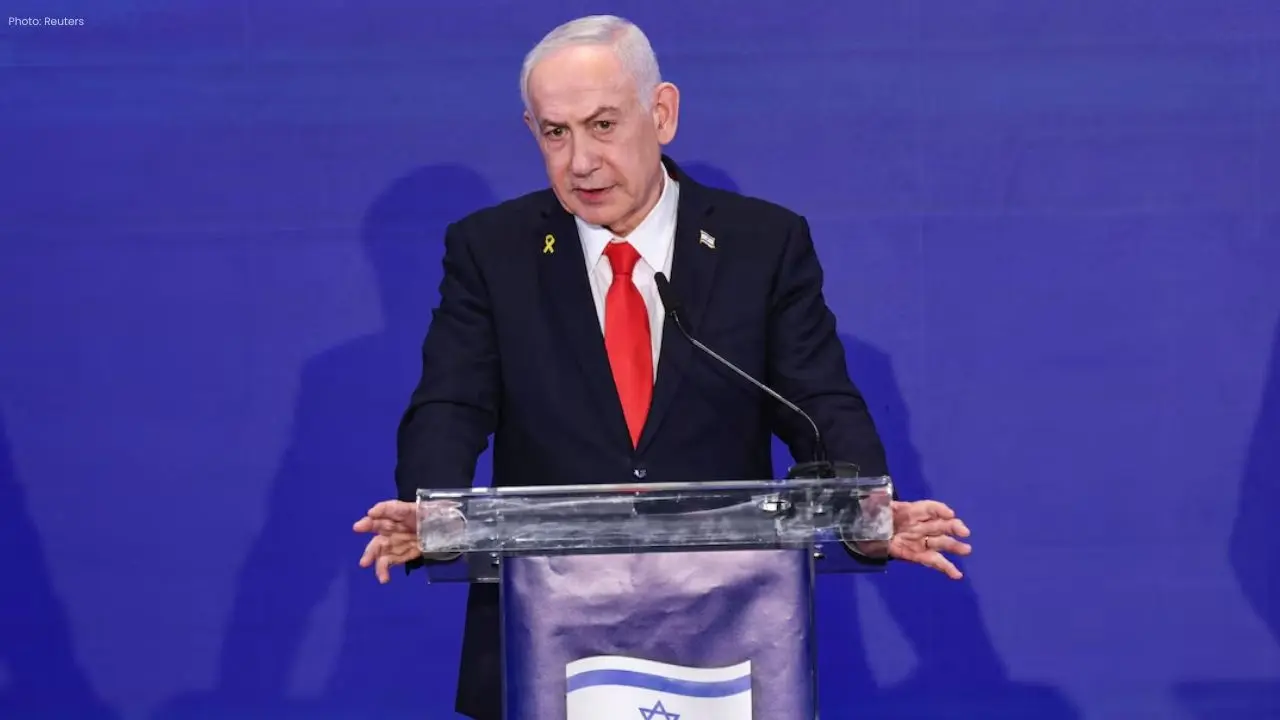
At a joint press conference in Jerusalem, Israeli Prime Minister Benjamin Netanyahu spoke alongside Greek Prime Minister Kyriakos Mitsotakis and Cypriot President Nikos Christodoulides, confirming Israel’s awareness of recent Iranian military exercises. However, Netanyahu did not provide further specifics on these activities.
Iranian state media reported that Iran conducted missile drills in several cities across the country. This marks the second time in a short period that such exercises have been carried out, signaling Iran’s ongoing focus on strengthening its ballistic missile capabilities.
Western countries have long viewed Iran’s ballistic missile program as a significant threat to stability in the Middle East. These missiles are not only seen as conventional military weapons but also as potential delivery systems for nuclear warheads, should Iran pursue atomic weapons development. Tehran denies any intention to build nuclear arms, maintaining its right to peaceful nuclear energy.
Over the past decade, Israel, Greece, and Cyprus have worked to deepen their ties, driven by mutual concerns over Turkey’s growing influence in the eastern Mediterranean region. This cooperation has led to closer security and economic collaboration among the three nations.
Netanyahu highlighted that despite Israel’s “great achievements” during the recent 12-day conflict with Iran in June, the fundamental expectations Israel and the United States have of Iran remain unchanged. A key demand is for Iran to reduce its uranium enrichment levels, a critical component in nuclear weapons development.
Regarding his upcoming meeting with U.S. President Donald Trump, Netanyahu said the discussions would focus on these expectations but stressed that Israel does not seek confrontation with Iran. Instead, the goal is to foster “stability, prosperity, and peace” across the region.
In addition to Iran, Netanyahu plans to discuss moving forward with the next stage of Trump’s Gaza plan and addressing the threat posed by Hezbollah, the Lebanese militant group.
The three leaders agreed to enhance their security cooperation and announced plans to pursue a major infrastructure initiative. This project aims to connect India to Europe through the Middle East via sea and rail routes, opening what President Christodoulides described as a “southeastern gateway” linking Europe with the Middle East and beyond.
They also intend to develop an undersea power cable to integrate their electricity grids with those of Europe and the Arabian Peninsula, strengthening energy cooperation.
Greek Prime Minister Mitsotakis called Greece a rising energy hub in southeastern Europe, especially for liquefied natural gas, and emphasized that interconnection projects remain a top priority for all three countries.
After the conference, Israeli Energy Minister Eli Cohen told Reuters that this trilateral meeting is crucial at a time when some nations are attempting to undermine regional stability, though he did not name those countries specifically.