Photo:AP
In a defining step toward reckoning with a painful chapter in its past, Ireland has officially launched a massive forensic excavation of a mass grave located at the former site of a mother-and-baby institution in Tuam, County Galway. This site, now internationally infamous, was once home to St. Mary’s Mother and Baby Home, operated by the Bon Secours Sisters from 1925 to 1961. The institution housed unmarried mothers and their infants, part of a broader network of religious-run homes established throughout 20th-century Ireland to house so-called “fallen women.” These homes were places of sorrow, stigma, silence, and loss.
The excavation marks the beginning of a two-year, government-funded investigation that seeks to uncover, identify, and honor the remains of up to 800 children believed to be buried in unmarked, underground chambers—many of which appear to have been originally part of a defunct sewage system. The purpose of the excavation is to bring dignity to those lost lives and closure to families who have spent decades searching for answers. It also symbolizes a national attempt to confront the injustice and cruelty faced by countless women and children who were hidden away in these institutions and forgotten by society.
background and discovery of the tuam site
The story that led to this groundbreaking excavation began with the tireless efforts of local historian Catherine Corless. A native of Tuam, Corless began researching the former mother-and-baby home in the early 2010s, curious about its role in the town’s history. What she uncovered was startling and heartbreaking: she obtained death certificates for 796 children who had died at the home but found burial records for only one of them.
Digging deeper, she learned that a concrete slab covering what locals thought was a disused septic tank near the site may actually have served as a makeshift crypt for many of those children. A 2017 investigation by the Commission of Investigation into Mother and Baby Homes confirmed these findings, revealing that significant quantities of human remains—mostly of infants and toddlers—were located in underground chambers. Some of the children may have died from malnutrition, disease, neglect, or other causes exacerbated by institutional conditions. It was also confirmed that the remains had been placed in the former sewage structure, not in a formal cemetery, and without proper identification or burial rites.
ireland’s national apology and public response
The revelations caused a national and international uproar. Public outrage erupted, and calls for accountability and justice grew louder. Survivors, relatives, advocacy groups, and international human rights organizations demanded not just apologies but tangible action. In 2021, the Irish government issued a formal apology through then-Taoiseach Micheál Martin, acknowledging the “profound failure of empathy, understanding, and basic humanity.”
This apology was the culmination of years of public debate, survivor testimony, media scrutiny, and legal reviews. But for many survivors and relatives, words were not enough. They wanted physical proof that their loved ones had not been forgotten. They sought answers: Where are the children buried? Can they be named? Can their remains be returned to families for a proper burial? These questions are now at the heart of the excavation effort.
structure and purpose of the excavation
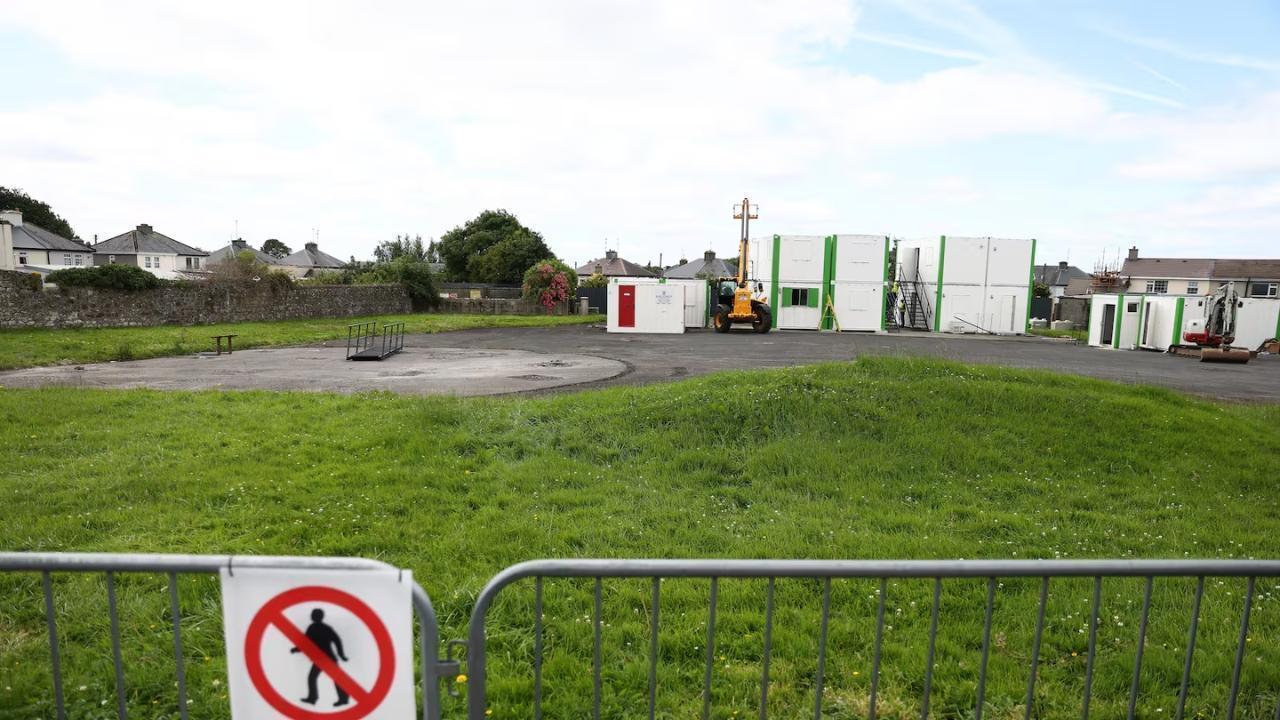
The current excavation, officially begun in July 2025, is being conducted by the Office of the Director of Authorised Intervention, Tuam (ODAIT). This body was established specifically to manage the recovery and identification of remains at the site. A multidisciplinary team of international forensic experts has joined Irish authorities to execute the excavation to the highest ethical and scientific standards.
The excavation involves multiple stages. First, the team has erected a secure perimeter around the site, including protective fencing and surveillance systems to ensure the security of the work and respect for the dead. Next, the actual recovery process begins, which involves carefully removing soil layer by layer to reach the 20 known underground chambers where the remains were initially found.
Specialists will then document, catalog, and analyze the remains using forensic archaeology and anthropology. This process includes determining approximate age, sex, health conditions, and possible causes of death. Any clothing fragments, pins, or remnants of personal items will also be documented.
The ultimate goal is to extract viable DNA samples from as many remains as possible. These samples will be compared to genetic profiles collected from surviving relatives who have volunteered to participate in the identification process. Through DNA matching, the hope is that some of these long-lost children can be named and returned to their families for dignified burial.
international cooperation and expertise
The team involved in this excavation is not limited to Irish scientists. Experts from Colombia, Canada, Spain, the United Kingdom, Australia, and the United States have joined the operation. This international collaboration underscores the global relevance of the Tuam story. Similar institutional abuses have occurred in other countries—Canada’s residential schools for Indigenous children, Australia’s stolen generation, and others.
By bringing together forensic experts from different cultural and academic backgrounds, the excavation becomes more than a local effort. It becomes a universal mission to uphold truth, dignity, and human rights. It also provides a model for how other nations can approach similar burial sites in their histories—through transparency, collaboration, and survivor-centered processes.
challenges in recovery and identification
Despite the commitment and preparation, the excavation faces considerable challenges. Many of the remains have been buried for over half a century in poor conditions. The underground structure where they were discovered was originally part of a sewage system, meaning moisture, bacteria, and environmental exposure have likely accelerated decomposition.
Additionally, the remains are co-mingled—meaning bones from multiple individuals may be mixed together in the same space. This complicates efforts to attribute specific bones to individual children. Modern forensic science has tools to address these issues, such as isotope analysis, radiocarbon dating, and advanced DNA sequencing, but the process will be slow and meticulous.
There is also the emotional toll. Each bone, each artifact, each chamber excavated is not just data—it represents a lost life, a grieving mother, a family left without answers. Teams will have mental health professionals on standby and trauma support services available to relatives and survivors as excavation proceeds.
importance of survivor and community involvement
The Tuam excavation is not happening in a vacuum. It is deeply tied to the stories of survivors, many of whom are elderly and have waited decades for this moment. The government has pledged to involve survivors and families at every stage. Limited supervised visits will be allowed during the early phases of excavation, so relatives can see the site being treated with care and respect.
Moreover, community forums are being held in Galway and surrounding areas to educate locals on the significance of the excavation. The site, once a playground, has long been part of the neighborhood’s fabric. As such, it is important to involve and inform the community about what is happening on their doorstep and why it matters.
potential outcomes and hopes for justice
If identification is successful, some families may finally be able to lay their children to rest in marked graves, with names, dates, and memorials. For many, this is not just about physical remains—it is about reclaiming lost narratives. Some survivors hope that recognition of these children will lead to deeper reconciliation and possibly financial compensation or social supports.
In the long term, the excavation could serve as the foundation for a permanent memorial or museum. The government has previously discussed creating a national archive for testimonies, documents, and exhibits related to mother-and-baby homes. The Tuam site could become a central part of that effort, serving as a reminder to future generations of the consequences of institutional neglect and societal prejudice.
symbolism and cultural reckoning
This excavation is deeply symbolic. Ireland has spent much of the last two decades peeling back the layers of silence that surrounded its institutional past. From the Magdalene Laundries to industrial schools and clerical abuse scandals, the nation has been forced to confront how the Church and State colluded to marginalize and abuse vulnerable populations—especially women and children.
Tuam is now a global symbol of that reckoning. The image of a concrete slab covering the unmarked graves of nearly 800 children has burned into public consciousness. The act of removing that slab and recovering the remains beneath it represents more than archaeological procedure—it is a gesture of justice, a sign that the truth will no longer be hidden.
comparison to global human rights efforts
Other countries are watching closely. In Canada, mass graves have been discovered at former residential school sites where Indigenous children were forced to live. In Argentina, DNA matching has been used for decades to identify children stolen during the military dictatorship. The Tuam excavation, by applying international forensic standards and survivor-centered processes, could become a template for how nations deal with historical injustices involving mass unmarked graves.
It may also contribute to broader global conversations about reconciliation, reparations, and institutional accountability. When governments and religious institutions fail to protect the vulnerable, there must be a response grounded in transparency, humanity, and science.
public reaction and national unity
While many Irish citizens have expressed support for the excavation, it has also reignited painful debates about the Church’s role in Irish society. Some religious orders have cooperated with investigations, while others have been criticized for stonewalling or offering partial apologies. There are also ongoing legal and ethical debates about data access, DNA privacy, and how to handle unidentified remains.
Nevertheless, the excavation has united people across political and generational lines in agreement that the Tuam children deserve to be found, named, and mourned. That unity—however temporary—suggests a growing national consensus that the time for secrecy is over, and the time for restoration has come.
timeline, funding, and accountability
The excavation is expected to last approximately 24 months. The Irish government has allocated initial funding of 9.4 million euros, with additional resources available as needed. Interim progress reports will be made available to the public, and oversight will be maintained by independent auditors and survivor representatives.
Following the excavation, the focus will shift to analysis, identification, and burial. Memorial services, educational programs, and possibly a documentary or national archive will follow. The government has also promised full accountability and transparency throughout the entire process.
conclusion: a journey of justice and remembrance
The excavation at Tuam is more than a technical operation. It is a national journey toward justice, remembrance, and healing. It seeks to restore dignity to the smallest victims of one of Ireland’s darkest eras and to fulfill the moral obligation owed to their families. It is a sign that silence will no longer be tolerated, that truth will be pursued with compassion and science, and that even decades later, justice can be found—one child at a time.