Photo : Reuters
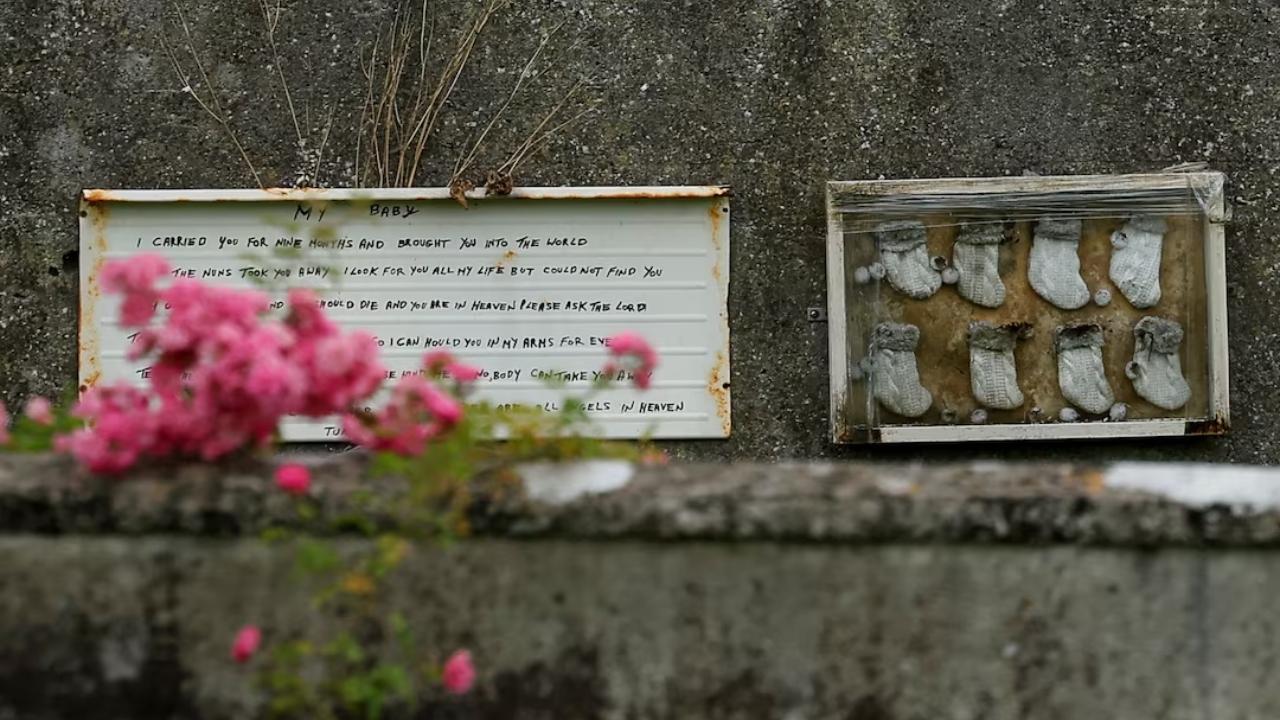
In a landmark moment for historical justice in Ireland, the country has commenced the forensic excavation of a mass grave at the former Bon Secours Mother and Baby Home in Tuam, County Galway. The site, now infamous worldwide, is believed to contain the remains of nearly 800 infants and young children who died between 1925 and 1961 under the care of a religious order. After years of pressure from survivors, families, historians, and the public, the Irish government has launched a major recovery and identification mission, promising to deliver dignity to those long denied it.
Historical Context of the Tuam Home
The Bon Secours Mother and Baby Home in Tuam operated for more than three decades as one of several institutions across Ireland designed to house unmarried pregnant women and their children. These facilities were often run by religious orders under the patronage of the state and reflected the deeply conservative and clerical nature of mid-20th-century Irish society.
Women who became pregnant outside of marriage were sent to these homes, where they endured stigmatization, forced labor, loss of their children through adoption, and in many cases, abuse and neglect. The children born in these institutions were often underfed, malnourished, poorly treated, and subject to extremely high mortality rates. The Tuam home, in particular, recorded the deaths of 796 infants and young children—an alarmingly high number relative to its size.
The shock to the public conscience came when it was revealed that these children were buried not in consecrated graves but in an underground structure, believed to be a former septic tank. For decades, the site was left unmarked and unknown to most of the community. It was only through the persistent work of local historian Catherine Corless, who uncovered death certificates without corresponding burial records, that the scandal came to light.
What Prompted the Excavation
Though revelations about the Tuam site surfaced nearly a decade ago, the Irish government's response was initially cautious. Years of discussion, consultation, and legal hurdles followed. Families of the deceased and survivors consistently called for action—both to excavate the site and to identify the remains.
The turning point came when a series of independent and government reports confirmed the presence of human remains in underground chambers. The government passed special legislation to enable a formal forensic excavation, and funding was allocated for a multi-year operation to uncover, examine, and if possible, identify the remains.
In mid-2025, the preparatory phase began with the erection of fencing, security installations, and removal of overgrowth around the site. By early July, the first stages of digging commenced, officially marking the start of one of the most sensitive archaeological and humanitarian projects ever undertaken in Ireland.
Scope and Goals of the Excavation
The Tuam excavation is being carried out by a multidisciplinary forensic team with decades of international experience in conflict zones, genocide sites, and post-disaster recovery. Their mission is complex and deeply emotional: to recover all remains within the site, preserve forensic evidence, attempt identification through DNA testing, and ultimately ensure dignified reinterment.
The main objectives of the project include:
-
Locating and excavating all human remains present in the subterranean structures beneath the former home.
-
Analyzing the remains for age, sex, health indicators, trauma, and cause of death where possible.
-
Extracting DNA samples for cross-matching with living relatives who have voluntarily submitted DNA to the registry.
-
Providing families with information, closure, and—where identification is possible—the option for a private burial.
-
Ensuring that unidentified remains are respectfully buried in a memorial site.
This operation is expected to take at least two years due to the extreme sensitivity, complexity, and volume of the remains involved.
Conditions of the Burial Site
One of the most disturbing aspects of the Tuam case is the nature of the burial. The remains were discovered in what appeared to be a decommissioned septic system, divided into a series of small concrete chambers. Some chambers held multiple skeletons, suggesting mass internment without coffins or burial rites.
Many of the children were buried without any record beyond a basic death certificate. The lack of headstones, graves, or family acknowledgment points to a wider cultural and institutional effort to hide what occurred at the home. Over time, housing developments were built around the site, and a playground even stood above the burial area, symbolizing how the tragedy had been forgotten or ignored.
The site’s degradation over time has made recovery efforts extraordinarily difficult. Remains are likely to be commingled, fragile, and partially decomposed. Soil conditions, water damage, and the sheer density of burials pose significant forensic challenges.
Forensic Challenges and Scientific Methods
The forensic team involved in the Tuam excavation includes archaeologists, osteologists, forensic anthropologists, and DNA specialists from Ireland and around the world. They bring experience from mass grave recoveries in places like the Balkans, Latin America, and Africa.
Their methods include:
-
Meticulous layer-by-layer excavation to avoid disturbing skeletal arrangements.
-
Documentation and mapping of bone placements using digital 3D modeling.
-
Osteological analysis to determine the probable age and sex of remains.
-
Radiographic imaging to detect congenital conditions or skeletal abnormalities.
-
Extraction of DNA from teeth and long bones, where genetic material is more likely to be preserved.
-
Matching recovered DNA with voluntary family submissions using a national registry.
This process is expected to be slow. DNA degradation is likely given the burial conditions, and in many cases, family lines may have died out or moved away, making matches more difficult. Nevertheless, the hope is that dozens—if not hundreds—of children may be identified by the end of the process.
The Emotional Toll on Families and Survivors
For families of the children buried at Tuam, the excavation represents both a long-awaited act of justice and a reopening of emotional wounds. Many have lived for decades without knowing what happened to their siblings or children. Some were told their babies died shortly after birth, only to later suspect or discover they were adopted without consent or that the burial records were falsified.
Survivors of the home system, many of whom are now in their 70s and 80s, view the excavation as a crucial reckoning. For them, it's not only about recovery—it’s about acknowledgment, apology, and ensuring that such neglect and secrecy are never repeated. Some have expressed gratitude that the truth is finally being treated with the gravity it deserves.
Ceremonial events were held before the excavation began, offering space for survivors and families to share their stories, light candles, and leave tributes. These acts of public remembrance are seen as essential components of national healing.
Ireland’s National Reckoning with Its Past
The Tuam excavation forms part of a broader national process in Ireland of confronting historical abuse in religious and state institutions. From industrial schools to Magdalene laundries and other mother and baby homes, thousands of Irish citizens were subjected to abuse, neglect, forced adoptions, and state-sanctioned secrecy over the 20th century.
Over the last decade, successive governments have issued apologies, launched public inquiries, and created redress schemes. Yet many critics argue that the response has been slow and incomplete. They point to ongoing resistance from religious orders to fully fund reparations or open up their records. The Bon Secours Sisters, who ran the Tuam home, have faced significant criticism, though they have now pledged financial contributions to redress efforts.
The excavation is viewed by many as one of the most concrete steps toward accountability—a literal unearthing of history that can no longer be denied or obscured.
Legal and Political Developments
To enable the Tuam excavation, the Irish government passed specific legislation allowing for the exhumation of mass graves in historical institutions. The law established a new office—the Director of Authorised Interventions—tasked with overseeing such operations in compliance with human rights law and best forensic practices.
This legal framework is expected to be used in the future to examine other potential mass burial sites linked to similar institutions. Several locations have been identified across the country where mass or undocumented graves may exist. The outcome of the Tuam excavation will likely influence how these are approached—legally, politically, and scientifically.
What Happens Next
Over the coming months, the excavation will continue through carefully divided site sections. Every recovered bone will be documented, examined, and stored for analysis. Relatives will be kept informed of progress and may be invited to participate in future ceremonial events as remains are identified.
The Irish government has committed to publishing an official report following the conclusion of the excavation. This report will outline all findings, methodologies, identifications, and recommendations for further action. It is expected to become a foundational document in the country's reckoning with its past.
In the meantime, the site itself is under constant security surveillance, and all public access is restricted to maintain forensic integrity. Counseling and support services have also been made available to survivors and relatives as the emotional weight of the process unfolds.
The Global Significance of Tuam
The story of Tuam has gained international attention as a cautionary tale about institutional abuse, the role of religion in governance, and the consequences of social stigma. Governments, human rights organizations, and forensic experts from around the world are watching the excavation closely.
What Ireland is doing at Tuam represents a model for truth recovery. It blends scientific precision with emotional sensitivity, legal rigor with community engagement. The case also emphasizes the importance of grassroots advocacy—without the determination of individuals like Catherine Corless, the Tuam children may have remained forgotten forever.
Conclusion
The excavation at Tuam is more than a dig. It is a resurrection of forgotten voices, a reckoning with hidden pain, and a pledge that the era of silence and secrecy is over. Ireland’s effort to uncover, identify, and honor the remains of nearly 800 lost children is one of the most powerful statements of national accountability in recent memory.
As bones are brought to light and names are hopefully restored to the nameless, the world watches a small town in Galway lead a global conversation about dignity, memory, and justice. What lies beneath the soil at Tuam is not only the past—it is the foundation for a more honest and humane future.