Tensions in the Middle East escalate as Iran threatens retaliation against the United States if military action is taken on its territory. This warning comes alongside the U.S. withdrawal of personnel from critical regional bases, a move aimed at ensuring safety amidst rising unrest within Iran.
The Iranian government grapples with widespread protests—a response to severe economic hardship and a harsh crackdown on dissent. The unrest has tragically claimed thousands of lives, marking it as the deadliest wave of protests since the 1979 Islamic Revolution. While rights organizations report over 2,600 fatalities, Iranian authorities assert the toll is closer to 2,000.
This climate of unrest has prompted the United States to ready itself for possible intervention, with a senior military official indicating to Reuters that the likelihood of a U.S. strike seems imminent, although precise details are not yet defined. President Donald Trump has, however, advocated for a cautious stance, suggesting he believes the violence may be waning and that the U.S. is “monitoring the situation” before making any military decision.
In an attempt to quell rising tensions, Iranian Foreign Minister Abbas Araqchi stated that “hanging is out of the question” concerning anti-government demonstrators. Nonetheless, Iran has cautioned its neighboring states that U.S. installations in the region could be targeted should attacks occur, including those in allied nations such as Saudi Arabia, the United Arab Emirates, and Turkey.
The U.S. decision to pull personnel from the Al Udeid air base in Qatar, its largest Middle Eastern installation, underscores these precautions. British forces from regional bases have also seen reductions in numbers as tensions continue.
The protests, ignited two weeks ago by widespread discontent over the plummeting value of Iran’s currency and economic woes, have rapidly turned violent as security forces respond aggressively to demonstrators. The Iranian government has accused external influences, particularly the U.S. and Israel, of exacerbating the chaos. French Foreign Minister Jean-Noel Barrot characterized the crackdown as “the most brutal repression in modern Iranian history.”
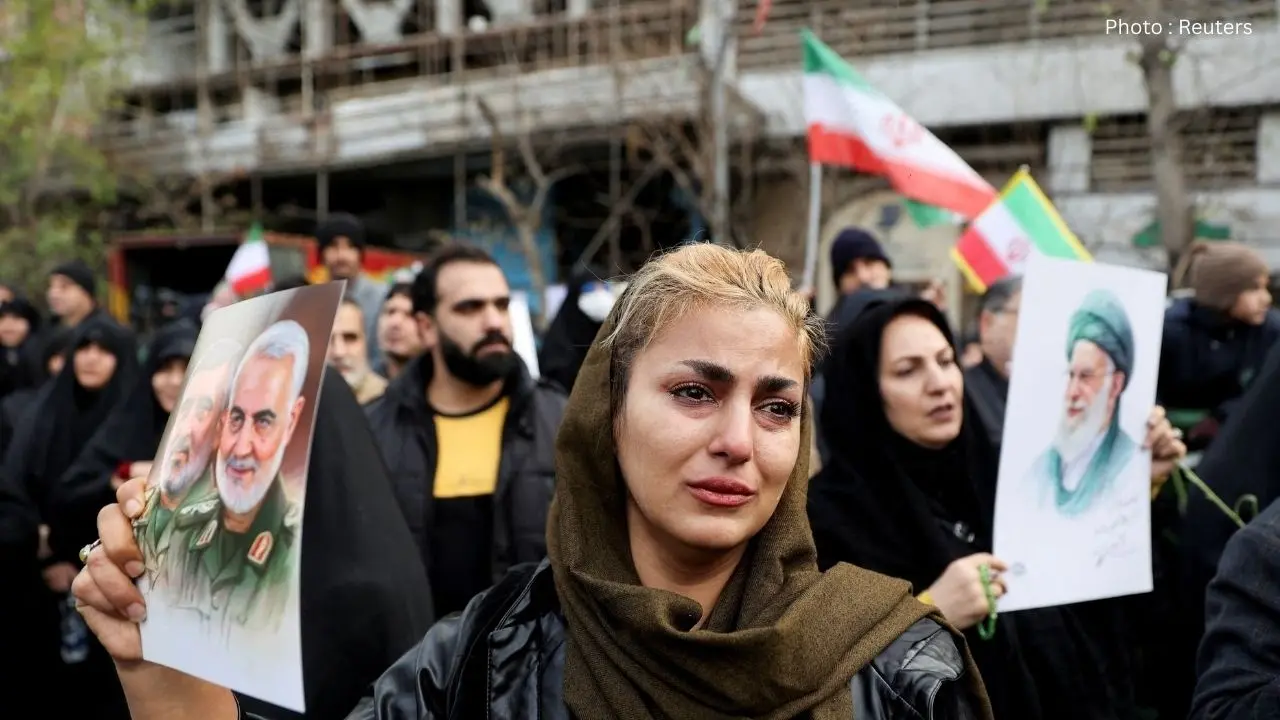
Despite the turmoil, the Iranian regime remains in control, holding public displays of loyalty through grand funeral processions and rallies supporting Supreme Leader Ayatollah Ali Khamenei. Authorities are attempting to maintain a facade of stability in the face of internal discontent and international scrutiny.
The United Nations Security Council is anticipated to convene to evaluate the escalating situation in Iran. As the U.S. vigilantly observes developments, the confluence of domestic unrest, regional threats, and military readiness points to an unstable environment with significant risks of escalation.
For the Iranian populace, uncertainty prevails, accentuated by internet shutdowns and a strong security force presence that inhibits information access. As global eyes turn toward this crisis, the forthcoming actions from both Washington and Tehran will play a crucial role in determining the trajectory of regional stability.