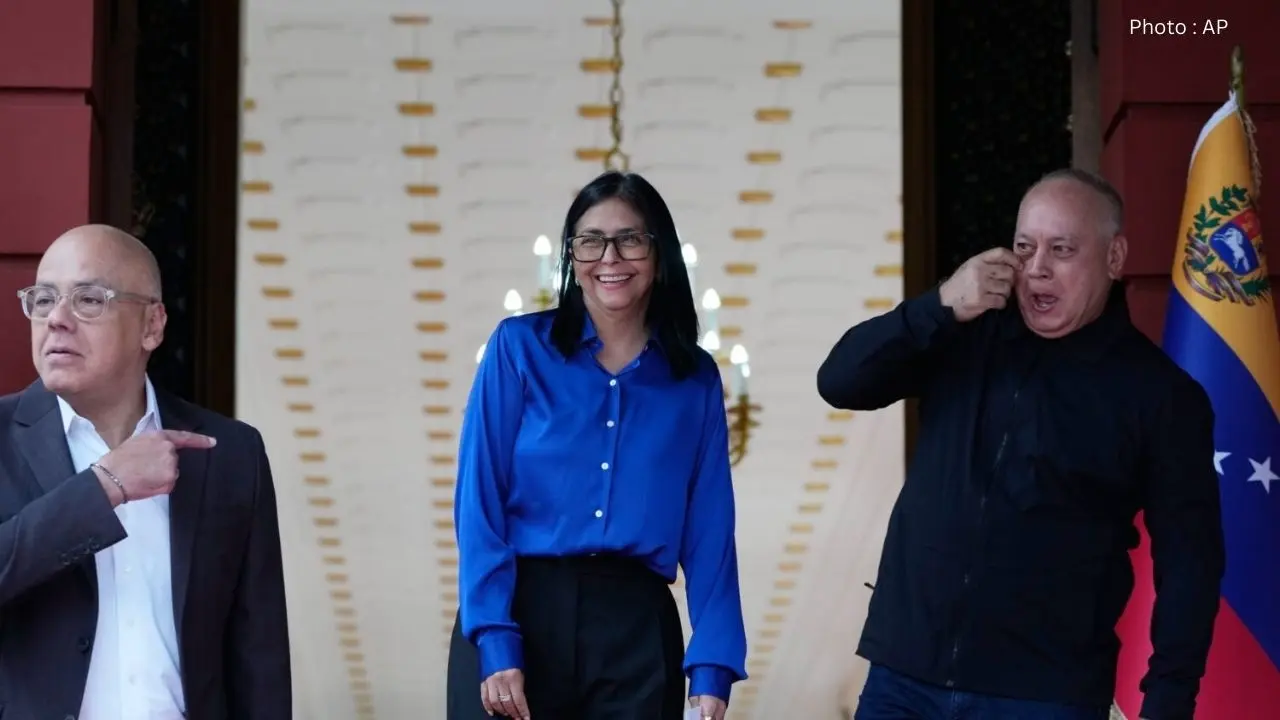
In a press briefing marked by resolve, Venezuela’s Interim President Delcy Rodríguez announced a commitment to continue the release of prisoners detained under former President Nicolás Maduro, describing this as a pivotal “new political moment” for the nation. This update follows Maduro's recent apprehension by U.S. authorities on drug-related charges.
Speaking at the presidential palace in Caracas, Rodríguez emphasized that the release process for detainees is ongoing and yet to reach completion. Her comments came on the heels of heightened expectations from families waiting anxiously for updates on their loved ones.
Rodríguez asserted that Venezuela is transitioning into a period welcoming political and ideological diversity. While she claims to herald this change, her government remains closely linked to Maduro’s faction. Reports suggest approximately 800 political prisoners, including opposition leaders, journalists, and activists, are still incarcerated.
This announcement coincided with U.S. President Donald Trump acknowledging a direct conversation with Rodríguez, describing their dialogue as constructive. This marked the first direct interaction since Maduro was taken to the U.S. on January 3. Trump has recently oscillated between encouraging dialogue and warning of severe repercussions for Venezuela.
In a noticeable shift, Rodríguez refrained from directly criticizing the U.S., choosing instead to concentrate solely on the process of prisoner releases. She did, however, take a stand against rights organizations, alleging misinformation related to their work. She underscored her government’s commitment to enforcing the law strictly against acts of violence or threats to the constitutional order.
The management of prisoner releases is under the purview of Interior Minister Diosdado Cabello, though the process has faced scrutiny for its lack of transparency. Families report prolonged uncertainty, often waiting for hours on end outside prisons for updates.
Rodríguez acknowledged the efforts initiated by Maduro in December, when he ordered the release of nearly 200 prisoners as a gesture of tolerance. She claims that over 400 prisoners have been set free since then, though discrepancies exist with reports from human rights groups.
Foro Penal, a prominent prisoner rights organization, has confirmed that at least 72 political prisoners have been released since the interim government's announcement of potential large-scale releases. Despite some success, they assert that hundreds continue to languish in prison, criticizing the government's transparency.
As she navigates this delicate situation, Rodríguez faces pressure from both the U.S. regarding human rights and the domestic hard-liners who resist U.S. intervention. Trump’s warnings highlight the potential consequences of failing to cooperate.
Political experts suggest that the government is juggling dual narratives—exhibiting control within Venezuela while externally portraying an openness to reform through prisoner releases. This nuanced approach was evident in Rodríguez’s speech, which offered cautious optimism without clear timelines.
The families of political prisoners remain in anguish, with ongoing protests and vigils across the nation. While recent releases instill some hope, there’s apprehension that this momentum could falter at any moment.
Venezuela is at a critical juncture. The fall of Maduro, U.S. involvement, and the promises of the interim government have set the stage for anticipations of transformation. The real question remains whether these prisoner releases signify the dawn of substantial reform or merely a calculated political maneuver as they shape the country’s immediate future.