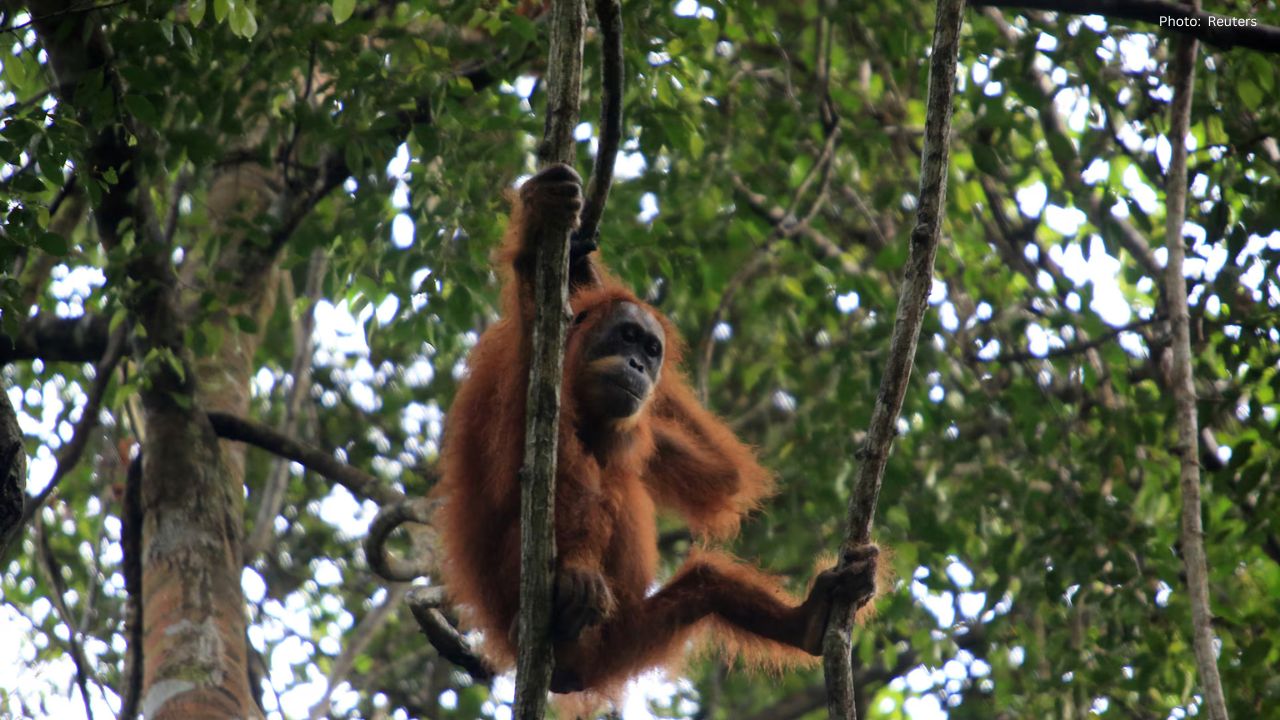
The floods and landslides that recently struck Indonesia have not only claimed numerous human lives but have also brought one of the planet’s most endangered species perilously close to extinction. The Tapanuli orangutans in North Sumatra, for instance, are disappearing due to the forest destruction caused by the deadly storms.
This catastrophe starkly illustrates the profound impact of human activities on nature and wildlife.
Prior to the calamity, local ranger Amran Siagian frequently observed orangutans traversing the lush forest of Sipirok. They would often descend to gather fruits, including durian, from surrounding plantations. These gentle creatures rely on intact tree canopies for safe movement.
In the aftermath of the floods and landslides, the landscape has altered drastically. The trees have been uprooted, the hills have crumbled, and the protective forest cover that once safeguarded orangutans is now eerily quiet, leaving the animals unseen or unheard. According to Siagian, they might have migrated far in search of safer grounds and sustenance.
This situation transcends mere natural disaster—it's deeply intertwined with human negligence. Environmental activists and local figures have indicated that illegal logging, mining, and widespread deforestation significantly exacerbated the floods and landslides.
When forests are decimated, the crucial root systems that stabilize the soil vanish. Without trees, rainwater cascades rapidly and forcefully, resulting in landslides and flash floods. Had the forests been preserved, the devastation could have been mitigated.
The Tapanuli orangutan ranks among the rarest of great apes globally, with estimates suggesting only 760 remain in this area. The total count across Indonesia and Malaysia hovers around 119,000. While this figure may appear substantial, it is alarmingly low for a species that once roamed freely through expansive forests.
The foremost threat to orangutans is not merely climate change or severe weather but rather the degradation of forest areas due to agriculture, mining, and illegal logging. These activities fragment the forests, making it exceedingly difficult for orangutans to roam, forage, or rear their young securely.
This alarming scenario raises critical concerns for both governments and corporations. Economic progression is vital, but it shouldn't come at the cost of ecological destruction and the extinction of unique species. Once a species vanishes, no financial resources or remorse can revive it.
From an editorial stance, this serves as an urgent wake-up call. Protecting forests transcends animal conservation; it involves safeguarding human lives. The same deforestation forcing orangutans from their habitats also heightens the risk for villages susceptible to floods and landslides.
Governments must enact rigorous measures against illegal logging and unsafe mining practices. Companies should be held accountable for their environmental footprint. Additionally, communities deserve support to avoid reliance on harmful practices for survival.
Globally, there exists a shared responsibility. The international community should back conservation initiatives and provide funding for rainforest preservation. Orangutans represent not only Indonesia’s natural wealth but an integral part of the world's ecological legacy.
If decisive steps aren’t taken, the residents of Sipirok may face the loss of both their lush landscapes and the magnificent creatures that have coexisted with them for generations. Tragically, the occurrence of floods and landslides may only become more frequent and deadly.
The eerie silence of the forest post-disaster serves as a cautionary tale for all of humanity. Nature furnishes us with nourishment, air, water, and security. By annihilating it, we jeopardize our collective future.