A Pivotal Moment in India-EU Relations
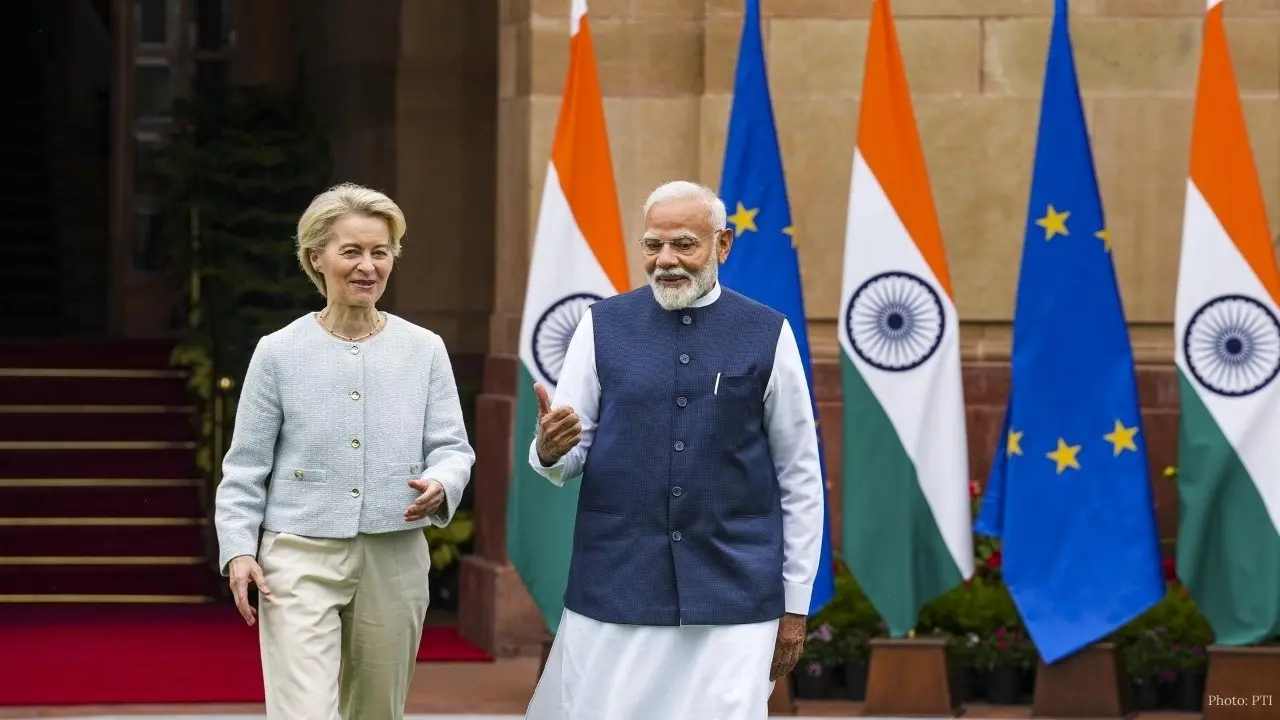
India is gearing up for a noteworthy visit from senior leaders of the European Union, including António Luis Santos da Costa, President of the European Council, and Ursula von der Leyen, President of the European Commission, who will serve as chief guests at India’s Republic Day celebrations on January 26, 2026.
This ceremonial participation coincides with a crucial diplomatic agenda – the 16th India-EU Summit on January 27, 2026, where a long-awaited India-EU Free Trade Agreement (FTA) is on the verge of being finalized.
This visit is not just ceremonial; it represents a possible turning point in economic relations as both parties work towards finalizing a deal that has been negotiated for almost two decades.
The Journey Toward a Trade Agreement
Initial Negotiations and Challenges
Discussions for an extensive free trade agreement between India and the EU began in 2007 but faced prolonged delays due to disputes over market access and regulatory standards among other issues.
Following a lengthy pause, negotiations restarted in 2022, driven by rapid shifts in the global economy and growing geopolitical tensions. Both sides are eager to enhance market integration and diversify supply chains in an increasingly fragmented global trade environment.
Recent Developments and Accelerating Talks
In the past year, talks have rapidly progressed. Sources indicate that most elements of the agreement are nearing completion, with only a handful of issues remaining. Indian Commerce Secretary Rajesh Agrawal remarked that both parties are “very close” to a finalized deal, with teams actively working to resolve last-minute differences.
German Chancellor Friedrich Merz—whose recent visit emphasized economic ties—suggested the deal could see closure by the end of January, setting the stage for its formal announcement during the EU leaders’ visit.
This momentum reflects a strong political will, making the India-EU FTA one of India’s most significant trade agreements to date.
Diplomatic Context: EU Attendance at Republic Day
A Unique Diplomatic Recognition
For the first time, high-ranking officials from the European Union bloc will attend India’s Republic Day celebrations, marking a significant acknowledgment of the growing India-EU partnership.
Historically, the selection of the chief guest reflects India’s diplomatic focus, reinforcing the EU’s role as a crucial economic and strategic ally.
During their visit from January 25-27, EU leaders will engage in ceremonial activities, bilateral discussions, and an India-EU Business Forum aimed at strengthening commercial relations.
Contents of the Proposed India-EU Free Trade Agreement
Objectives and Goals
The envisaged India-EU Free Trade Agreement (FTA) is designed to minimize tariffs and non-tariff barriers, boost market access for goods and services, safeguard investments, and foster regulatory cooperation across the 27-nation bloc, which includes key economies like France, Germany, and Italy.
Commerce and Industry Minister Piyush Goyal referred to this impending agreement as the “mother of all deals”, emphasizing its potential to significantly amplify bilateral trade and economic activities.
The arrangement would entail mutual commitments across various economic sectors, encompassing industrial goods, services, and select sensitive categories.
Key Economic Questions and Negotiation Dynamics
Despite significant progress, some sectors remain delicate and warrant careful negotiation. The EU has requested lower import tariffs on automobiles, where Indian rates can top 100 percent, alongside improved access for medical devices, wine, and spirits. Conversely, India has approached agriculture and dairy sectors with caution due to their sensitive nature.
Other contentious areas include regulatory standards and carbon adjustment mechanisms, particularly for steel, which may be influenced by European environmental policies. Negotiators are optimistic about achieving a balanced agreement that promotes trade while protecting strategic interests.
Strategic and Global Implications
Beyond Economic Interests: Indo-EU Strategic Alignment
The India-EU relationship extends beyond economic matters into strategic arenas, including technology, defense collaboration, and clean energy transitions. The FTA is part of a broader strategy that aligns economic goals with shared geopolitical objectives, supporting a rules-based international framework.
Experts suggest that India’s escalating significance in global economics is vital to Europe’s strategic aspirations, particularly in the Indo-Pacific region.
A Signal to Global Markets
The potential completion of the India-EU FTA could dramatically reshape global trade dynamics. For Europe, improving access to India's burgeoning market—home to over 1.4 billion people—would enhance economic diversification and resilience against supply-chain vulnerabilities.
For India, this trade deal may result in deeper integration into global value chains, thereby enhancing exports in textiles, pharmaceuticals, and other key sectors. This increased access could foster investor confidence and stimulate long-term economic growth.
Together, these developments could significantly alter trade relationships between two leading economic regions, influencing global trade negotiations.
Economic Ramifications and Market Reactions
Forecasted Benefits for Indian Industries
If finalized, the FTA would provide expanded market access for Indian goods in the EU—its largest trading partner. Reduction in tariffs and streamlined regulations could enhance the competitiveness of Indian exports in European markets.
Sectors that stand to gain include textiles, pharmaceuticals, and machinery, as decreased tariff barriers could lead to greater orders and improved foreign exchange earnings.
Jobs, Growth, and Investment Opportunities
Increased trade engagement could unlock investment prospects, stimulating job creation and development in sectors aligned with global demand. European firms may be drawn to invest in India, attracted by market opportunities and stronger legal protections under the pact.
However, India must carefully balance increased competition in sensitive areas with its domestic economic priorities, creating ongoing negotiation challenges.
Political Considerations and Policy Directions
Domestic Concerns and Trade Strategy
India’s trade policy must navigate complex domestic priorities while pursuing international integration. Protecting agriculture, dairy, and small-scale manufacturing remains paramount, influencing tariff negotiations.
Similarly, Europe must balance member states' interests, particularly in industries sensitive to international competition, while fostering broader goals with India.
Upcoming Developments: Summit and Future Projections
The India-EU Summit on January 27, 2026 is anticipated to be where the proposed free trade agreement could be formally introduced, even if some technicalities are finalized afterward.
This summit will follow India’s Republic Day celebrations, symbolizing the depth of the India-EU partnership. With European leaders as chief guests, the events will highlight mutual values and cooperation.
Looking ahead, this agreement may also set a trajectory for collaborative efforts in digital trade and defense, extending beyond mere economic interactions.
Conclusion: A Critical Phase for India-EU Relations
The upcoming presence of top EU leaders in India for Republic Day and the concurrent summit signifies a transformative moment for India-EU relations. With the free trade agreement nearing finalization after extensive negotiations, both parties stand at the brink of a major breakthrough.
If successful, the pact could reshape economic ties with the EU, boosting trade flows and strategic collaboration. As preparations for the summit unfold, there’s a shared understanding: this trade deal embodies joint ambitions, mutual respect, and a fortified global partnership in the face of a rapidly evolving world.
Disclaimer:
This article is based on current reports and analysis regarding India-EU negotiations. Trade discussions are intricate and subject to various political decisions. Readers are urged to monitor future updates for formal confirmations.