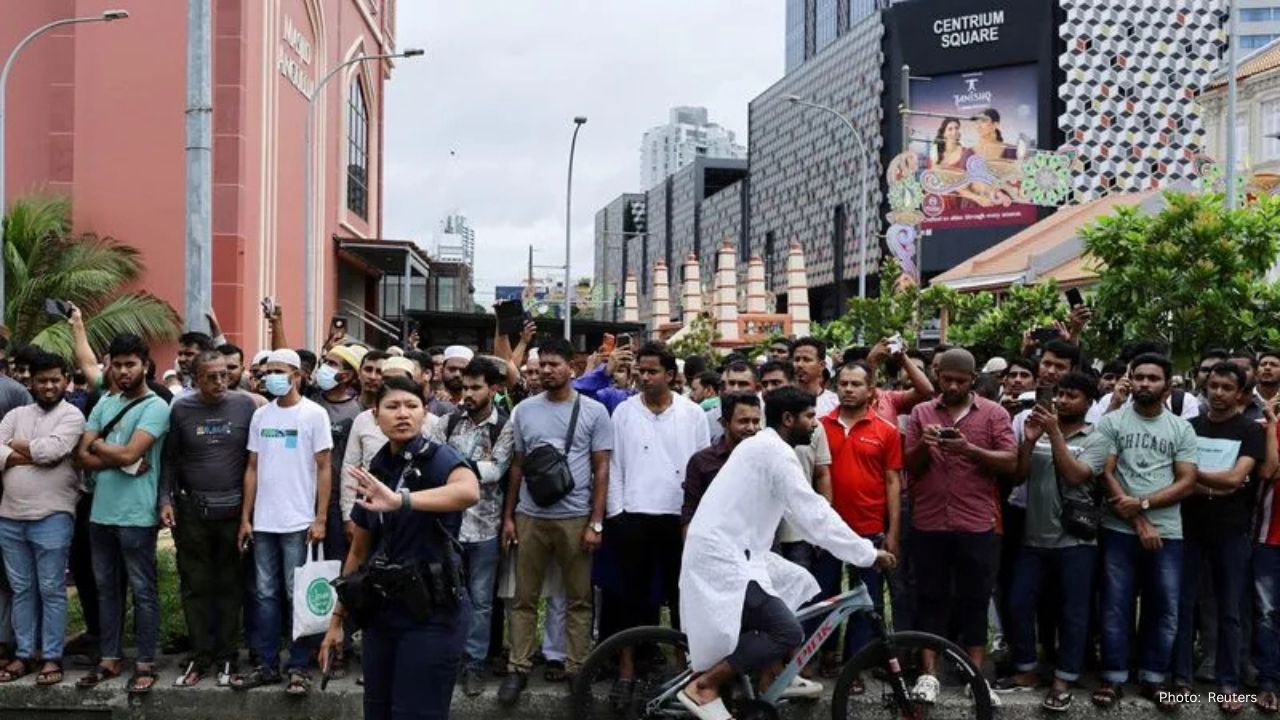
Bangladesh is in turmoil following the murder of a prominent student leader, igniting protests and unrest just weeks ahead of national elections. The interim government has called for calm and urged citizens to refrain from violence, attributing the chaos to “fringe elements” attempting to destabilize the nation's delicate democratic progress.
Sharif Osman Hadi, 32, was a key figure and spokesperson for the Inquilab Mancha, also referred to as the Platform for Revolution. He was gearing up for the upcoming elections on February 12 when he was tragically shot in the head by masked assailants in Dhaka while launching his campaign. After receiving initial care in Bangladesh, he was flown to Singapore for further treatment, where he succumbed to his injuries six days later.
Hadi's death incited widespread outrage and grief throughout the country. On Thursday evening, protests escalated into violence in multiple locations. Demonstrators vandalized and set fire to major newspapers' offices, including Prothom Alo and the Daily Star. Firefighters responded quickly to control the blaze at the Daily Star, and security forces worked to free journalists trapped inside. Military personnel were later deployed to restore order.
By Friday morning, many areas saw a return to calm, although protests persisted in parts of the capital. At Shahbagh in central Dhaka, demonstrators gathered with national flags and placards, chanting demands for justice for Hadi. Many vowed to remain until those accountable faced repercussions.
The murder has heightened fears of further violence in a nation already under strain. Bangladesh is currently led by an interim government under Nobel laureate Muhammad Yunus, who assumed office in August 2024 after previous Prime Minister Sheikh Hasina fled to India amid significant student-led protests. Since then, the administration has encountered pressure for delayed reforms and mounting political discord.
In his televised address, Yunus proclaimed Saturday as a state mourning day in Hadi's honor. The government issued a statement urging citizens to avoid mob violence, emphasizing that the nation is at a pivotal point in its democratic transition. It warned that a small group is attempting to create chaos and disrupt progress.
Furthermore, the government apologized to journalists whose offices were targeted, asserting that attacks on the media are direct attacks on the truth. It committed to delivering justice for those affected. Simultaneously, officials condemned the lynching of a Hindu man in Mymensingh over blasphemy accusations, pledging strong actions against the culprits.
Unrest was not confined to Dhaka, as violence erupted in other regions, including Chittagong, where protesters targeted the Indian Assistant High Commission. Anti-India sentiments have been on the rise since Sheikh Hasina sought refuge in New Delhi, with recent rallies calling for her return.
Despite the tensions, some gatherings remained peaceful. Almost 1,500 individuals gathered at the national mosque in Dhaka following Friday prayers for a peaceful rally organized by an Islamist political group.
The assassination of Sharif Osman Hadi has resonated as a powerful symbol among many young Bangladeshis who view him as a champion for change. With elections on the horizon, the interim government's paramount challenge will be to administer justice, uphold free expression, and stifle further violence during this critical juncture.