Photo:AP
Deadly Red Sea Assault: Houthi Rebels Sink Cargo Ship in Ongoing Maritime Conflict
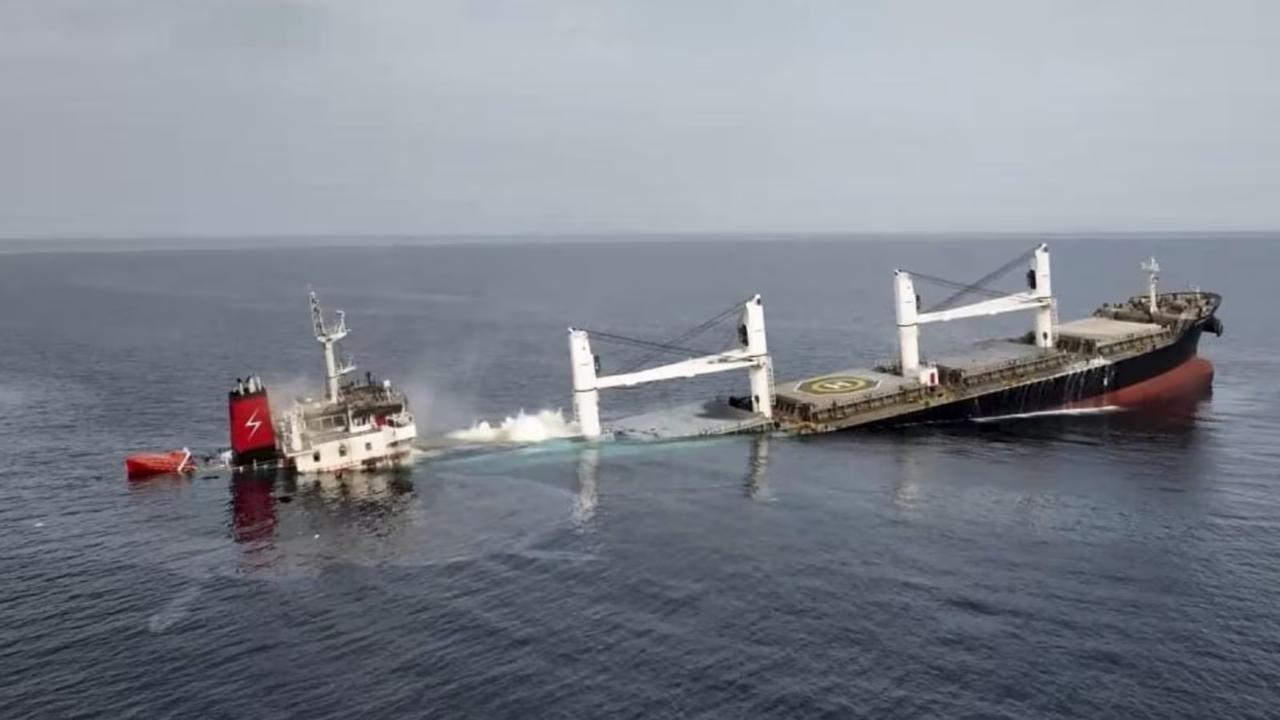
In a tragic escalation of maritime conflict in the Red Sea, Yemen’s Houthi rebels launched a series of deadly attacks on a commercial cargo vessel, the MV Eternity C, resulting in the ship's sinking. At least four crew members are confirmed or presumed dead, and 11 others remain missing. The European Union’s naval mission in the region, Operation Aspides, confirmed the loss of the vessel and the ongoing search for survivors. This marks one of the deadliest Houthi maritime assaults since the Iran-backed group began targeting international shipping lanes in 2023 as part of its broader political and military agenda in support of Palestinians during the Israel–Hamas conflict.
The MV Eternity C: Targeted in Open Waters
The MV Eternity C, a bulk cargo ship flying under a Liberian flag but operated by a Greek shipping company, was transiting through the Bab el-Mandeb Strait—an internationally vital shipping corridor connecting the Red Sea to the Gulf of Aden. The vessel had previously delivered humanitarian cargo and was headed toward a Saudi Arabian port when it was ambushed by Houthi militants using drone boats, sea mines, and potentially armed speedboats. The attack reportedly began in the early hours of July 7, 2025, and continued over several hours with waves of remote and manned assaults.
According to preliminary assessments by naval officials and rescue teams, the first wave of attacks damaged the engine room and navigation systems, rendering the ship immobilized. Fires broke out on multiple decks, and the crew was forced to abandon the vessel amid explosions and a rapidly deteriorating situation. The EU naval force attempted to coordinate recovery and search operations in cooperation with nearby allied warships and regional coast guards.
Casualties Confirmed and Crew Status
As of the latest update, four crew members are presumed dead. Their nationalities reportedly include at least three Filipinos and one Russian, though full identification has not been released pending family notification. Eleven more remain missing, and it is feared they may have drowned or been killed during the attack or subsequent sinking. Among the ship’s international crew, survivors include at least eight Filipinos, one Greek private security guard, and one Indian national.
Some survivors were rescued by nearby commercial ships under escort, while others were retrieved from the water by EU naval patrols and taken to medical facilities in nearby ports. The survivors were reportedly suffering from burns, shock, and exposure to toxic fumes.
Attack Details: How the Strike Unfolded
According to EU and private intelligence reports, the assault on the Eternity C was deliberate and highly coordinated. The ship was first struck by unmanned surface vessels—commonly referred to as “sea drones”—which are equipped with explosives and guided toward ships remotely. These devices have been a cornerstone of Houthi naval attacks and are difficult to detect until close range.
This initial blast caused major structural damage to the ship’s hull and likely breached internal compartments. Minutes later, speedboats armed with rocket-propelled grenades and machine guns approached, firing directly at the bridge and lifeboat stations. The combination of remote explosives and direct fire created chaos aboard the ship, leading to the hasty abandonment of the vessel under harrowing conditions.
Motives Behind the Houthi Attacks
The Houthis have openly stated that their naval operations are part of a campaign of resistance against Israel and its allies, particularly in retaliation for ongoing Israeli military actions in Gaza. However, many of the ships targeted have no direct Israeli links. In this case, the Eternity C had no Israeli ownership or cargo, leading analysts to conclude that the Houthis aim to disrupt global maritime trade more broadly to increase international pressure on Israel and Western allies.
By targeting vessels in the Red Sea, the Houthis aim to cut off one of the world’s most critical shipping lanes. The Bab el-Mandeb Strait sees the transit of more than 12% of global trade, including oil, gas, food, and commercial goods. A disruption here can trigger delays, increase shipping insurance costs, and force companies to divert traffic thousands of kilometers around Africa, driving up global prices.
Historical Context: A Pattern of Red Sea Attacks
Since late 2023, the Houthis have significantly expanded their naval capabilities. What began as sporadic missile attacks from the Yemeni coast has evolved into a multifaceted threat involving drones, sea mines, fast attack crafts, and potential hijackings. Previous attacks in 2024 targeted commercial vessels affiliated with U.S. and UK companies, and one earlier this year led to a partial cargo oil spill in the northern Red Sea.
Despite international naval presence, including the U.S.-led Operation Prosperity Guardian and the EU’s Operation Aspides, the Houthis have continued to demonstrate their capability to launch long-range attacks from the Yemeni coast and operate mobile strike units far from their home territory.
Search, Rescue, and Diplomatic Fallout
EU naval ships responded quickly to the distress signal sent from the Eternity C, launching helicopters and rescue boats into a rapidly evolving war zone. The search for the missing continues, but the remote and dangerous conditions of the Red Sea make recovery difficult.
Diplomatically, the attack has strained relations further between Western nations and the Iranian-backed Houthi leadership. The United Nations has condemned the assault, with Secretary-General António Guterres calling for an immediate halt to maritime violence. The U.S. government labeled the strike a “violation of international law” and warned of consequences if the pattern continues.
Greece, the vessel’s operating country, has summoned Yemeni diplomats and begun discussions with the EU to enhance escort operations for all Greek-flagged or -owned vessels transiting the area. The Philippines, home to most of the surviving and deceased crew members, has also launched an inquiry and is providing consular assistance to affected families.
Impact on Global Shipping and Supply Chains
The repercussions of the Eternity C sinking stretch far beyond the Red Sea. Shippers have already begun rerouting vessels via the Cape of Good Hope, a move that adds significant time and cost to each voyage. Insurance rates for Red Sea transits have doubled in recent months, and fuel surcharges are now being applied to global freight contracts.
Goods typically shipped through this corridor—electronics, grains, textiles, medical supplies, and petroleum—are now delayed. Some experts warn of rising prices and shortages if the Red Sea corridor becomes completely unviable for a prolonged period.
Crew Welfare and Maritime Security Debate
This tragedy has reignited debate over the vulnerability of merchant mariners in conflict zones. Most seafarers are not trained or equipped to handle military-grade assaults, yet continue working in these conditions out of necessity. Calls are growing for international maritime agencies to adopt new crew safety regulations, including armed escorts, specialized training, and faster emergency response protocols.
Human rights organizations have also urged nations to investigate potential Houthi hostage-taking, as reports suggest some survivors may have been captured and taken to Yemen for political leverage.
Environmental Fallout of the Sinking
Environmental groups are raising concerns over potential ecological damage from the Eternity C’s sinking. The ship was carrying fuel and potentially hazardous goods that, upon submersion, could leak into the delicate Red Sea ecosystem. Oil slicks have already been observed in satellite imagery. Local authorities in nearby ports are preparing containment operations in case currents carry pollutants toward coral reef zones or marine sanctuaries.
Geopolitical Implications: Broader Conflict Spillover
The sinking of the Eternity C is a stark symbol of the expanding ripple effects of the Israel–Hamas war. As conflicts become more transnational, innocent seafarers and global supply chains become unintended casualties. With Iran continuing to back Houthi efforts and Western nations strengthening naval patrols, analysts warn of possible direct confrontation between major powers unless diplomatic solutions can be found.
There is also concern that similar tactics may be adopted by other non-state actors in global hotspots—from the South China Sea to the Horn of Africa—if Houthi tactics are seen as successful in disrupting major powers.
Conclusion: An Urgent Call for Global Maritime Stability
The attack on the Eternity C has sent shockwaves through the global maritime industry, cost human lives, and escalated geopolitical tensions in one of the world’s most critical sea lanes. It underscores the vulnerability of civilian shipping in modern hybrid warfare and the urgent need for cohesive, internationally supported responses.
With the search for survivors ongoing and international tensions rising, the incident may prove to be a turning point—either in intensifying conflict or catalyzing diplomatic engagement. In either case, what happened in the Red Sea in July 2025 will not soon be forgotten, nor should it be ignored.