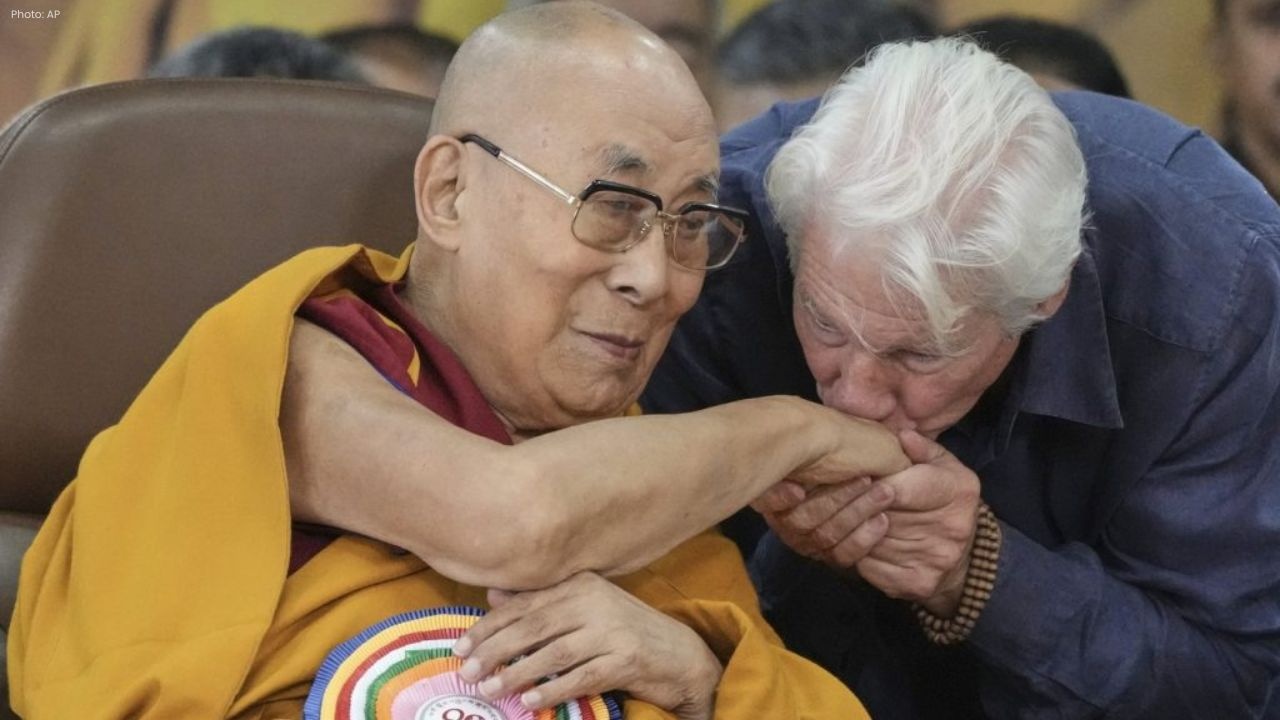
Renowned actor Richard Gere was met with a warm standing ovation from Canadian lawmakers during his visit to the House of Commons on Monday.
Gere attended a parliamentary session where Members of Parliament made an official statement regarding the human rights conditions in Tibet.
“Mr. Speaker, this year marks the 90th birthday of His Holiness the Dalai Lama,” said Liberal MP James Maloney during Question Period. “Following a request from His Holiness to then-Prime Minister Lester Pearson, Canada welcomed its first two Tibetan refugees on October 15, 1970—just over 55 years ago. Since then, Tibetan Canadians have significantly contributed to our economy and society.”
Maloney led a standing ovation for Gere, labeling him a “true champion for Tibet.” Gere sat in the public gallery and has previously partnered with Maloney on initiatives advocating for Tibet.
In 1959, the Dalai Lama and many Tibetans fled their homeland after the Chinese Communist Party assumed control, a situation that human rights advocates claim has exacerbated the region's conditions.
Earlier in the day, Gere shared his thoughts on Canada’s renewed diplomatic engagement with China amidst ongoing U.S. trade tensions. “Everyone should engage in dialogue,” he remarked. “However, we need to approach global arrangements with skepticism, as they often yield unfavorable outcomes.” He urged Canadian leaders to “take a deep breath” and “view things realistically.”
Gere’s commitment to Tibetan advocacy dates back years, famously drawing attention to China's occupation during the 1993 Oscars, which led to a controversial 20-year ban from the event—though the Academy disputes this claim. He reprised his presence at the ceremony in 2013 to award Best Original Score and Best Original Song.
Bloc Québécois MP Alexis Brunelle-Duceppe also expressed gratitude towards Gere while reaffirming the party's support for Tibetan self-determination.
Canada acknowledges Tibet as part of China while recognizing its unique cultural identity and the associated human rights issues facing its people.