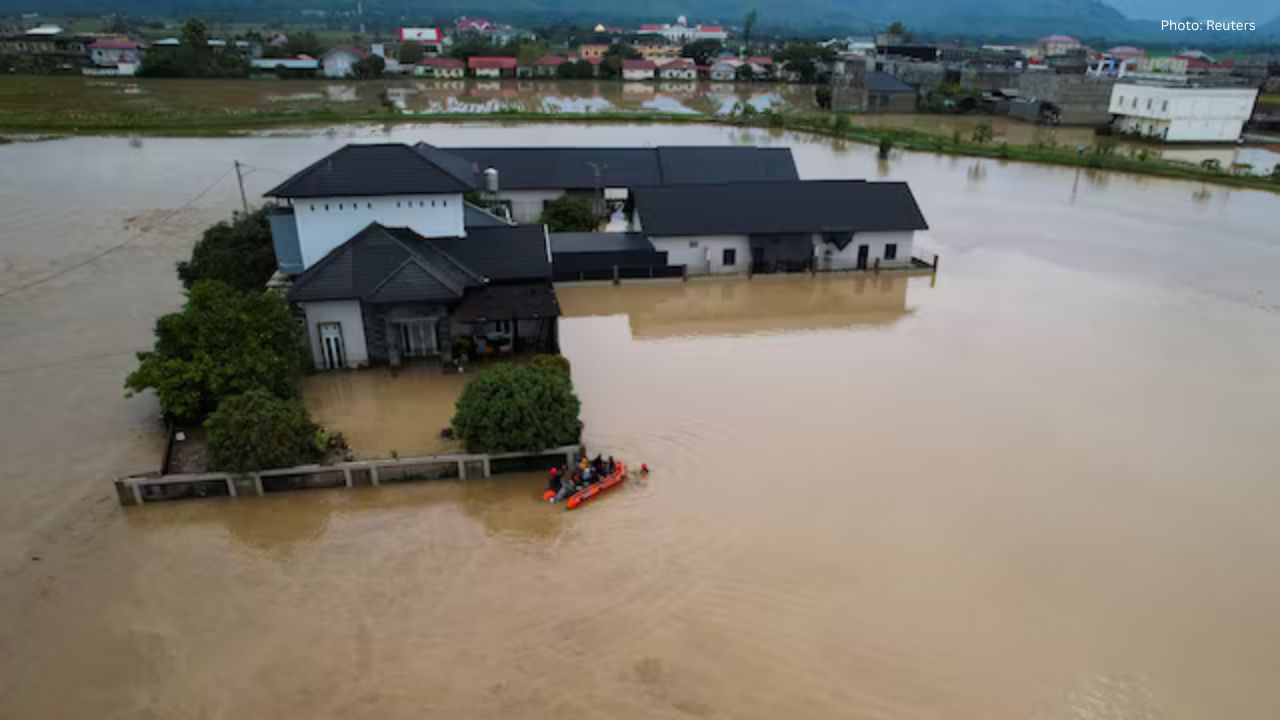
The flood disaster in Southeast Asia has escalated, with the death toll reaching at least 183 as of Friday. Torrential rains, cyclones, and an unusual tropical storm have wreaked havoc across Indonesia, Thailand, and Malaysia. Rescue missions are ongoing as workers attempt to access stranded individuals, restore utilities, and initiate recovery efforts.
For over a week, relentless rain from severe weather patterns has impacted the region. Several locales have been severed from communication and transportation networks, hampering rescue operations.
In Indonesia, the situation is particularly dire. Authorities have reported 94 fatalities across the island of Sumatra. Many communities remain submerged and isolated due to water, fallen trees, and landslides. In the Padang Pariaman area alone, 22 lives have been lost, with survivors expressing concern over dwindling food and clean water supplies.
Resident Muhammad Rais, 40, recounted moving to the upper floor of his home as flooding approached rapidly. He noted that numerous people in his vicinity are still waiting for emergency assistance.
With widespread power outages and loss of phone services, families struggle to call for help or locate missing loved ones. Indonesia's disaster response agency is urgently airlifting food and aid to cut-off regions whenever conditions allow.
Meanwhile, Thailand grapples with its own flooding issues, having confirmed 87 fatalities across eight southern provinces. The floods have impacted over 3.5 million residents, marking a significant crisis for the country this year.
In Hat Yai, the southern city hardest hit, water levels began to diminish on Friday, though mud still clogs the streets, and many areas remain without power. Residents are returning to homes that have been irrevocably damaged, with some saying they have lost everything they owned.
Even those spared from major flooding are feeling trapped, as indicated by local resident Somporn Petchtae, who described his neighborhood as a "small island" surrounded by rising water.
Malaysia is also coping with the aftermath of the storm system. The tropical storm Senyar made landfall but has since weakened, though authorities warn of continued strong winds and additional rainfall. Two fatalities have been reported so far. Approximately 30,000 people are still in emergency shelters, down slightly from previous counts.
Additionally, Malaysia is facilitating the evacuation of over 1,400 citizens stranded in southern Thailand, with 300 more still awaiting rescue.
The priority now is saving lives. Rescue teams are in the process of repairing power lines, clearing debris, and relocating people to safety. Officials, however, caution that inclement conditions may persist as the rainy season continues, putting communities at risk of landslides, flash floods, and hazardous winds.
As floodwaters gradually recede, Southeast Asia faces a lengthy recovery period. Families will require support to rebuild their homes, access clean water, and resume everyday life. Governments are urging citizens to remain vigilant, adhere to guidance, and seek safety in designated shelters when needed.
This unfortunate event underscores the region's vulnerability to extreme weather events. Experts emphasize the need for Southeast Asia to bolster early warning systems, enhance emergency preparedness, and develop safer infrastructures to safeguard against future calamities.