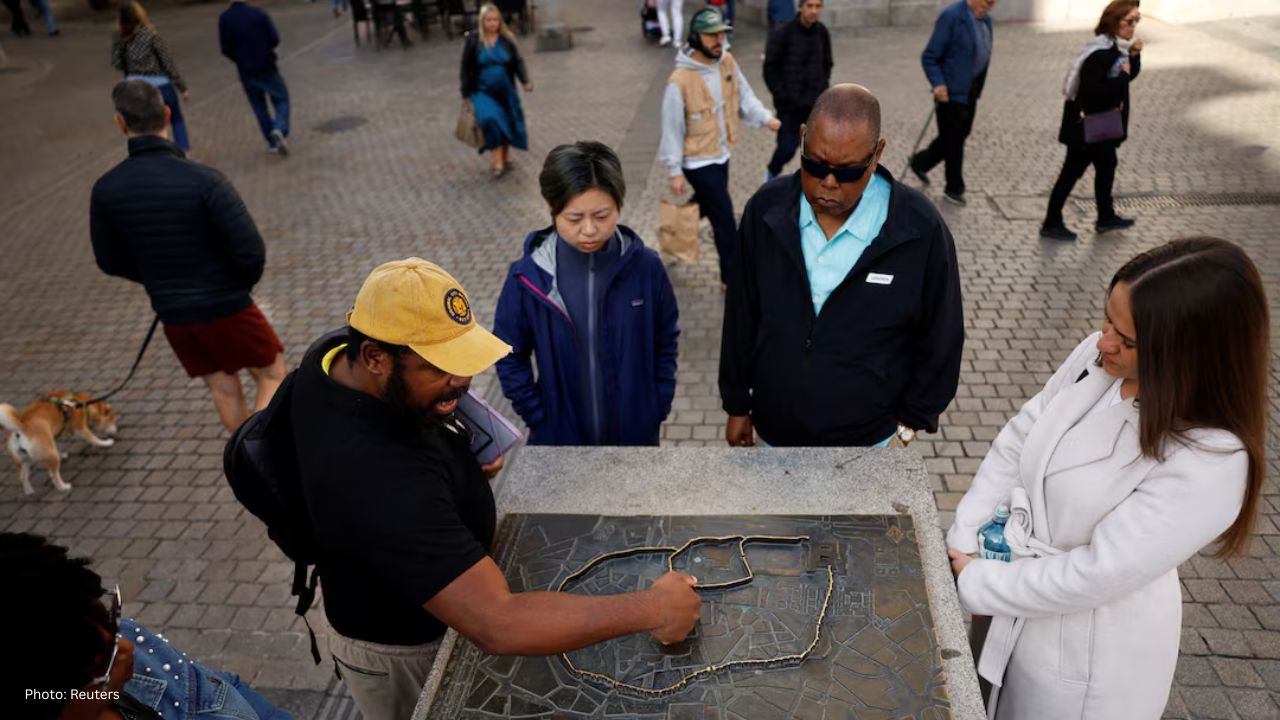
A new initiative in Madrid is bringing to light the city’s overlooked Black history via unique walking tours aimed at both locals and tourists. These tours delve into African heritage, the impact of slavery, and Spain's colonial history, highlighting what is often absent from education and public discourse.
Kwame Ondo, the creative mind behind AfroIberica Tours, launched these enlightening experiences in 2022. Having grown up in Spain, Ondo recognized a void where Black narratives should be in historical accounts and took it upon himself to explore what has been systematically excluded. “It’s a silenced history that’s been erased,” he articulated. His roots trace back to Equatorial Guinea, a former Spanish colony that gained independence in 1968.
Primarily attracting international visitors, particularly Black Americans, AfroIberica Tours reveal the unacknowledged influence of African individuals over Madrid’s development. Participants journey through the city, stopping at significant landmarks and uncovering the stories of African and Afro-descendant figures who made impactful contributions over the centuries.
Professor Antumi Toasije, a historian at New York University’s Madrid campus, emphasized the severe lack of acknowledgment of African influences in Spanish education. “It’s as if there had never been any presence of Africans, portrayed as a recent phenomenon only beginning since the 1980s,” he noted, drawing attention to the crucial educational gap regarding Spain’s colonial affiliations and slavery history.
Complementing this effort, the group Madrid Negro—translated as “Black Madrid”—takes an activist approach to history. They connect modern economic growth to the legacies of slavery, using their tours to enlighten attendees on this often-concealed history. Participants are encouraged to commemorate this legacy through acts like placing stickers on buildings, reciting Maya Angelou’s Still I Rise, and lighting candles in tribute to influential historic African residents such as Antonio Solis, who assisted struggling Black families with funeral expenses.
For members of Madrid Negro, this mission holds deep personal resonance. Irene Marine, who descends from Haitian lineage, expressed, “My Afro-descendant identity resonates with this issue because it’s largely invisible. My Spanish identity wonders why I wasn’t taught or informed about this history.”
These walking tours form part of a wider European movement addressing historical colonial narratives that have often been overlooked. By shedding light on the contributions and stories of Afro-descendant communities, they seek to rectify historical oversights, educate, and celebrate a richly textured heritage.
Madrid’s walking experiences do more than educate; they serve as a poignant reminder that historical narratives are often more intricate than traditional textbooks reveal. They invite both residents and visitors to delve into the city’s complex past, nurturing awareness, empathy, and a profound understanding of Spain’s African connections.