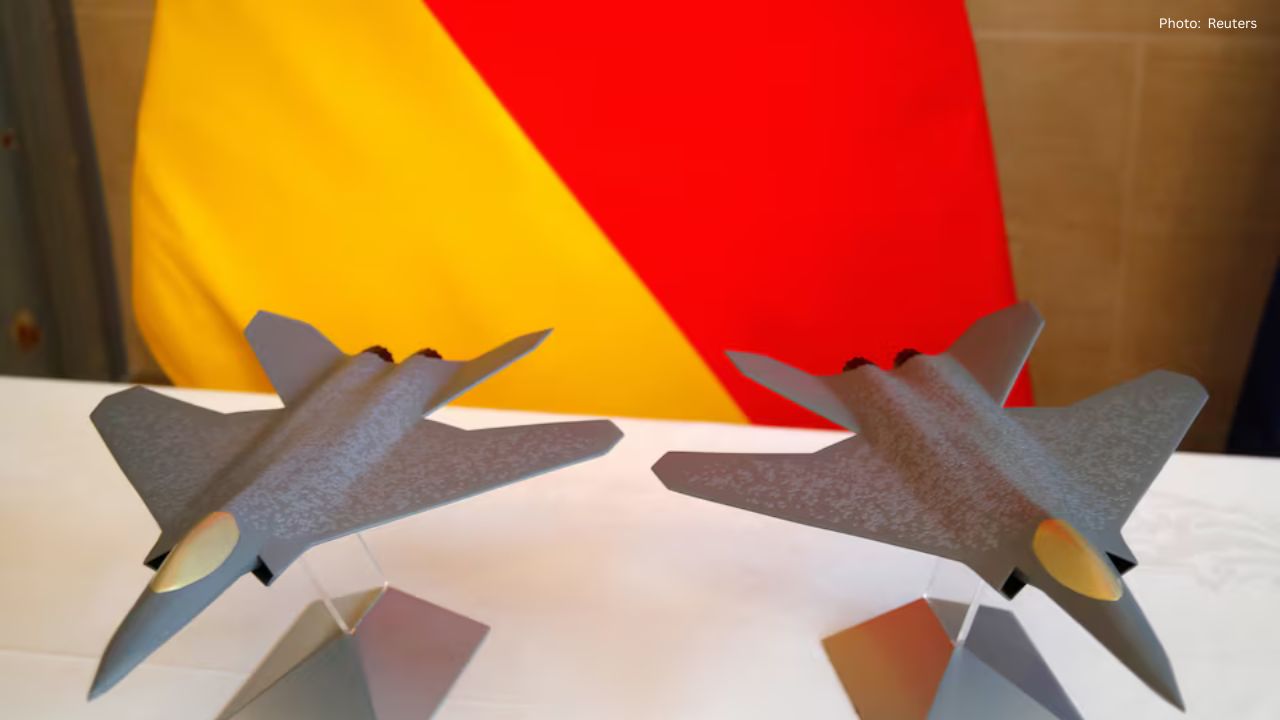
The initiative for Europe to create a next-generation fighter jet is encountering significant challenges, prompting leaders from Germany, France, and Spain to convene on December 11 to explore pathways forward. This ambitious project, known as the Future Combat Air System (FCAS), boasts a staggering budget of approximately 100 billion euros and aims to develop a cutting-edge fighter aircraft that integrates seamlessly with advanced drone technology by the year 2040. However, ongoing conflicts between the two principal contractors, Airbus and Dassault Aviation, are threatening to halt progress.
Initially unveiled over eight years ago, the FCAS was envisioned to enhance Europe’s military autonomy during a transforming era in warfare technology. Despite extensive deliberations, the project’s momentum has stalled due to persistent disputes over the distribution of responsibilities and control. Airbus, representing Germany and Spain, and Dassault, serving as France's counterpart, are both vying for a more significant share in the undertaking.
Insiders indicate that the standoff between the companies has shown “no movement,” revealing the entrenched nature of the conflict. The situation escalated to the point where French President Emmanuel Macron and German Chancellor Friedrich Merz intervened in recent discussions, instructing their defence ministers to tackle the issue directly. This urgency underscores the project’s critical importance for Europe’s prospective military capabilities.
German officials contend that Dassault aims to secure dominance over around 80% of the project, which they argue is disproportionate. Dassault, in turn, vehemently refutes this assertion. French representatives have countered, claiming that Airbus is leveraging its influence across both Germany and Spain to gain excessive power. This blame-shifting has hampered advancement and bred mistrust between the entities.
According to Airbus CEO Guillaume Faury, no one partner should take charge of the entire project, highlighting the necessity of collaborative governance. He expressed support for the existing management framework. Dassault’s CEO Eric Trappier has not issued recent comments regarding this contention, but has previously stated that Dassault requires the liberty to lead decisions pertinent to the jet component of the initiative.
This conflict transcends corporate rivalry; it has significant implications for Europe’s strategic sovereignty and its competitive posture in the global defence arena. Continuing delays in the FCAS could derail Europe’s capacity to keep pace with advancements made by nations such as the United States, China, and the UK, all of which are progressing with their own sophisticated fighter programs. Additionally, prolonged setbacks may increase Europe’s reliance on American jets in the future.
The December 11 gathering is regarded as a pivotal juncture for the FCAS project. Defence analysts throughout Europe are observing with keen interest to ascertain whether these three nations can broker an agreement that reconciles their competing interests. A failure to do so could see the FCAS stagnate for countless years, jeopardizing one of Europe’s most significant and ambitious defence undertakings.
As things stand, the outlook for the FCAS fighter jet project remains murky. The outcomes of next week’s discussions will be crucial in determining whether the venture can finally progress or retain its entanglement in disputes and national priorities.