On Tuesday, renewed conflict at the disputed Thailand-Cambodia border escalated, prompting fears of further violence and widespread displacement. With each side accusing the other of instigating the renewed clashes, the viability of the ceasefire negotiated by U.S. President Donald Trump in July hangs in the balance.
Cambodia's former leader, Hun Sen, stated that his country had honored the ceasefire for a full day to allow for evacuation before launching counterattacks against Thai forces. He emphasized, “While we seek peace, we are forced to retaliate to safeguard our territory,” adding that Cambodian troops possess robust defenses and weaponry, which he believes provides an edge against the perceived invasion.
In Thailand, military reports indicated skirmishes across five border provinces, with a Navy-led initiative in Trat Province aimed at expelling Cambodian soldiers. Thai officials claimed that Cambodia was utilizing artillery, drones, and rockets in attacks against Thai positions. Major General Surasant Kongsiri, spokesperson for Thailand's Defence Ministry, affirmed, “Thailand is resolute in defending its sovereignty and territorial integrity, with military actions deemed necessary.”
The human toll of the ongoing conflict is already substantial, with Cambodia reporting nine civilian deaths and twenty serious injuries since hostilities reignited on Monday. Thailand has recorded three fatalities among its soldiers and twenty-nine injuries. Cambodian Prime Minister Hun Manet criticized Thailand for targeting civilian areas under the guise of national defense.
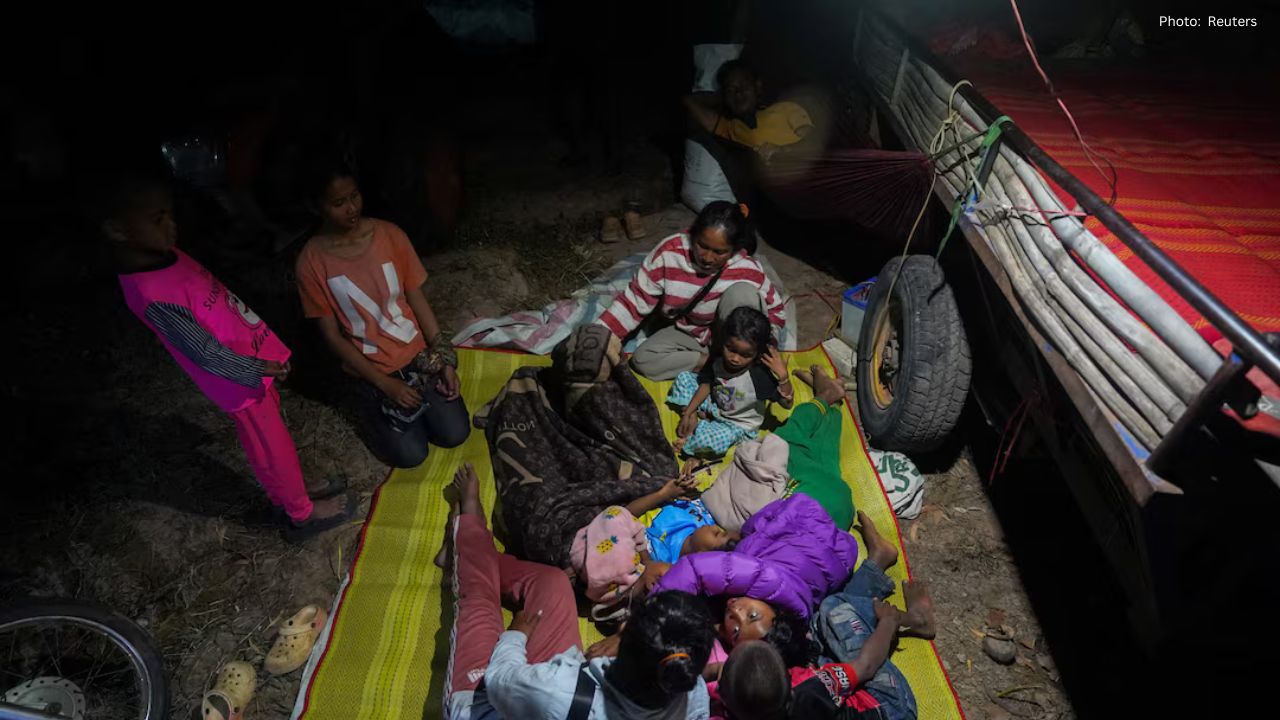
Both nations have evacuated hundreds of thousands from the affected border regions, with tensions escalating since Thailand suspended de-escalation efforts after a Thai soldier was injured by a landmine that Bangkok attributed to Cambodia.
These recent clashes are the most severe since July's five-day exchange of artillery that resulted in nearly fifty fatalities and the displacement of approximately three hundred thousand individuals, prior to Trump's mediation for a ceasefire. Long-standing tensions have characterized border disputes for decades, with recent incidents including a deadly episode in May that led to significant troop mobilization.
Possessing a more substantial military presence, Thailand boasts larger forces, superior budgets, and advanced weaponry, while Thai fighter jets have been active in air strikes to support ground activities. Both nations have contested sovereignty over their 817-kilometer border for over a century, driven by conflicts over ancient temples that stoke nationalist sentiments, resulting in sporadic episodes of violence.
This current escalation serves as a reminder of the precarious nature of peace in the region. Both nations must work toward resolving their differences while ensuring civilian safety remains paramount. International mediation may be essential to prevent further casualties and displacement, fostering stability along this historically contentious border.
Local communities bear the brunt of this conflict, as thousands have been forced from their homes, grappling with uncertainty regarding their basic needs for food, shelter, and security. In the midst of these sovereignty concerns, the humanitarian imperative must remain a priority for both governments.
The renewed clashes between Thailand and Cambodia underscore the potential for longstanding border disputes to escalate into violence rapidly. Engagement from the international community and regional authorities may be crucial in mediating dialogue, aiming to alleviate further suffering.