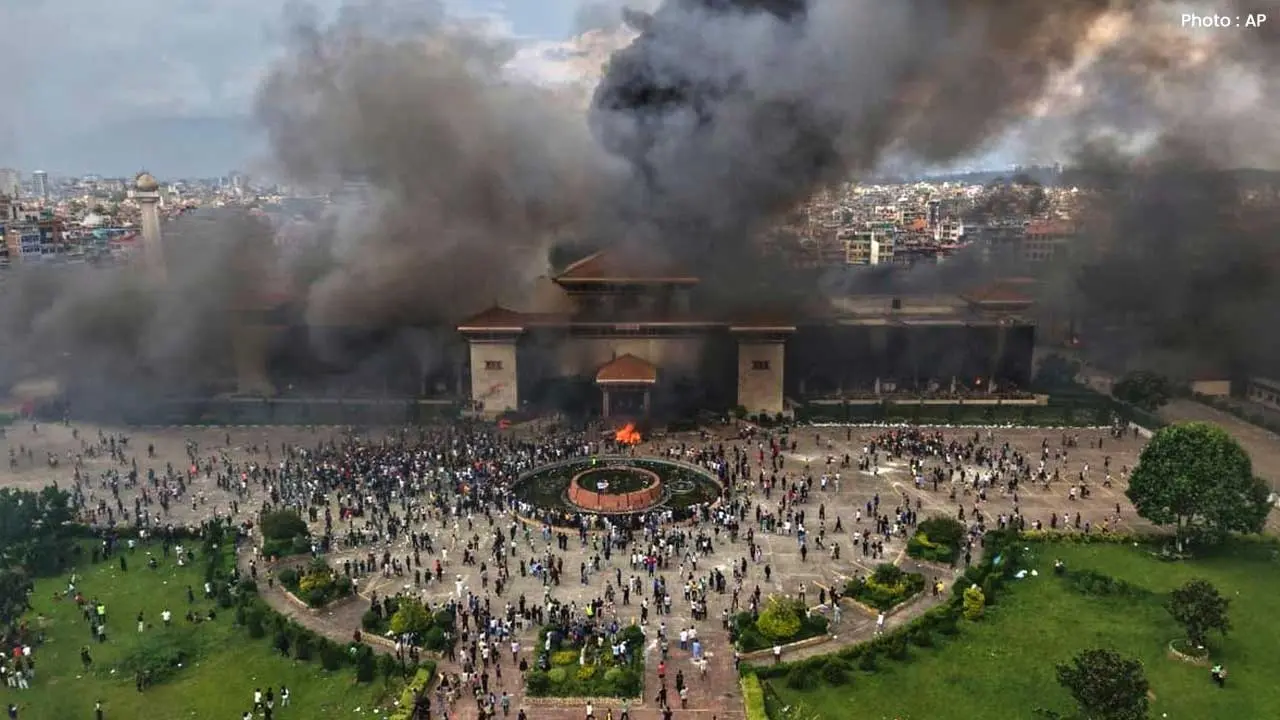
Nepal is grappling with one of its most turbulent times following the youth-led anti-corruption demonstrations in September that caused extensive damage nationwide. These protests led to the resignation of Prime Minister KP Sharma Oli, resulting in over 77 fatalities and more than 2,000 injuries, raising alarms about the nation’s safety, stability, and economic outlook.
The interim government has reported that the protests resulted in economic damages exceeding $586 million, significantly affecting Nepal’s $42 billion economy. The unrest rapidly spread to various regions, causing damage to crucial governmental and private assets, leaving behind a legacy of destruction that may take years to mend.
Significant public buildings sustained severe harm, including the Singha Durbar—the main administrative hub, alongside the Prime Minister’s Office, the Supreme Court, the Parliament House, and various ministerial sites. Political leaders' homes and businesses tied to prominent figures were likewise targeted and ablaze amidst the chaos.
Sushila Karki, the new interim Prime Minister, has announced that an official body is now evaluating the reconstruction costs. Initial findings indicate that Nepal will require over $252 million to restore the ravaged infrastructure. However, the current relief and reconstruction fund has garnered less than $1 million, raising worries about how the remaining financial shortfall will be addressed.
The Ministry of Urban Development has initiated restoration on several vital structures. Some repairs on partially damaged sites are complete, allowing many offices to resume operations. Nonetheless, reconstructing structures completely devastated will be a more prolonged process, as comprehensive design analyses and evaluations are still in progress.
Amid ongoing recovery efforts, the government has yet to clarify its strategy for securing the additional funds necessary for full reconstruction. This ambiguity has heightened public anxiety as the nation gears up for upcoming parliamentary elections, set for March 5, 2026.
Nepal finds itself at a pivotal juncture, balancing the imperative for political stability with the urgent obligation to rebuild its devastated infrastructure. The youth-driven protests have shifted the national discourse around corruption, governance, and accountability while burdening the nation with an economic challenge that demands extensive planning and effective leadership to navigate.