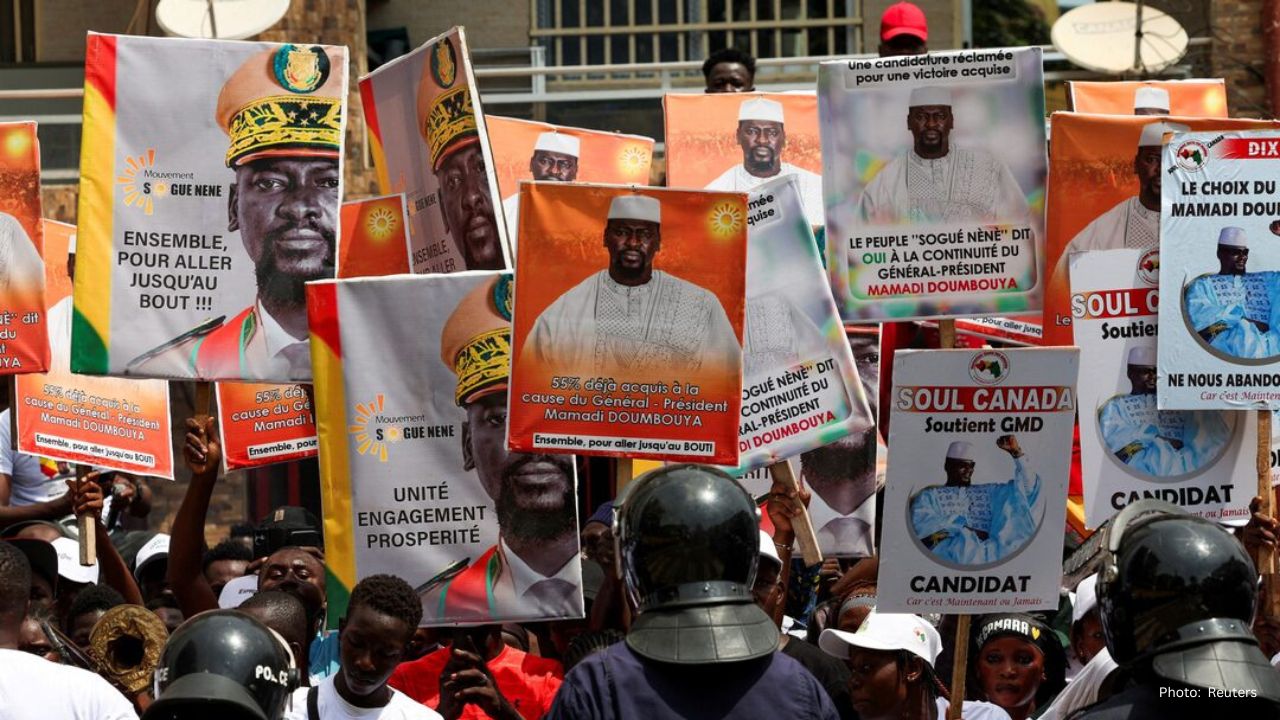
Guinea is on the brink of a significant political transition as military ruler Mamady Doumbouya strives to evolve from coup leader to elected president. With a presidential election set for December 28, this pivotal moment will likely affirm his grip on power, nearly four years post his military takeover.
Doumbouya ascended to power in September 2021, ousting then-president Alpha Condé, whose bid for a third term sparked widespread civil unrest. The coup was initially met with support from many Guineans eager for an end to political turmoil and a return to accountability. As a former special forces commander, Doumbouya had pledged a shift towards civilian governance and initially vowed to avoid participating in elections.
However, this promise has shifted. Recent constitutional amendments approved in a referendum lifted previous restrictions that prevented junta members from running for office. With key opposition leaders sidelined or barred from participation, a Doumbouya victory in the upcoming election appears likely, raising alarm among critics over the integrity of the electoral process.
Proponents highlight the economic reforms and investment in Guinea’s substantial mining sector as indicators of progress under Doumbouya's leadership. The country houses the world's largest bauxite reserves and considerable untapped iron ore deposits, including the Simandou site. A significant iron ore venture was initiated last month, and the government has taken strides to enhance state control over mining assets to raise national revenue, attracting foreign investment and maintaining relative stability compared to neighboring nations plagued by coups and unrest.
Nevertheless, dissenters contend that political freedoms are eroding. Civil society organizations have accused the government of prohibiting protests, curtailing press freedoms, and impeding opposition activities. Prominent opposition figures face exile or restrictions from contesting the elections, with former prime minister Cellou Dalein Diallo residing abroad due to corruption allegations, while ex-president Alpha Condé has been disqualified under a new age restriction.
Doumbouya's background influences his governance approach. An ethnic Malinke from eastern Guinea, he has received military training in various countries, including France, where he served in the Foreign Legion. His supporters argue that his military discipline has introduced order and discipline into governance, while opponents argue that it has led to increased authoritarian controls and diminished democratic safeguards.
International stakeholders now face a challenging dilemma. Directly criticizing Guinea’s political trajectory could potentially push the nation closer to non-Western allies like China. Conversely, accepting the election results without scrutiny might embolden other military leaders in the region to pursue similar paths to power.
As the election approaches, it presents more than just a change of title for Doumbouya. It will define Guinea's future equilibrium and assess whether stability and economic growth can indeed flourish alongside a democratic framework. For many citizens, the critical question remains whether this transition will serve the nation's interests or merely entrench the power of the current leadership.