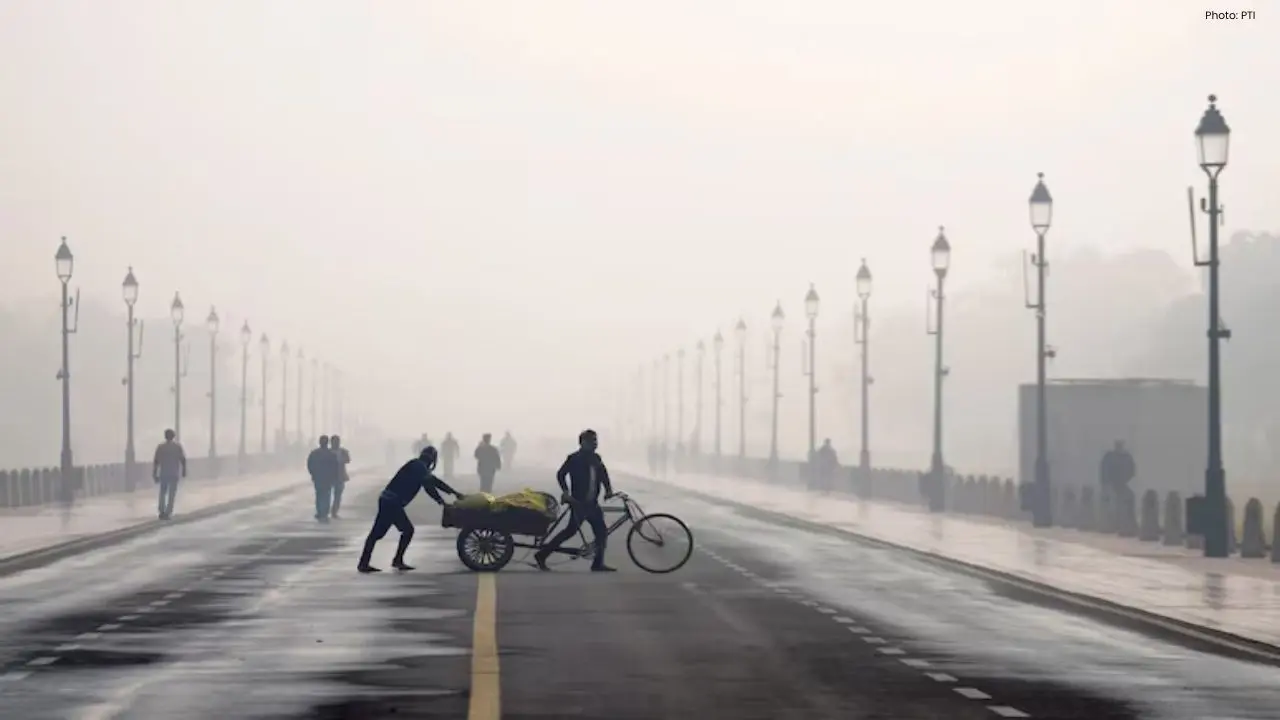
Delhi and surrounding areas are bracing for another challenging week as the cold wave tightens its hold while pollution levels rise yet again. Residents who had hopes for clearer skies following a minor improvement earlier this week found themselves waking up to heavy fog, biting winds, and dangerously polluted air, complicating daily life.
As of Thursday morning, most regions of Delhi reported an Air Quality Index (AQI) ranging from 350 to 400, placing them firmly in the "very poor" category. Some areas, such as Wazirpur and Bawana, even fell back into the "severe" category, indicating the air quality poses health risks to everyone. This mixture of pollution and cold air has led to discomfort, causing irritated eyes and respiratory issues for many residents.
For the past month, Delhi has navigated persistently high levels of pollution. Although a brief improvement was observed recently, the overall situation continues to be alarming. The Commission for Air Quality Management (CAQM) had lifted GRAP Stage 3 restrictions on Wednesday evening, yet the air quality remains in the "very poor" category, underscoring the ongoing seriousness of the issue.
Data released by the Central Pollution Control Board (CPCB) on Thursday morning indicated a renewed spike in pollution levels. Wazirpur registered an AQI of 404, while Bawana recorded 403. Other locations also noted elevated readings: Vivek Vihar (395), Jahangirpuri (392), Anand Vihar (386), Narela (386), Burari (368), Chandni Chowk (368), Sonia Vihar (355), and RK Puram (354). These figures highlight that most of Delhi is engulfed in polluted air, with conditions likely to worsen if the current weather persists.
A dense fog enveloped Delhi early in the morning and returned again later in the evening. This fog, combined with pollution particles, formed a thick layer of smog, impairing visibility on the roads and posing dangers for commuters. Morning walkers and daily travelers found it challenging to breathe in the dense haze. This dual effect of fog and pollution has rendered outdoor activities exceedingly difficult.
During winter, cold air hampers the rise and dispersion of pollution, trapping harmful particles close to the ground and leading to the persistent grey smog that has become a yearly occurrence in Delhi. As a result, people are experiencing symptoms such as cough, throat irritation, and breathing difficulties. Medical experts warn that prolonged exposure to such contaminated air can elevate the risk of lung infections, chest congestion, and other serious health concerns.
Doctors and environmental specialists stress that inhaling polluted air over extended periods can be detrimental to health. They advise several safety precautions:
-
Limit outdoor activities unless absolutely necessary
-
Wear high-quality masks when outdoors
-
Keep windows shut to prevent polluted air from entering
-
Utilize air purifiers in your home if available
-
Stay hydrated and consume warm beverages
-
Avoid strenuous outdoor activities
These measures are particularly critical for vulnerable groups such as children, the elderly, and individuals with pre-existing health conditions like asthma or heart disease.
Concern is mounting among residents of Delhi-NCR as the pollution shows little sign of abating. Parents are apprehensive about their children attending school under such conditions. Senior citizens report that the combination of cold and pollution makes even essential errands challenging. Daily commuters are experiencing headaches, irritation, and chest discomfort due to their prolonged exposure to the smog.
Despite the recent lifting of GRAP Stage 3 restrictions, the rising pollution levels could compel officials to reconsider reinstating them. Weather experts indicate that pollution levels are unlikely to decrease without the intervention of strong winds or rainfall. Until then, adherence to safety guidelines is crucial for protecting public health.