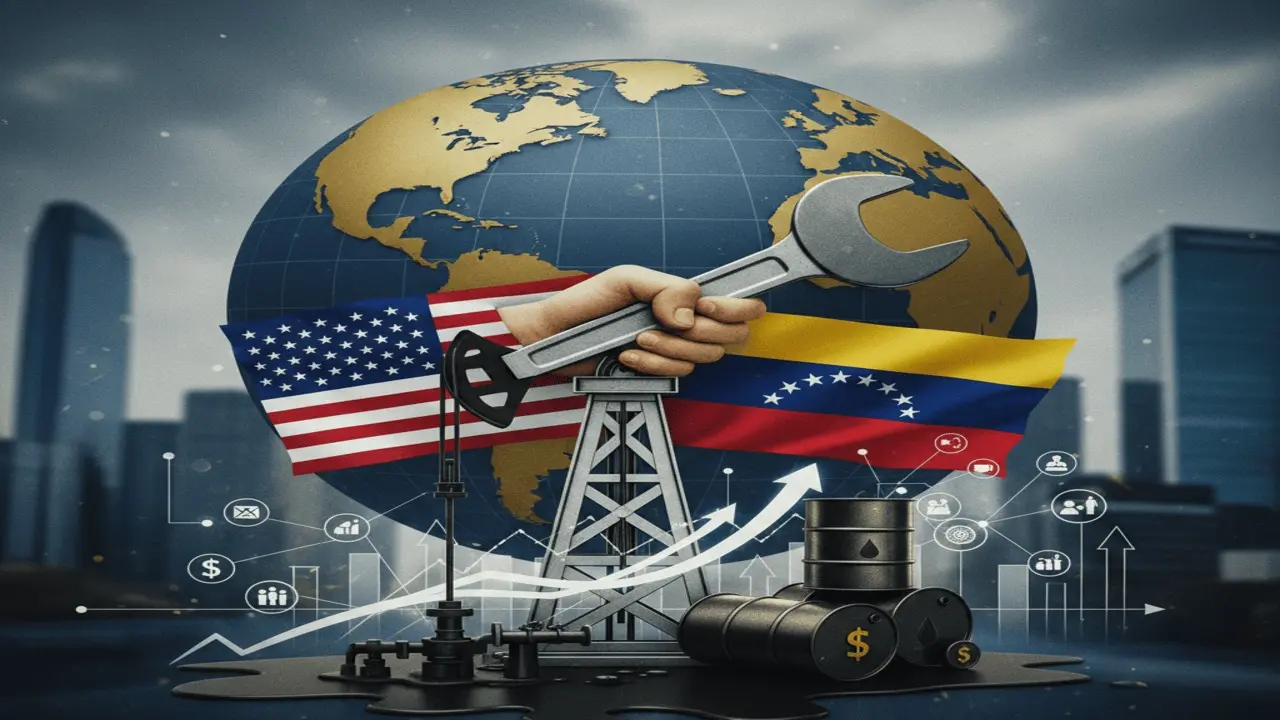
Decoding US Control Over Venezuela’s Oil and Its Global Consequences
The term “US control over Venezuela’s oil sector” signifies a shift in influence rather than a military takeover. This control is rooted in economic strategies, the granting of licenses, sanctions adjustments, and financial oversight, positioning the US to influence how Venezuela manages its oil resources in the global marketplace. Such influence is fundamentally reshaping international energy alliances and oil pricing structures.
To grasp the nuances of this control, one must delve into its implications for global oil trade, emerging economies, and consumer fuel prices.
Venezuela’s Oil in the Global Energy Landscape
Venezuela boasts the largest proven oil reserves globally, even surpassing Saudi Arabia. Primarily heavy crude, this resource demands specialized refining but holds tremendous value in times of reduced supply.
Yet, despite these vast reserves, Venezuela's oil production has plummeted dramatically over the past ten years due to:
-
Sanctions hampering exports and payments
-
Incompetence in managing PDVSA, the state oil enterprise
-
A shortage of foreign investments and technology
-
Degrading infrastructure
Once yielding over 3 million barrels per day, current production is now below 800,000 barrels per day, generating a shortfall in global oil supply.
Understanding the Realities of US Control
The US does not literally possess Venezuela’s oil fields. Its influence stems from economic dynamics rather than ownership.
Sanctions as an Influencing Tool
US sanctions have historically dictated:
-
Eligible buyers of Venezuelan oil
-
Payment processing methods
-
Permissible companies in the oil industry
By selectively modifying sanctions, the US effectively determines the quantity and conditions of Venezuelan oil entering global markets.
Licensing Privileges for Oil Companies
The US government grants licenses to specific firms, notably American and allied companies, enabling them to:
Monitoring Financial Transactions
The majority of global oil trade occurs within dollar-based frameworks. Even when Venezuela sells oil to third-party nations, US financial systems influence contracts, shipping, and regulatory compliance.
Political Conditionality
Any increase in oil exports hinges on political agreements, upcoming elections, or mandated reforms, granting the US a sustained leverage beyond immediate production outcomes.
The Rationale for the Current US Strategy
This approach is fueled not by altruism but by global energy market instability.
Supply Shortages from Global Conflicts
Ongoing geopolitical tensions, including those in Russia, the Middle East, and critical trade routes, have disrupted oil supplies. The sanctions imposed on Russia have withdrawn millions of barrels from the Western markets.
OPEC Production Limitations
OPEC and its associates have persistently restricted production to maintain prices, creating vulnerabilities for consuming countries.
Domestic Political Considerations
Fluctuating fuel prices can impact inflation, influence elections, and sway public sentiment. The US aims for stable and manageable supply channels.
With plentiful reserves nearby, Venezuela presents an appealing option that can be swiftly activated under controlled circumstances.
The Implications of Venezuelan Oil Resurgence for Global Supply
A rebound in Venezuelan oil production, even if partial, would shift global supply dynamics.
Increase in Supply in the Short Run
An elevation of 300,000 to 500,000 barrels per day can:
-
Alleviate supply constraints
-
Stabilize price fluctuations
-
Mitigate emergency reserve depletion
Market reactions consider both actual supply and future expectations.
Minimized Dependence on Instability-Prone Areas
Incorporating Venezuelan oil into the market lessens reliance on:
Effects on Oil Prices Globally
Psychological factors equally influence oil pricing.
Price Stabilization Potential
-
Prevent drastic price spikes
-
Dampen speculative increases
-
Establish a price ceiling
Traders often base today’s prices on future supply expectations.
Reasons Prices Might Remain Steady
Despite potential increases in supply:
-
Recovery of production is gradual
-
Infrastructure issues persist
-
OPEC's ability to modulate output remains
This indicates Venezuelan oil may serve to stabilize rather than plunge prices.
Influences on OPEC and Main Oil Producers
The reemergence of Venezuelan oil alters existing power structures.
Challenges to OPEC Solidarity
Several OPEC nations are reliant on elevated prices. An uptick in supply:
-
Undercuts collective price management
-
Requires internal negotiations
-
Increases competitiveness
Adjustments to Strategies Among Major Producers
Saudi Arabia and Gulf nations may:
Effects on China, India, and Developing Economies
Venezuela has previously offered discounted oil to circumvent sanctions.
Decreasing Access to Discounts
As trade channels become more regulated:
-
Available discounts diminish
-
Contract stipulations become stricter
-
Political power shifts
Nations benefitting from cheaper oil may find themselves paying closer to market values.
Increased Competition for Resources
Emerging markets face:
Consequence for Global Energy Corporations
International energy companies cautiously approach the market.
Re-Entry under Controlled Conditions
Energy firms must adhere to:
-
Strict regulatory conditions
-
Limited expansion permissions
-
Continuous political oversight
This mitigates risks but curtails potential profits.
Technology and Infrastructure Enhancements
Incremental upgrades can:
-
Boost extraction efficacy
-
Minimize environmental repercussions
-
Enhance long-term output capacity
However, full recovery will be prolonged.
Consumer Fuel Prices and Their Implications
Consumers are unlikely to perceive immediate changes.
Potential for Short-Term Relief
During supply anomalies, price spikes are less pronounced.
Long-Term Stability
A more varied supply landscape can lead to fewer abrupt shortages;
Nevertheless, taxes, refining charges, and local regulations largely govern retail fuel costs.
Risks Tied to This Strategic Shift
Economic control via influence involves inherent risks.
Political Instability
Changes in regulation or governance could:
Infrastructure Vulnerability
Years of disrepair introduce:
Market Overconfidence Risks
There’s a danger that market participants will misjudge the timeliness of production recovery, resulting in pricing errors.
Geopolitical Ramifications
Venezuela’s oil becomes a tool of international politics.
Lessened Russian Influence
Every additional barrel from Venezuela lessens Western nations' dependence on Russian energy supplies.
Shifts in Latin American Politics
As Venezuela:
-
Re-engages on the economic front
-
Gains selective legitimacy
-
Loses unilateral authority
US Strategic Advantages
Enhancing energy control boosts diplomatic influence in trade and security negotiations.
The Future of Venezuela’s Oil Landscape
For Venezuela, full recovery remains a distant prospect.
Potential Gains
Challenges Ahead
-
Constrained autonomy in oil governance
-
Dependence on external validations
-
Pace of social reconstruction will be slow
Gained control brings financial benefits, yet not sovereignty.
The Perception of Global Market Dynamics
Markets don't anticipate a Venezuelan oil surge. They are instead factoring in:
-
Decreased extreme market fluctuations
-
Improved supply reliability
-
Reduction in emergency interruptions
These factors illuminate why oil prices fluctuate moderately rather than drastically.
The Broader Implications of US Moves
The importance lies beyond mere barrel counts; it establishes a precedent. It illustrates that energy governance is often executed through financial instruments and regulatory frameworks rather than outright ownership.
Such a model could influence future engagement with resource-rich regions.
Final Reflections on Global Energy Equilibrium
The US's strategic influence over Venezuela's oil signals a transition from seclusion to managed integration. It enhances supply security for consumers while mitigating price shocks, all while redefining the tenets of sovereignty within global energy landscapes.
Energy reserve ownership is now eclipsed by the more critical question of who governs access and trade flows.
Disclaimer
This article is intended for informational and analytical purposes only. It does not constitute financial, investment, legal, or geopolitical advice. Energy markets and international policies are complex and subject to rapid change. Readers should consult authoritative sources or qualified experts before making decisions based on geopolitical or market developments.