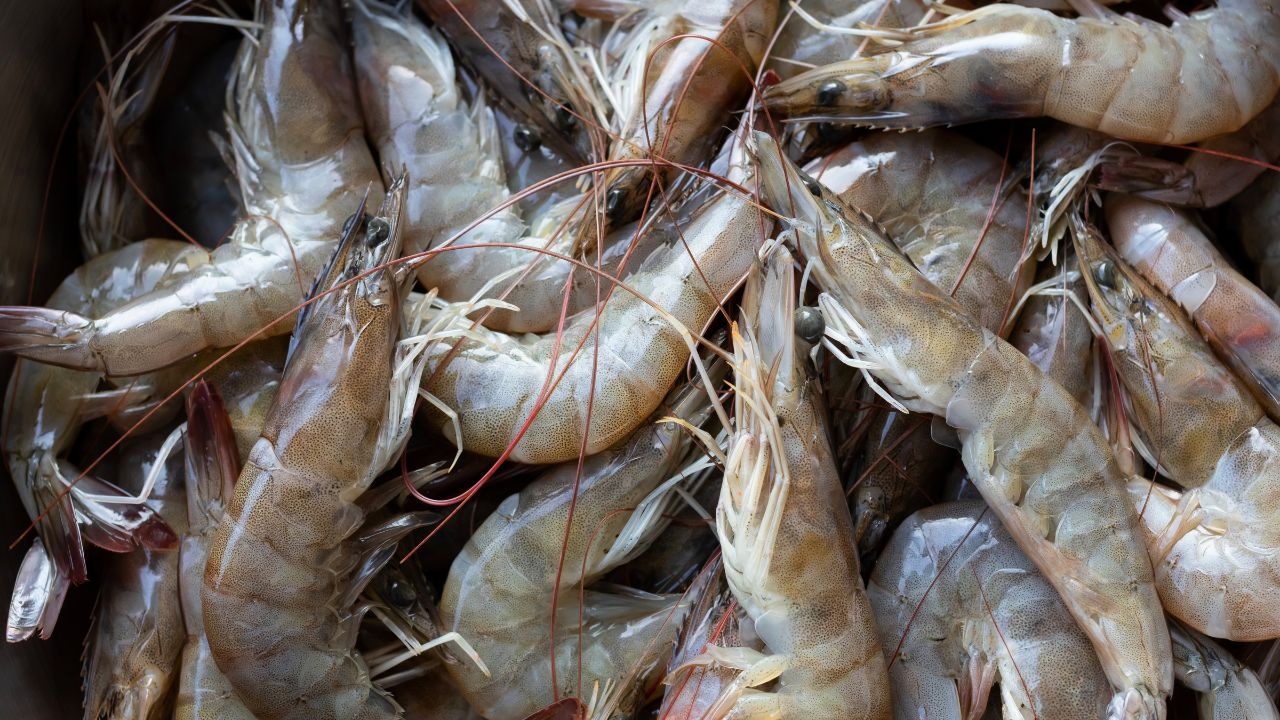
Kolkata, India – In Nandigram, West Bengal, shrimp farmer Buddhadeb Pradhan is taking a risk that could determine his future. Just weeks after his first shrimp crop was harvested, he opted to cultivate a second cycle, despite the heightened risk of disease associated with consecutive harvests. This choice stems not from ambition but from necessity: declining shrimp prices following new US tariffs jeopardize his profits.
As the world’s second-largest shrimp producer after Ecuador, India exported $5 billion worth of frozen shrimp for the year ending March 2025, nearly half of which went to the United States. The newly imposed tariffs by the US have slashed farm prices from 300 rupees ($3.38) per kilogram to 230 rupees ($2.59), even as production costs stay at 275 rupees ($3.10). For farmers like Pradhan, the widening gap between costs and sales is leading to increasing losses.
“The declining prices of shrimp make me worry about recovering my investment of 300,000 rupees,” Pradhan expressed. Other local farmers, like Nardu Das, caution that without market stabilization, financial ruin is a real threat, compelling some to take desperate measures. Shrimp farming involves substantial costs, including loans, feed, utilities, and land leases, with disease and price drops pushing many towards the edge.
India cultivates two primary shrimp varieties: black tiger and Pacific whiteleg, or vannamei. While vannamei can support two annual harvests – February to June and July to October – farmers remain apprehensive about the second cycle due to the risk of disease. Black tiger shrimp, on the other hand, is harvested once a year from March to August. Major coastal states for shrimp production include West Bengal, Gujarat, Odisha, Andhra Pradesh, Tamil Nadu, Goa, Maharashtra, Karnataka, and Kerala, employing around 10 million individuals across farming, hatcheries, and processing.
The US tariffs, which impose countervailing and anti-dumping duties exceeding 58 percent, threaten to exclude Indian farmers from their biggest market. In contrast, Ecuador exports premium vannamei shrimp to the US at significantly lower tariffs of 15 percent. In the first nine months of 2025, Ecuador’s exports to the US grew by 14 percent compared to the previous year, reaching 1,038,208 metric tonnes valued at $5.51 billion.
The repercussions extend beyond the farms; India’s 550 private shrimp hatcheries, responsible for producing around 80 billion seeds each year, are seeing a sharp decline in demand. With half of them already closed, hatchery owners are grappling with substantial losses due to the short shelf life of shrimp seeds, which lasts only three to four days.
Industry experts highlight that Indian farmers rely on imported brood stock from the US, but fluctuations in quality can lead to disease outbreaks. This, coupled with price declines due to tariffs, has ignited a plea for the development of local brood stock to stabilize cultivation.
With the US market becoming increasingly out of reach and Ecuador gaining a competitive advantage, Indian shrimp farmers are assessing their next steps. Some are optimistic about tapping into the largely unexplored domestic market, while others brace for challenging times ahead, balancing financial risks with the need for survival.