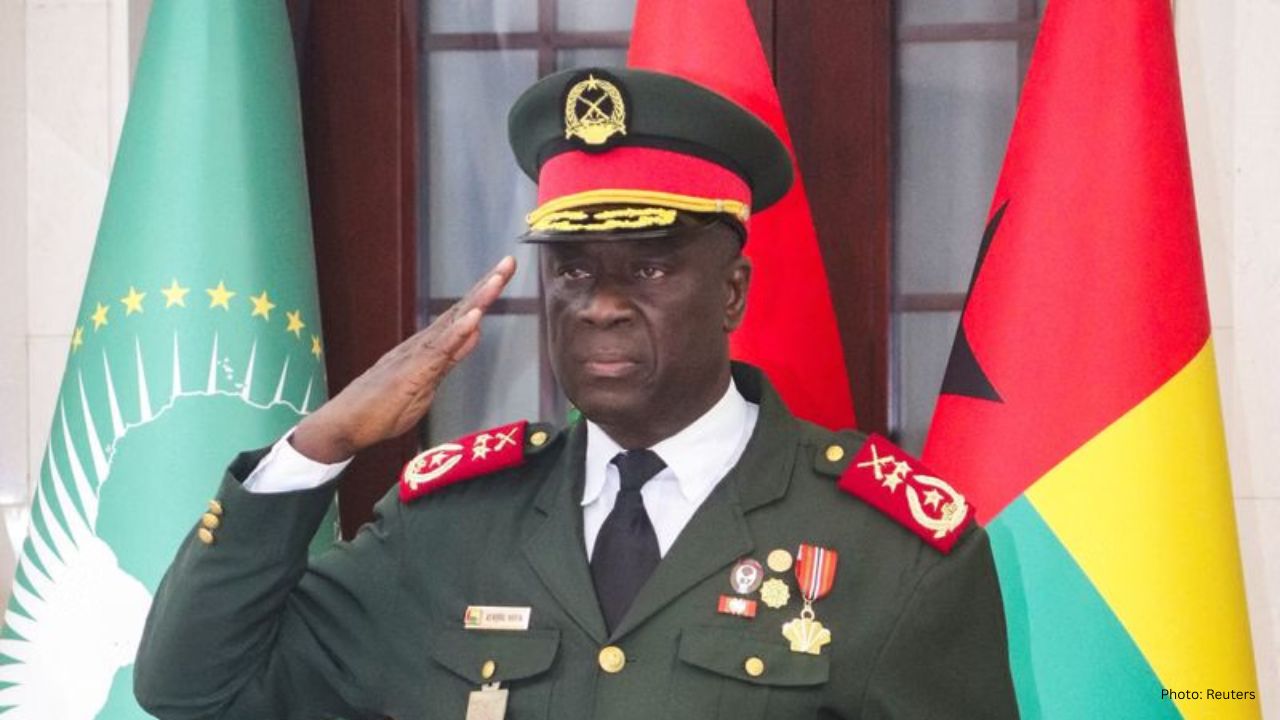
A fresh wave of political turmoil has swept Guinea-Bissau following the military's abrupt removal of President Umaro Sissoco Embalo, who has been replaced by Major-General Horta Inta-a as the interim leader. This coup occurred just days after a presidential election, preventing the unveiling of official results.
The West African nation has a history plagued by military coups and political unrest, with this incident marking the ninth such intervention in the area within just five years. Given Guinea-Bissau's enduring legacy of power struggles, there are widespread concerns that instability may escalate further.
The military justified its actions by alleging a potential conspiracy involving drug traffickers and politicians to wrest control of the government. Although lacking substantial evidence, the new military leadership asserted that they were acting to “protect Guinean democracy.”
Major-General Inta-a, clad in military attire and flanked by senior officials, announced on state television that the transition period would last for one year. Shortly thereafter, he appointed Major-General Tomas Djassi as the new army chief of staff.
President Embalo was removed from office and subsequently transferred to Senegal on a special flight arranged by the West African regional group ECOWAS. Information regarding his whereabouts remained unclear for several hours after his removal. The military had previously stated that Embalo and other officials were “under the control” of the High Military Command.
As the coup unfolded, residents in the capital, Bissau, reported hearing gunfire near the electoral commission and presidential palace. Businesses, banks, and pharmacies shuttered their doors, heightening fears for public safety. One concerned local professor expressed alarm as residents struggled to obtain essential medicine during the crisis.
The international response was immediate and resolute. The African Union condemned the coup and called for the unconditional release of President Embalo and the other detained officials. Leaders of ECOWAS convened virtually to deliberate on the situation, while the European Union emphasized the need for the vote tallying to proceed to ensure the electoral process is completed.
Fernando Dias, Embalo's primary opponent in the recent election, accused the ousted president of orchestrating a “false coup attempt” to hinder the announcement of election results. His coalition demanded the prompt release of these results, along with the liberation of former Prime Minister Domingos Simoes Pereira, who was detained amid the turmoil.
Protests sprang up in response to the arrests, leading security forces to deploy tear gas to disperse crowds. Some witnesses reported hearing live ammunition, though no injuries were documented.
Guinea-Bissau’s strategic position as a major transshipment point for cocaine heading to Europe has long been recognized. Analysts indicate that drug trafficking surged during Embalo’s administration, with some election campaigns purportedly financed by major traffickers. Experts warn that the coup is unlikely to diminish the stronghold that drug networks have on the country.
Some foreign election observers have reportedly gone missing, with the African Union and ECOWAS noting that several monitors have been detained. Nigeria's former president Goodluck Jonathan, in the country to oversee the voting process, has also been unreachable. Nigeria's foreign ministry has urged the coup leaders to ensure the safety of all election monitors and warned of consequences for those involved.
As Guinea-Bissau faces another leadership crisis, there are growing fears within the region about an ongoing cycle of coups and political instability. Currently, the streets are fraught with tension, businesses remain closed, and the country’s democratic future is precariously at stake.