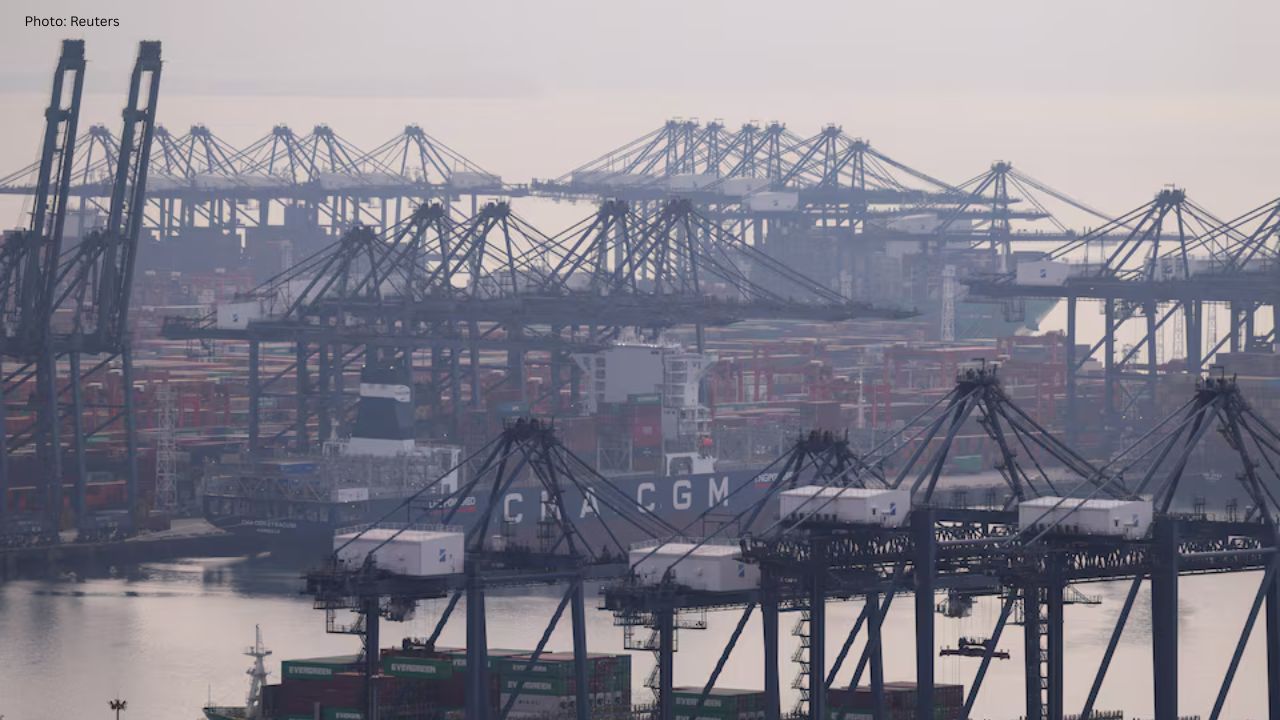
China has delivered an unexpected boost to global markets with a notable rise in exports during November, surpassing prior forecasts. This growth stems not from the United States, traditionally one of its largest markets, but from strengthened commercial ties with Europe, Southeast Asia, and other regions. This transition highlights China's strategic pivot in response to U.S. tariffs.
According to official reports, Chinese exports increased by nearly six percent year-on-year, a significantly better performance than analysts had anticipated. Meanwhile, imports experienced slower growth, leading to a trade surplus peaking at one of the highest levels recorded this year.
The shift can largely be attributed to the substantial tariffs imposed by the United States, which have hindered Chinese profitability in the American market, resulting in a sharp decline in shipments to the U.S. during November.
To navigate these challenges, China has actively sought to fortify trade relationships with other regions. Exports to the European Union saw significant growth, while shipments to Australia also escalated dramatically. This diversification strategy has enabled China to offset losses incurred from reduced U.S. trade.
Known as trade diversification, this strategic approach allows a country to lessen its dependence on a single market. By selling to multiple countries, economic stability can be maintained even if one market falters, a principle China has been embracing for over a year.
Despite the optimistic export figures, caution is warranted. Chinese factories continue to report subdued new orders, and many businesses face challenges in securing consistent demand. Recent surveys indicate that factory activities have been contracting for several months, raising concerns about the sustainability of the current export growth.
Additionally, domestic demand in China remains weak, exacerbated by ongoing troubles in the real estate sector and a slowdown in construction. A decline in imports of raw materials like copper mirrors the sluggish growth in internal manufacturing and building.
Chinese authorities have pledged to stimulate domestic demand, encouraging consumer spending and fostering business investment within the country. High-level meetings are likely to address new policies aimed at bolstering economic support.
The trade statistics also reveal shifts in global supply chains, with Chinese firms establishing operations in other countries to mitigate the impact of tariffs. This strategy facilitates new sales avenues, enabling China to maintain a significant role in global commerce amid ongoing political tensions.
While China's export success reflects positively on its economy, deeper challenges linger. An over-reliance on exports is precarious; any downturn in global demand could adversely impact China. For a robust economy, there must be a harmony between exports, domestic demand, and innovation.
At this juncture, China has illustrated its adaptability by identifying new markets and safeguarding its export sector. However, navigating the road ahead will be challenging. The uncertainties of the global economy and persistent trade tensions necessitate careful navigation.
The coming months are pivotal. China must strategically support its manufacturing sector, motivate its populace to spend, and forge equitable and stable trade interactions worldwide.