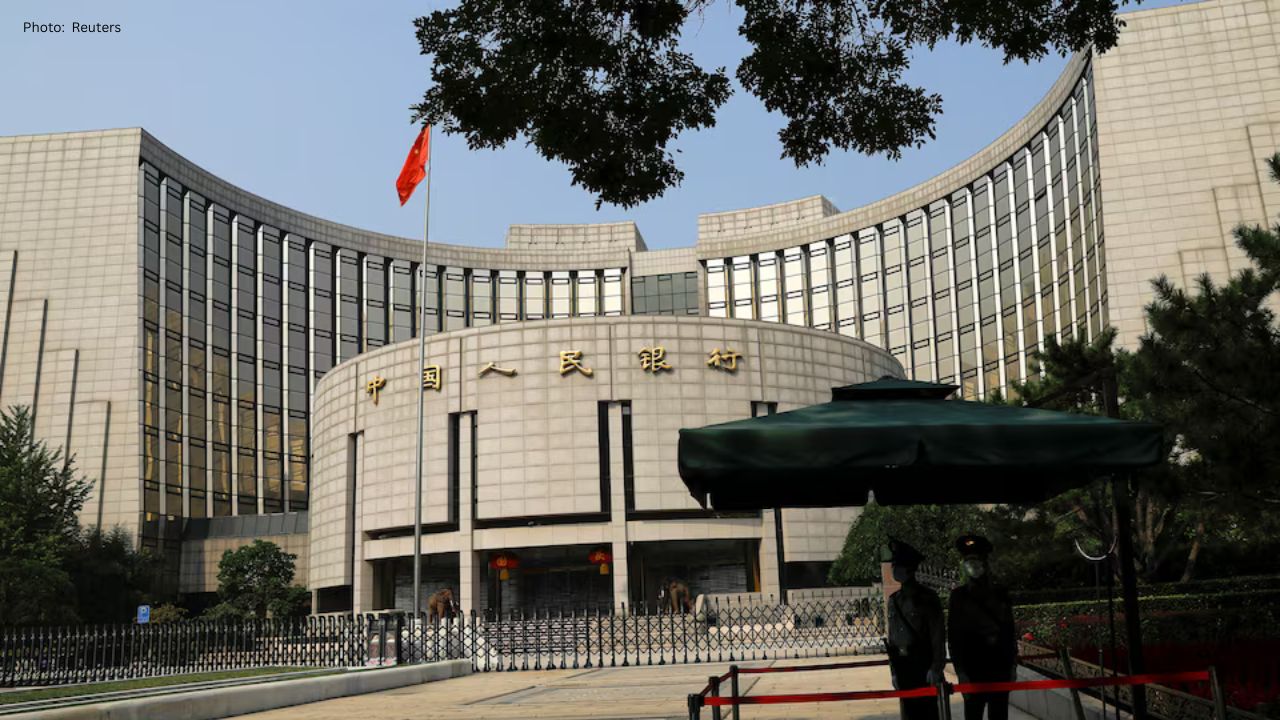
China has opted to keep its primary benchmark lending rates stable for the seventh month in a row, indicating a measured approach toward achieving growth targets while being mindful of persisting economic challenges. This decision, revealed on Monday, aligns with what experts anticipated and illustrates Beijing's careful handling of the economy during this gradual recovery phase.
The one-year loan prime rate, crucial for corporate borrowing and short-term loans, is held at 3.00%. Meanwhile, the five-year loan prime rate, closely tied to mortgage rates, stays at 3.50%. These rates influence the interest banks levy on businesses and households throughout the nation.
By maintaining these rates, Chinese leaders seem confident that the economy is on the path to reaching the government’s anticipated growth target, estimated at around 5%. This decision further suggests that there is no pressing need for new monetary stimulus at present, even as certain sectors continue to face difficulties.
The central bank has been employing a “cross-cyclical” approach to policy, aimed at stabilizing economic fluctuations rather than making abrupt policy changes. Additionally, banks are experiencing squeezed profit margins, which may deter immediate rate reductions as further cuts could jeopardize the financial system if implemented hastily.
Recent economic indicators depict a varied scenario. In November, growth in factory output slowed, and retail sales also experienced a decline. These trends may indicate weaker demand from consumers and businesses alike. The ongoing property crisis has further dampened confidence, leading to increased caution in spending and borrowing.
New bank lending recorded in November was below expectations, primarily due to a significant drop in household borrowing. Many families are reluctant to incur new loans, particularly for housing, due to uncertainties surrounding jobs, income, and property valuations. This reluctance limits the positive effects of stable interest rates on overall economic activities.
Earlier this month, during the annual Central Economic Work Conference, Chinese officials asserted their commitment to a proactive fiscal policy for the coming year. This approach illustrates the government's intent to employ spending initiatives to bolster consumption and investment, ensuring stable growth. Officials also highlighted the importance of flexible policy tools, including interest rates and reserve requirements, should circumstances necessitate action.
Some economists predict that monetary easing may occur by early 2026. Analysts from renowned global banks suggest there may be a slight policy rate cut and easing of reserve requirements to encourage government bond issuance and economic activity. Nevertheless, these measures are currently viewed as non-urgent, given the ongoing growth trends.
For now, China's choice to keep lending rates stable underscores a cautious wait-and-see approach. Policymakers are striving to support growth while weighing the risks of taking hasty actions. While the economy isn't performing at its highest potential, officials seem to trust that existing measures are sufficient for the time being, while retaining the ability to respond if conditions deteriorate.