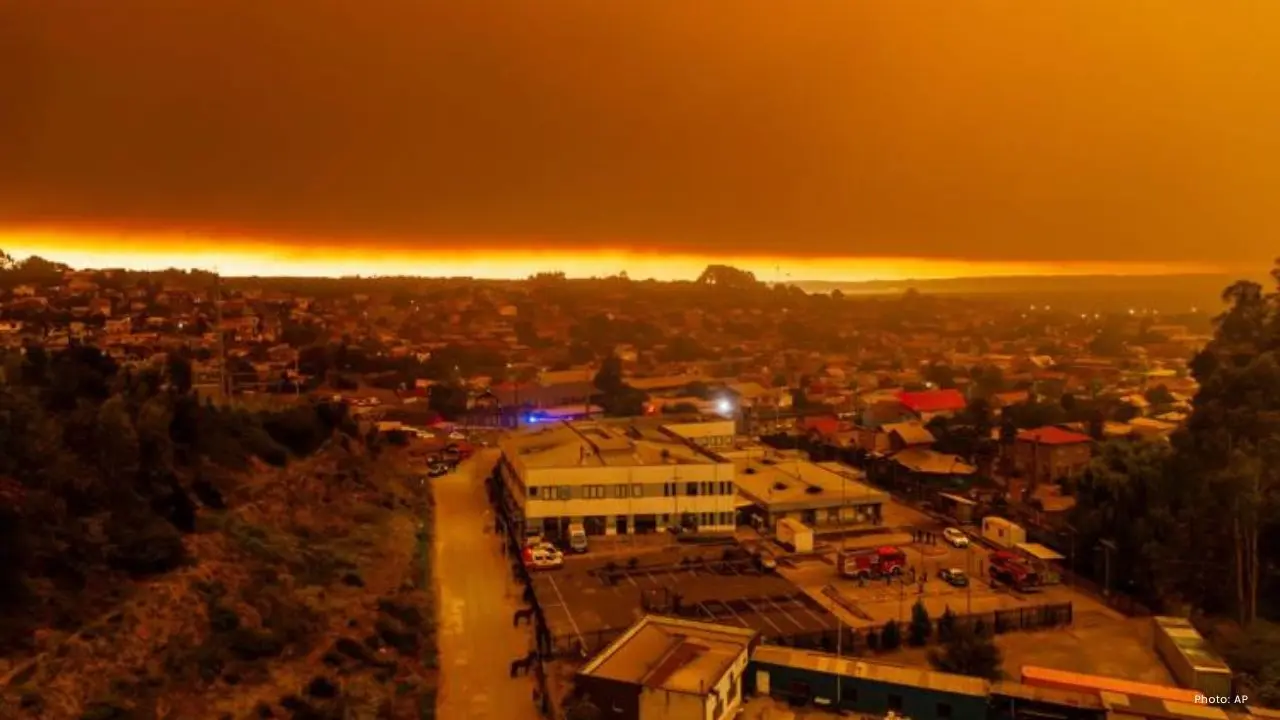
Chile is enduring one of its most tragic episodes in recent memory as relentless wildfires ravage central and southern regions. Up to 18 lives have been lost, thousands of homes have been damaged or obliterated, and tens of thousands of residents are fleeing to safety. What began as isolated blazes quickly escalated into a national catastrophe, leaving families engulfed in sorrow and uncertainty.
The wildfires ignited during an unprecedented heat wave, with temperatures soaring over 38 degrees Celsius (100 degrees Fahrenheit). Fierce winds intensified the flames, overwhelming firefighters and leaving residents scrambling to escape. Entire hills have turned to ash, and once-peaceful towns now lie in ruins.
In response to the crisis, President Gabriel Boric declared a state of disaster in the Biobío and Ñuble regions, roughly 500 kilometers south of Santiago. This declaration enables military assistance in disaster management and supports front-line firefighters. Currently, over two dozen fires are still raging, consuming approximately 8,500 hectares of land according to Chile’s national forestry agency.
In the heavily affected city of Concepción, President Boric expressed his condolences and solidarity with those impacted. He cautioned that the reported death toll might rise as rescue operations reach isolated areas. Initial estimates indicate that at least 300 homes have been lost, but officials believe the real figure could surpass 1,000 in the Biobío region alone.
More than 50,000 individuals have been compelled to evacuate, many escaping in the dead of night with their children, pets, and meager belongings. Some families fled for their lives as the flames roared closer.
“Our foremost goal is to extinguish the fire,” remarked President Boric. “But we must not overlook the human pain. Families are losing everything; these are trying times.”
Alongside the grief, a swell of anger is surfacing. Local leaders and residents expressed frustration over delayed assistance. The mayor of Penco criticized the government’s slow response, emphasizing that their community endured hours of destruction without visible support.
Brave firefighters are battling nonstop against the raging flames that have devastated homes, vehicles, schools, and even places of worship. As smoke engulfed the sky, daylight shifted to an eerie orange haze. Emergency shelters were established as thousands sought refuge.
Eyewitnesses recounted chilling experiences. Many believed the fire would halt at the forest's edge and hesitated to evacuate—a decision that proved fatal.
“It was completely out of control,” remarked one resident. “No one anticipated this would happen.”
Tragic discoveries have been made, with charred bodies located in homes, fields, roads, and even burned cars. In smaller communities, nearly everyone is connected to someone who has perished; the grief is palpable, resonating throughout neighborhoods.
Interior Minister Álvaro Elizalde cautioned that dangerous weather conditions persist. Extreme heat and dry winds are set to continue, complicating firefighting efforts further. Authorities have imposed nighttime curfews in certain areas to safeguard residents and facilitate emergency operations.
While wildfires are a seasonal reality in Chile, with frequent outbreaks every summer, experts warn that climate change and persistent drought are exacerbating their severity and frequency. The wildfires in 2024 claimed at least 130 lives, making it the deadliest natural disaster since the 2010 earthquake.
The current crisis serves as a stark reminder that such disasters are no longer anomalies; they are becoming increasingly commonplace.
Neighboring Argentina is experiencing similar wildfire challenges, with thousands of acres in Patagonia ravaged in recent weeks due to the same severe conditions. Across South America, climate extremes are pushing governments, emergency services, and communities to their limits.
This disaster prompts deeper questions: Are nations adequately preparing for such extreme weather events? Are early warning systems robust enough? Are forest management practices effectively reducing fire hazards?
Unfortunately, for families grieving lost loved ones, these inquiries come too late. Survival and recovery are of utmost priority right now—homes need rebuilding, communities need healing, and emotional scars must be addressed.
Chile stands at a significant juncture. The courage of firefighters, volunteers, and citizens has been remarkable, but bravery alone cannot suffice. Strategic planning, improved disaster response mechanisms, and serious climate action are vital for preventing future tragedies.
As the fires persist, the nation mourns its dead and hopes for the safety of those still in peril. Amid this tragedy, there lies hope that Chile will emerge stronger and more prepared for future challenges.