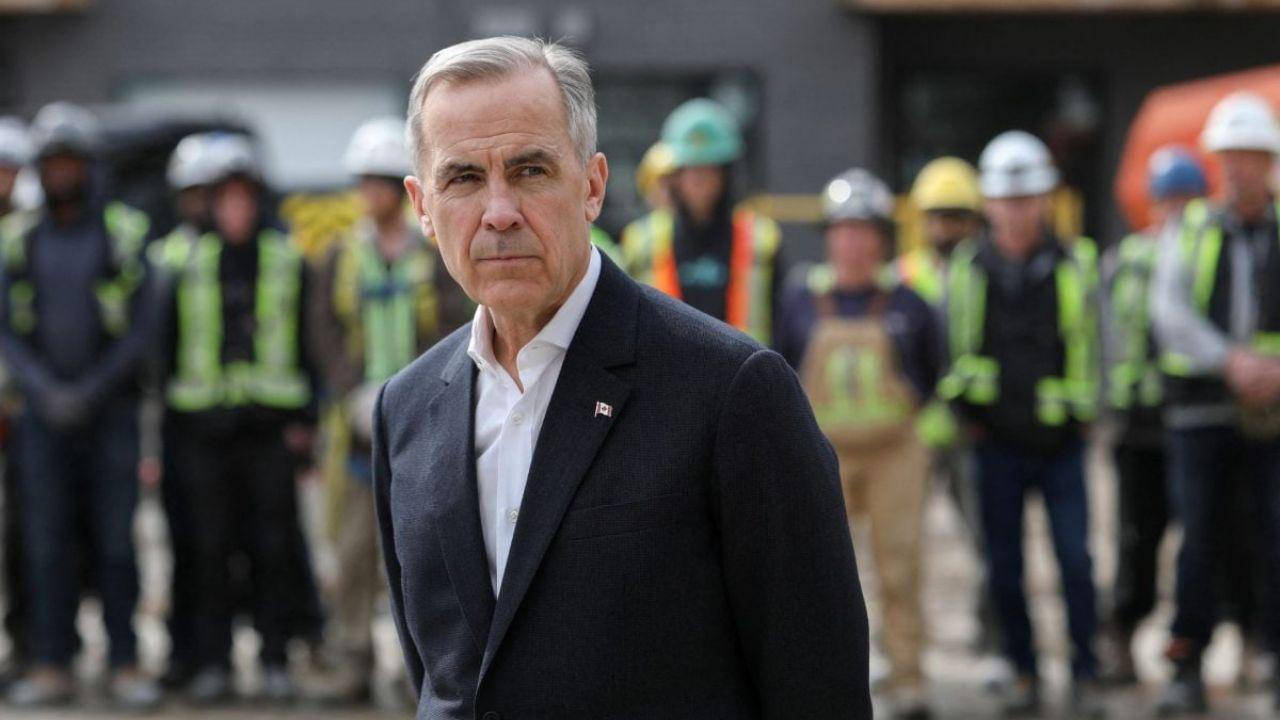
Photo:reuters
Introduction: A Crucial Dialogue in the High Arctic
In a high-stakes meeting set against the backdrop of the vast Canadian Arctic, Prime Minister Mark Carney sat down with Inuit leaders in Inuvik, Northwest Territories, for a critical dialogue centered on his government's deeply controversial major projects legislation. The summit of the Inuit-Crown Partnership Committee, co-chaired by the Prime Minister and Natan Obed, president of Inuit Tapiriit Kanatami (ITK), was a pivotal moment in an unfolding national debate. At issue is Bill C-5, the One Canadian Economy Act, a new law granting the federal government sweeping powers to fast-track development. While the government touts the bill as essential for national economic resilience, it has sparked fierce opposition from Indigenous leaders across the country, who see it as a modern-day assault on their sovereignty, rights, and the principle of consultation. This meeting was a crucial test of the government's commitment to reconciliation, as Inuit leaders sought to secure their place as true partners in shaping Canada's economic future.
The Legislation: A Double-Edged Sword of Development
At the heart of the controversy is Bill C-5, a law that fundamentally reshapes the approval process for major infrastructure projects in Canada. Passed on June 26, the act gives the federal cabinet extraordinary authority to declare certain projects—such as pipelines, mines, railways, and electricity transmission lines—to be in the "national interest". This designation allows the government to fast-track their approval, potentially sidestepping established environmental assessment processes and, most critically, aspects of the Crown's constitutional duty to consult with affected Indigenous communities.
The government's stated rationale is to build a more resilient and unified Canadian economy by cutting through the red tape that can delay critical, multi-billion dollar projects for years. However, the law has been widely condemned by Indigenous groups and human rights organizations, who warn that it encourages the fast-tracking of infrastructure projects without safeguarding Indigenous Peoples' right to free, prior and informed consent. Critics argue that the bill was drafted and passed without adequate consultation, prioritizing speed over the rights and well-being of the communities most impacted by development.
Inuit Priorities: Beyond a Single Bill
While Bill C-5 dominated the agenda, Inuit leaders, representing a population that inhabits 40% of Canada's land mass, arrived with a comprehensive set of priorities. Natan Obed made it clear that Inuit had "many questions" about the new law and needed clarity on how their modern treaties and self-governance agreements would be respected within this new framework. He came into the meeting seeking assurances that the unique legal status of Inuit land claim agreements would not be undermined.
The discussion, however, extended far beyond a single piece of legislation. The leaders pressed the Prime Minister on a wide range of urgent and long-standing issues that define life in Inuit Nunangat (the Inuit homeland). These included:
-
The severe and ongoing housing crisis across the North.
-
The critical need for investment in education and infrastructure.
-
The preservation of Indigenous languages.
-
The effective implementation of the child-first initiative to protect children's welfare.
-
The growing importance of Arctic security and defence in a changing geopolitical landscape.
For the Inuit leadership, the meeting was an opportunity to reinforce that economic development cannot happen in a vacuum and must be integrated with social progress and the strengthening of their communities.
The Government's Position: A Message of Partnership and Respect
Prime Minister Carney and his contingent of cabinet ministers, including Indigenous Services Minister Mandy Gull-Masty, came to Inuvik with a clear message of partnership and reassurance. In his opening remarks, Carney made a direct and unequivocal promise: "I want to be clear, up front, that the act fully respects treaty rights, including modern treaties, the modern treaties with Inuit treaty organizations. It fully respects treaty-based environmental assessment processes".
Carney framed the legislation not as a tool to override rights, but as a mechanism to make the federal government a more "effective and efficient" partner in development. The government's strategy to allay concerns rests on several key pillars:
-
Ongoing Consultation: A commitment to hold ongoing talks with First Nations, Inuit, and Métis leaders on the implementation of the act.
-
Indigenous Advisory Council: The establishment of a new council to provide direct input into the major projects office, although this has been criticized by some First Nations leaders as a "colonial construct" that is not grounded in treaty relationships.
-
Economic Inclusion: A new $10 billion Indigenous Loan Guarantee Program designed to provide capital for Indigenous communities to take equity stakes in the very projects that will impact their lands, turning them from stakeholders into owners.
Minister Gull-Masty described the meeting as a forum for finding "mutually beneficial" ways forward that respect Inuit sovereignty, while Carney spoke of building a "shared future" and unlocking the Arctic's "full economic potential".
A Tense Precedent: The Shadow of the First Nations Summit
The stakes for the Inuvik meeting were significantly raised by the outcome of a similar summit held with First Nations leaders in Ottawa just a week prior. That meeting was fraught with tension and left many chiefs deeply dissatisfied, with some walking out in protest and others stating they were left with "more questions than answers". Leaders like Chief Vernon Watchmaker of Kehewin Cree Nation accused the government of undermining treaty rights and pursuing assimilation under the guise of economic unity. This contentious precedent put immense pressure on Carney to achieve a more positive and collaborative outcome in Inuvik and to demonstrate that his government's consultation process was more than just "political theater".
The Outcome: Reassurances Given, but Broader Questions Remain
By the end of the day-long meeting, the tone from the Inuit leadership was markedly different from that of their First Nations counterparts the week before. Natan Obed told reporters that he had received "reassurances" from the Prime Minister. He stated that Carney was unequivocal in his promise that Bill C-5 would "not interrupt the processes under our modern treaties and that there will be full partnership of Inuit within these processes". Obed described the talks as a "fulsome conversation" and a positive step forward.
This outcome suggests that the government was successful in addressing the specific concerns of the Inuit, whose relationship with the Crown is largely defined by modern treaties and land claim agreements, which differ legally from the historic treaties held by many First Nations. However, while a success for the Inuit-Crown partnership, the meeting does not resolve the deep-seated opposition to the bill from many other Indigenous groups across Canada.
A Path Forward Paved with Promises
The meeting in Inuvik marks a significant moment in the complex and evolving relationship between the Canadian government and its Indigenous peoples. For the Inuit, it concluded with crucial promises of respect for their rights and a commitment to partnership in the new economic landscape being forged by Bill C-5. Prime Minister Carney successfully navigated a potential political minefield, achieving a collaborative tone that had eluded him with other Indigenous groups.
However, the fundamental controversy surrounding the One Canadian Economy Act is far from over. The government has made powerful promises to the Inuit, and the true test will be in the implementation of the law and the nature of the projects that are advanced. As Canada pushes forward with an ambitious economic agenda, it now does so with a set of explicit commitments to its northernmost peoples. The world, and particularly Indigenous communities across Canada, will be watching closely to see if these promises made in the heart of the Arctic are kept, and whether a new era of mutually beneficial partnership can truly be built on a foundation of respect for rights and sovereignty.