Photo:AP
Canada once stood at the forefront of the global movement to ban anti-personnel landmines. Spearheading the 1997-1998 Ottawa Process and forging consensus that led to the Mine Ban Treaty, Ottawa was lauded for validating the notion that war's remnants—hidden, indiscriminate weapons—must never go unchecked. But in a dramatic turn, six countries directly tied to Russia’s aggressive posture have announced withdrawal—Ukraine, Poland, Lithuania, Latvia, Estonia, and Finland—citing advanced defense needs. These actions threaten to unravel decades of progress in humanitarian law and civilian protection, raising alarm among international diplomats, disarmament advocates, and Canadian leaders.
Gold Standard Origins: Canada’s Pioneering Role
In the mid-1990s, then-Foreign Minister Lloyd Axworthy and his team led Canada’s charge in creating a global framework against landmines. The diplomatic Ottawa Process brought together states, NGOs, and international institutions, culminating in the 1997 signing of the Treaty and its enactment in 1999. This milestone paved the way for 165 countries to formally commit to a shared vision: destroying stockpiles, stopping deployment, and clearing existing mines. By 2013, over 50 million landmines had been dismantled, and mine-clearance programs expanded to millions of hectares. Canadian leadership remained central to funding, diplomacy, and advocacy efforts long after the Treaty’s creation.
Unexpected Withdrawals: A Cascade of Exits
In recent months, traditional gatekeepers of the Treaty departed from its ranks. Ukraine cited Russia's extensive mine use in its ongoing war and justified withdrawal as necessary to defend its territory. Accessions followed from Poland, Lithuania, Latvia, and Estonia, with Finland passing withdrawal legislation in June. These nations share borders with or lie close to Russian territory—making their decisions grounded in pressing security anxieties. They have maintained, however, declared intentions to operate within humanitarian law, suggesting new types of “defensive mine” use.
Security First: The Argument for Mines
Each departing nation cited a fundamental shift: doctrine perfected in peacetime does not always match the imperatives of war. Officials point to Russia’s extensive, indiscriminate mine deployment in Ukraine. With conventional forces stretched thin and infantry facing mechanized Russian troops, mines are seen as critical to delaying enemy advance, securing borders, and creating tactical obstacles—particularly in rugged or contested terrain.
In Ukraine’s case, refusal to adapt to defensive mine warfare would, President Zelenskiy and military leaders argue, concede initiative to Russia—who never bound itself to the Treaty. Similarly, NATO-adjacent countries expressed concerns about rapid escalation if confronted without comparable deterrent options. Their point: without access to mines, they believe their lean military forces could be easily overwhelmed.
Humanitarian Fallout: Mines Kill Long After War Ends
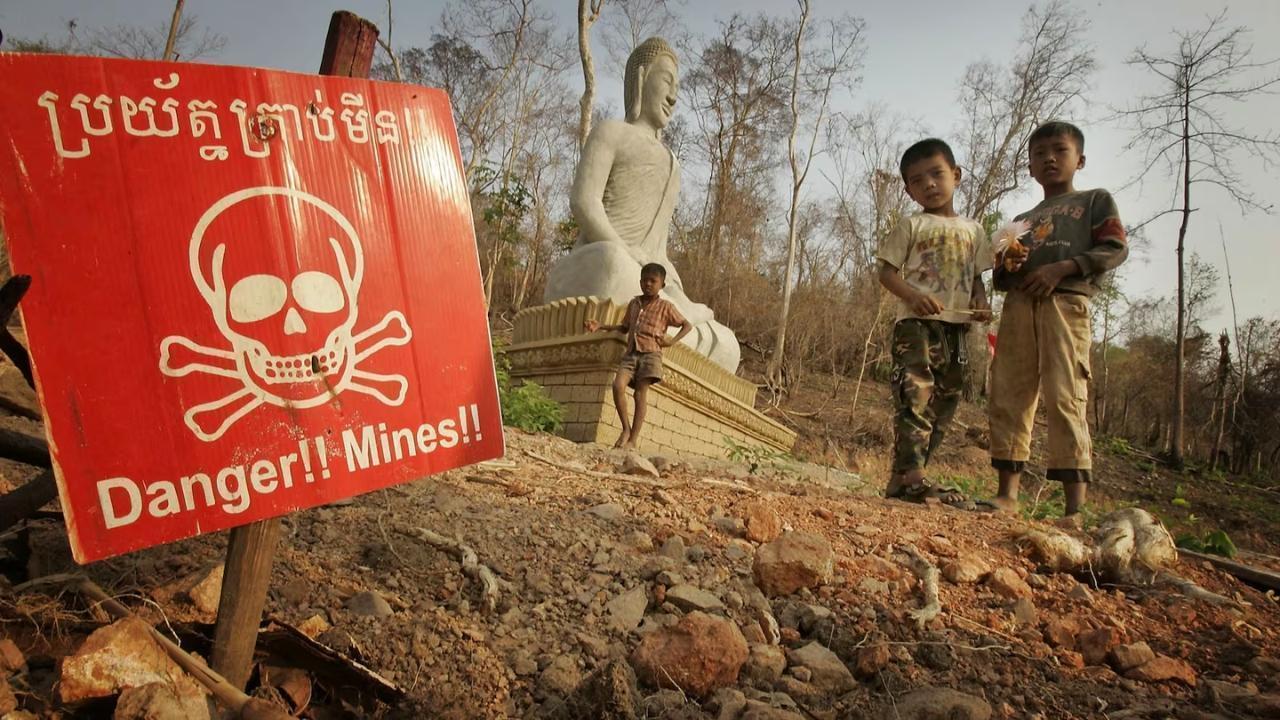
Yet history tells a different story. Landmines are notorious for their deadly persistence. Expert Jody Williams—co‑founder of the International Campaign to Ban Landmines—reminds us: “The war ends. The landmine goes on killing.” Mines cannot distinguish soldiers from civilians, and remain lethal for decades. Families lose limbs; children die; farmland and roads become unusable. Countries like Cambodia, Angola, and Bosnia exemplify the generational scars left behind long after peace treaties are signed.
Humanitarian groups warn that renewed mine use will cause civilian tragedies, complicate future reconstruction, and set back decades of mine clearance. Withdrawal from the Treaty risks revival of civilian casualties and reverses momentum built since the 1990s.
Canada Speaks Out: Defense of a Humanitarian Norm
Canada—long a champion of mine clearance—has reacted strongly. Former diplomats like Axworthy describe the withdrawals as the start of a troubling unraveling of the Treaty and other arms-control frameworks. NGOs such as Mines Action Canada and Humanity & Inclusion Canada, supported by UN ambassadors like Louise Arbour, are urging Ottawa to lead a diplomatic counteroffensive. They call for solidarity with remaining parties and a recommitment to the Mine Ban Treaty’s vision.
A coalition of 100 Nobel Peace laureates has issued an open letter, and the UN Secretary-General flagged the withdrawals as heightening risks to civilians. National groups hope Canadian diplomats will engage counterparts in Europe, defend treaty norms at NATO forums, and reinforce mine removal initiatives worldwide.
Legal Framework and Treaty Parameters
The Treaty’s terms are strict: signatories must refrain from using, producing, or stockpiling landmines. Critically, Article XXII prohibits withdrawal during armed conflict—a restriction meant to ensure continuous protection. While some withdrawing states argue they are not yet in legal direct conflict, their moves set a far-reaching precedent. The Treaty, which once seemed nearly universal, will now lose its influence precisely when conflict and geopolitical tension rise.
Erosion of International Humanitarian Norms
These withdrawals signify more than a policy pivot—they signal a weakening of the global humanitarian framework. Disarmament treaties—including those banning chemical weapons, cluster munitions, or landmines—operate based on collective trust. Once one state abandons the norm, others follow. Analytical voices warn that the sliding exits may hasten global fragmentation in arms control, undermining future collective action.
Civil Society’s Alarm Bell
Civil society groups are mobilizing rapidly. The International Campaign to Ban Landmines, the Cluster Munition Coalition, Human Rights Watch, and prominent individuals are publicly condemning withdrawals. They argue that decision-makers are underestimating the long-term humanitarian costs and reviving weapons whose use was previously illegal and unconscionable. Non‑profits in Ukraine report that, even before withdrawals, mines were already being planted, hurting civilians and exhausting demining efforts.
Canada’s Diplomatic Options
Canada’s diplomatic toolbox includes several responses:
-
Leading outreach and persuasion among withdrawing countries
-
Hosting conferences or regional dialogues to address evolving security needs without sacrificing norms
-
Vetting export controls on mine-adjacent technologies
-
Scaling up funding for mine clearance in affected regions
-
Encouraging NATO to formulate policy responses that balance defense with humanitarian imperatives
Strategic Alternatives and Defense Innovation
Defenders argue mines are blunt instruments for border defense. Canada and allies propose alternatives—such as sensor networks, tripwires, surveillance drones, barrier systems, and rapid-response infantry forces—that could deter threats without humanitarian fallout. Investing in such systems now could undercut the justification for mines and preserve Treaty norms.
Future Risks and Fragility
The domino effect is real. With six withdrawals in one season, the Treaty’s credibility is under attack. Russia, non-party since inception, may feel emboldened. The United States and China are watching closely; a major fracture could weaken advocacy for the Treaty’s expansion and implementation. Mine banning had made sense after Cold War turmoil; the return of strategic conflict may now hollow out its foundation.
Canada’s Moment of Reckoning
For Canada, the current juncture demands leadership. A willingness to engage—not retreat—from small but real conversation on border security could help preserve the Treaty’s spirit. Canada’s identity as a humanitarian power is at stake; failure to act decisively risks reducing its legacy to historical footnote rather than evolving model for norms-driven diplomacy.
Conclusion
Canada’s leadership on the Ottawa Treaty changed the world. But the recent exodus of six nations from what was nearly unanimous consensus marks an urgent crossroads: Will a world gravitating back toward major power competition and strategic distrust abandon humanitarian norms? Or can Canada—through diplomacy, innovation, and principled persistence—reinvent the Treaty for new threats and preserve civilian protection?
The stakes could not be higher. In the coming weeks, Canada faces a critical choice: respond with hemispheric engagement or watch landmine norms give way to renewed militarization—and renewed suffering—for generations to come.