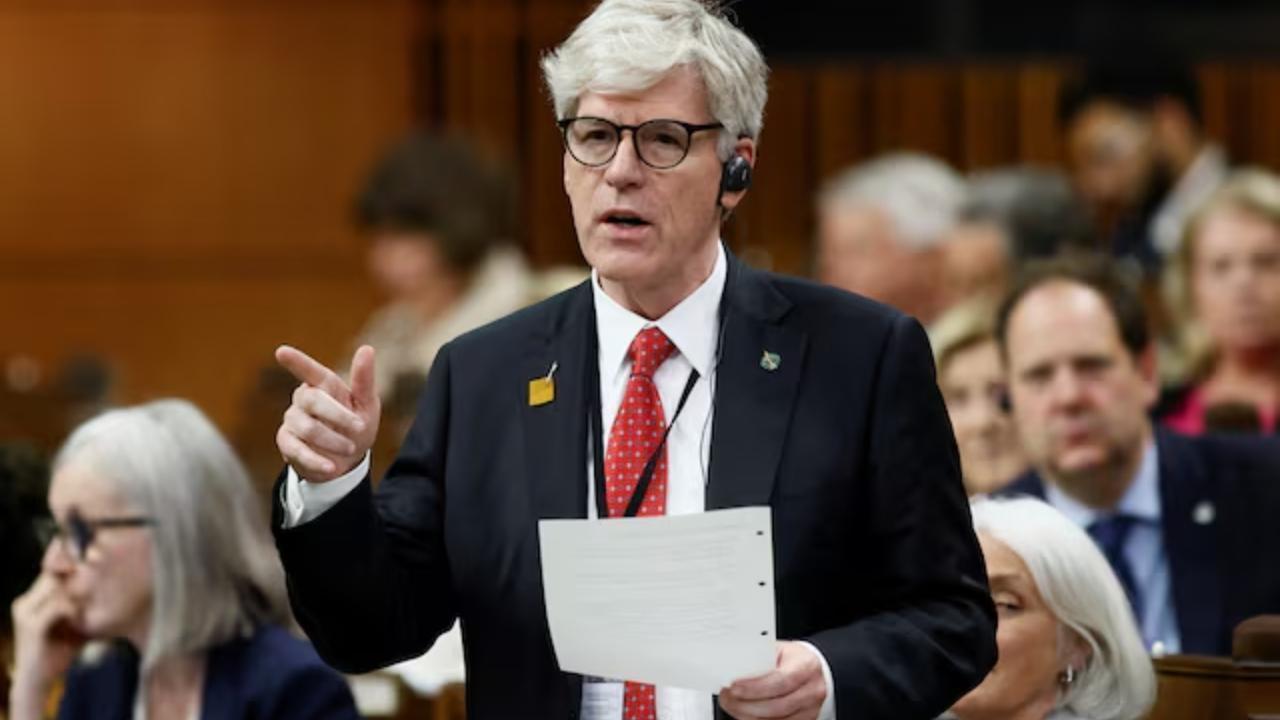
Photo:Reuters
Canada’s long-standing ambition to diversify its energy exports beyond the U.S. has reached a crucial juncture. In late June, the federal government passed sweeping legislation aimed at fast-tracking nationally significant infrastructure projects—including oil pipelines. The reforms were hailed as a bold step toward economic resilience and strategic autonomy. But despite this green light, no major company has stepped forward with a formal proposal to build a crude oil pipeline to the Pacific coast.
Natural Resources Minister Tim Hodgson has confirmed that discussions with energy firms are ongoing, but responsibility now lies squarely with industry. In other words, Ottawa has cleared the bureaucratic path—but whether a pipeline project will actually materialize depends entirely on whether private investors are willing to lead the charge.
The Political Will Is in Place, But the Blueprint Remains Blank
“This government is prepared to work with the private sector,” said Minister Hodgson at a press briefing. “We’ve built the regulatory runway. Now it’s up to industry to take off.”
The newly enacted legislative package includes time-bound project reviews, streamlined environmental assessments, and reduced legal exposure for proponents that meet regulatory standards. It’s a marked shift from the bureaucratic bottlenecks and legal entanglements that dogged previous pipeline efforts—most notably the Trans Mountain Expansion (TMX), which suffered repeated delays, ballooning costs, and fierce political resistance.
Yet despite this apparent red carpet, the private sector has so far remained on the sidelines.
Danielle Smith’s Pipeline Vision: Alberta Leads the Regional Charge
One notable exception to the private sector’s caution is Alberta Premier Danielle Smith, who has declared her intent to develop a corridor connecting Alberta’s oil sands to the northern B.C. port of Prince Rupert. The proposal, though still in its early stages, is ambitious: a new export route that would directly access global energy markets, bypass U.S. dependency, and potentially align with the Pathways Alliance carbon capture and storage (CCS) initiative.
“This isn’t just about getting Alberta oil to tidewater,” said Smith during a recent provincial announcement. “It’s about building infrastructure that allows us to compete in a carbon-constrained world.”
Estimates peg the total project cost between C$10 billion and C$20 billion, depending on the route, technology, and environmental mitigation strategies used. The provincial government is actively scouting for private partners, but has not yet named a lead proponent or consortium. Smith's plan could gain traction if Ottawa offers fiscal guarantees, tax incentives, or regulatory stability—elements still under discussion in federal circles.
Why a Pacific Pipeline Now? Strategic Imperatives at Play
Currently, over 90% of Canadian crude oil exports go to the United States. While the U.S. has been a reliable buyer, the lack of export route diversity has long been viewed as a strategic vulnerability. This dependency has become increasingly problematic amid rising U.S. protectionism, tariff threats, and the growing competitiveness of American shale oil.
A Pacific pipeline would dramatically alter this equation, offering Canadian producers direct access to Asian markets—including Japan, South Korea, and India—where long-term energy demand is expected to remain strong. It would also provide Canada with leverage in trade negotiations, allowing it to pivot when economic or political pressures in the U.S. become untenable.
“This is not just about oil,” noted energy economist Dr. Julia Renwick. “It’s about geopolitics. It's about Canada asserting itself as a global energy supplier, not just a regional one.”
Industry Still Hesitant: A Complex Web of Risk and Regulation
Despite the economic logic and government incentives, industry has not yet bitten. Major pipeline operators like Enbridge, Pembina Pipeline Corp, and TC Energy have expressed cautious interest, but none have formally committed to a project or filed proposals under the new legal framework.
Why the hesitation?
1. Carbon Policy Uncertainty
Companies say they remain unclear on how carbon pricing, offset requirements, and long-term decarbonization targets will be applied to new infrastructure. Many worry about investing billions into a project that could later be penalized by shifting environmental regulations.
2. Lessons from Trans Mountain
The federal government’s experience with the TMX project, which Ottawa had to purchase to prevent cancellation, looms large. It ran massively over budget and faced intense opposition from Indigenous groups, environmental activists, and some municipal governments. That legacy continues to chill investor enthusiasm.
3. Litigation and Permitting Risk
Even with new legislation, developers know that projects of this scale remain vulnerable to court challenges, delays in land acquisition, and community opposition—particularly in ecologically sensitive or Indigenous-held territories.
4. Global Market Uncertainty
Oil prices remain volatile. With growing competition from U.S. exports and increased global investment in renewables and LNG, some companies are questioning whether the long-term returns on a Pacific pipeline justify the near-term capital outlay and reputational risk.
The Pathways Alliance: Crucial to Climate Credibility
One of the most important elements linked to any future pipeline is the Pathways Alliance, a coalition of Canada’s largest oil sands producers committed to achieving net-zero emissions by 2050. Their carbon capture and storage (CCS) project—planned for central Alberta—could be a game changer in legitimizing Canadian crude on the international stage.
According to Minister Hodgson, any Pacific-bound pipeline project will need to integrate Pathways’ emissions reduction technologies. That could mean building shared infrastructure, such as CO₂ pipelines, sequestration hubs, and regulatory frameworks that verify emissions performance.
“This is not just about exporting oil—it’s about exporting clean, responsibly produced energy,” Hodgson stated. “The two must go hand in hand.”
While environmental critics remain skeptical, industry insiders suggest that linking the pipeline to CCS could make the project more palatable for both investors and regulators, especially in the era of ESG (Environmental, Social, Governance) scrutiny.
What’s Missing: The Final Push from Ottawa
Although the legislative groundwork has been laid, many in the energy sector are still waiting for additional clarity and assurances from Ottawa. Among the requests circulating:
-
Loan guarantees or public-private financing models
-
Clear carbon cost ceilings for project timelines
-
Royalty adjustments for oil exported via Pacific ports
-
Infrastructure coordination with Indigenous communities
The federal government has indicated a willingness to adjust its position based on market feedback, but no major announcements have been made. This regulatory ambiguity continues to stall decision-making at the boardroom level.
“The intent is there. The policy signals are positive. But execution remains incomplete,” said one anonymous executive from a major pipeline company. “Nobody wants to be first until the rules are crystal clear.”
Indigenous Partnerships: The Make-Or-Break Factor
A vital component of any new infrastructure project in Canada is genuine, long-term Indigenous engagement. The TMX experience showed that failure to obtain widespread Indigenous support can derail even the most promising initiatives.
Premier Smith has already initiated dialogues with northern B.C. First Nations, many of whom control land or have traditional claims near the proposed corridor. However, the depth of consultation, the scope of benefit-sharing agreements, and the autonomy of Indigenous-led investment remain unresolved.
Some groups have expressed cautious openness to pipeline discussions—especially if paired with community equity stakes, environmental protections, and workforce development plans. Others remain strongly opposed, citing ecological risks and treaty concerns.
What’s Next: Decision Points and Timelines
In the months ahead, several key milestones will determine whether Canada’s Pacific pipeline dreams materialize—or stall once again.
The federal government is expected to launch a formal “open window” period for project proposals under the new legislation. This is the earliest a private firm could submit a detailed plan.
Ottawa may release updated carbon pricing guidance, which could significantly impact how the oil sector views long-term viability.
If the CCS project breaks ground as scheduled, it could lend credibility to pipeline plans and attract ESG-conscious investors.
Expectations are high for potential fiscal incentives, including tax credits, investment supports, and Indigenous infrastructure funding.
A Defining Moment for Canadian Energy Strategy
Canada’s push for a new Pacific crude pipeline is more than just an infrastructure challenge—it’s a test of national strategy, political will, economic resilience, and environmental leadership.
With the legislative path now clear and provincial leaders like Premier Smith championing the cause, the stage is set. But without a willing and confident private sector partner, the plan risks languishing in political rhetoric and unrealized potential.
Will industry step forward? Will Ottawa go further to make the project irresistible? And can Indigenous communities be partners, not opponents, in shaping a 21st-century energy corridor?
The answers to these questions will shape Canada’s energy identity for decades. A successful Pacific pipeline could redefine Canada’s role on the global energy stage. A failure to act might leave the country permanently locked into its historical reliance on U.S. markets—and unable to seize new frontiers in a rapidly evolving global economy.
The clock is ticking. The world is watching. And the opportunity—though fleeting—is still on the table.