Photo:reuters
Canada’s Bold Move to Protect Steel Amid Global Turmoil
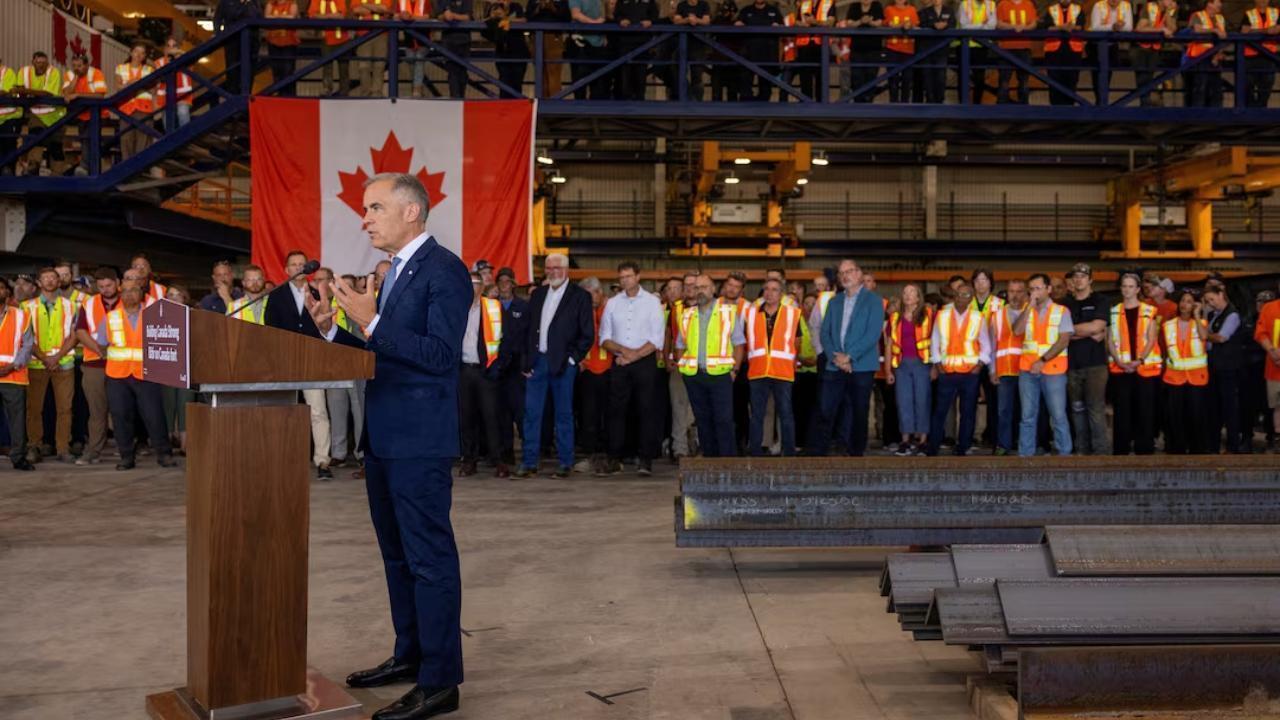
On July 16, 2025, Canadian Prime Minister Mark Carney unveiled a sweeping package of protective measures aimed at sheltering Canada’s domestic steel industry from intensifying global trade disruptions. At the heart of the announcement are new tariff rate quotas and significant duties designed to shield Canadian producers from unfair competition and trade diversion triggered by recent U.S. tariff spikes and shifting global market dynamics.
The measures include:
-
50 % tariffs on steel imports exceeding 2024 volumes from countries with free trade agreements—excluding the United States.
-
25 % duties on steel imported from any nation using steel melted and poured in China—regardless of existing trade deals.
-
For non-FTA countries, the tariff-free quota is halved (now 50 % of 2024 levels), beyond which a 50 % tariff applies.
-
A C$1 billion investment fund to support innovation and modernization in Canada’s steel industry.
-
A directive to prioritize Canadian steel suppliers in government procurement.
This multifaceted strategy signals a major shift in Canada’s trade policy, reflecting growing domestic concerns about global market imbalances and the cascading fallout from U.S. tariff hikes.
Unpacking the Tariff Rate Quota Strategy
Under the new framework, countries with free trade agreements (FTAs), such as Mexico, the European Union, and others—but not the U.S.—can continue tariff-free shipping up to 100 percent of their 2024 volumes. Any excess shipments above that threshold will face a steep 50 percent tariff. Previously, importers benefited from unrestricted, tariff-free access, which allowed foreign suppliers to redirect excess steel to Canada when the U.S. market tightened.
Carney framed the quotas as a proactive effort to counter trade diversion, where suppliers reroute exports to Canada to compensate for U.S. restrictions. He stated that these quotas will provide predictable limits, protect Canadian jobs, and stabilize the domestic market, while preserving vital trade relationships.
For countries without FTAs, the tariff-free limit drops from 100 percent to 50 percent of 2024 volumes, with a 50 percent tariff on all additional imports. This distinction is central to Canada’s approach: offering preferential treatment to longstanding trade partners while maintaining pressure on non-FTA exporters.
Targeted Tariffs on Chinese-Origin Steel
A notable facet of the plan is the blanket 25 percent tariff on any steel containing materials melted and poured in China, irrespective of trade agreements. While Canada has existing 25 percent duties on Chinese steel to prevent circumvention via other countries, this renewed action broadens that scope to cover finished goods from China, even those routed through third-party nations.
This element reflects global concern over China’s steel surplus, low-cost flooding of international markets, and its effects on heavy industries elsewhere. By targeting such imports, Canada aims to reinforce both trade fairness and national economic security.
Government Procurement as an Industrial Lever
Carney also committed to favouring Canadian steel in federal public works and defense contracts—a powerful economic lever. Given the scale of spending—spanning infrastructure, transit systems, bridges, pipelines, and military hardware—this procurement preference signals a long-term commitment to domestic producers. It sends a clear message: Canadian steel will be front-of-mind in Canada’s capital investments.
C$1 Billion Fund: Fueling Innovation and Defense Readiness
The government’s C$1 billion industry support fund aims to subsidize modernization, research, workforce training, and product diversification. Strategic sectors like defense and energy infrastructure stand to benefit most. The fund’s design blends short-term relief with long-term investment in efficiency, sustainability, and technological upgrades. For a sector grappling with economic pressure and global competition, the fund offers an avenue for resilience and strategic transformation.
Political Calculations and Domestic Pressures
Domestically, the steel industry has experienced turbulence since U.S. steel and aluminum tariffs doubled from 25 percent to 50 percent in early 2025. Canada reciprocated with its own measures, but concerns shifted toward new vulnerabilities—particularly "trade diversion" that allowed cheaper steel from China, South Korea, Turkey, and Mexico to undercut Canadian prices by entering via Canada and being re-exported to the U.S.
Steel producers, represented by the Canadian Steel Producers Association (CSPA), have consistently lobbied Ottawa for stronger protections. Catherine Cobden, the association’s CEO, praised the new measures but warned their rollout may be too little, too late for workers already affected by layoffs, signaling that deeper action may follow.
U.S.–Canada Dynamics: Navigating a Trade Spat
These Canadian tariffs are a direct response to the recent imposition of 50 percent duties by U.S. President Donald Trump on steel and aluminum imports. While Canada did not target U.S. suppliers with new quotas, Carney’s comments implied that further alignment—or retaliation—may be tied to ongoing trade negotiations under USMCA extensions.
In June, Carney hinted at the possibility of additional tariffs on U.S. steel and aluminum if a broader bilateral deal wasn’t reached by July 21. These new measures—which exclude American goods from quotas but elevate domestic procurement—signal Canada’s intent to rebalance the relationship without overtly escalating the dispute.
Canadian Views: Industry Welcomes, But Still Wants More
The reaction among industry groups and labor unions was generally positive but cautious. The CSPA called the move “long overdue” but maintained that quotas need robust enforcement to prevent circumvention. The Canadian Institute of Steel Construction echoed these concerns, noting that the policy fails to fully protect Canadian producers of finished steel products.
Steel workers also warned that sensitive industries—e.g. Oil Country Tubular Goods (OCTG) used in pipelines—remain vulnerable to imported underpriced goods under current safeguards. Canadian Steelmaker Evraz has filed related complaints, underscoring the need for targeted measures.
Still, provinces like Ontario and Québec, which rely heavily on steel manufacturing, welcomed the plan’s stability and fairness potential. Analysts suggest it could preserve thousands of jobs and anchor investment decisions, especially in mill upgrades and green technology retrofits.
Economic Impacts: Tradeoffs, Avoiding Disruption
Canada exports over 90 percent of its steel to the U.S.—meaning any job-saving measures must avoid harming those critical exports. The tariff rate quotas are engineered to permit standard trade volumes while reducing the incentive for diversion by other nations.
Modelling by industry groups predicts the strategy could prevent C$30–50 billion in diversion over the next two years, while safeguarding 10,000–20,000 domestic jobs. Some risks remain, including retaliatory measures from trading partners and legal challenges under WTO rules—though Canada maintains quotas are compliant due to their structured, volume-based nature.
Global Trade Considerations and Reactions
Canada’s move aligns with a broader global realignment of trade in strategic sectors (steel, semiconductors, critical minerals) spurred by pandemic lessons and rising U.S.-China tensions. Countries including the U.S., EU, and Japan are adopting layered protections—tariffs, subsidies, investment controls—to retain industrial autonomy.
At G7 and G20 summits earlier in the year, Canada emphasized the need for "targeted and transparent industrial policies" as part of a post-pandemic trade framework. The steel measures demonstrate that rhetoric taking shape in policy.
Challenges Ahead: Enforcement and Resistance
Key questions loom as Canada implements the plan:
-
Will quotas be strictly enforced, and will data reliably track volumes?
-
Could FTA partners challenge Canada’s move in WTO tribunals, citing trade harmony obligations?
-
Will measures be sufficiently flexible to adapt to market demand swings without destabilizing supply?
-
How durable is industry and political support if U.S. countermeasures or supply-chain disruptions emerge?
Canada has emphasized that quotas are provisional and will be reviewed periodically. Finance Minister Chrystia Freeland and Trade Minister Mary Ng will lead consultations with provinces and industry stakeholders, and the federal government has pledged ongoing monitoring to ensure adaptability.
Conclusion: Strategic Intervention or Protectionist Policy?
Ultimately, Canada’s July 16 steel package represents a strategic pivot—blending volume limits with investment support and procurement bias. It aims to correct trade imbalances, support employment, and anchor industrial renewal while respecting international obligations.
For producers, unions, and policymakers, the measures offer a welcome degree of certainty after months of turbulence. The immediate challenge now is execution: quotas must be enforced, funds allocated effectively, and procurement mandates upheld—all while avoiding trade retaliation and ensuring North American supply chains remain cohesive.
As Carney said, "We’re protecting our market and our workers," but whether this protection turns into sustained industrial competitiveness will depend on the next several quarters. Canada’s plan may serve as a blueprint for how middle powers balance global trade openness with strategic economic interests.