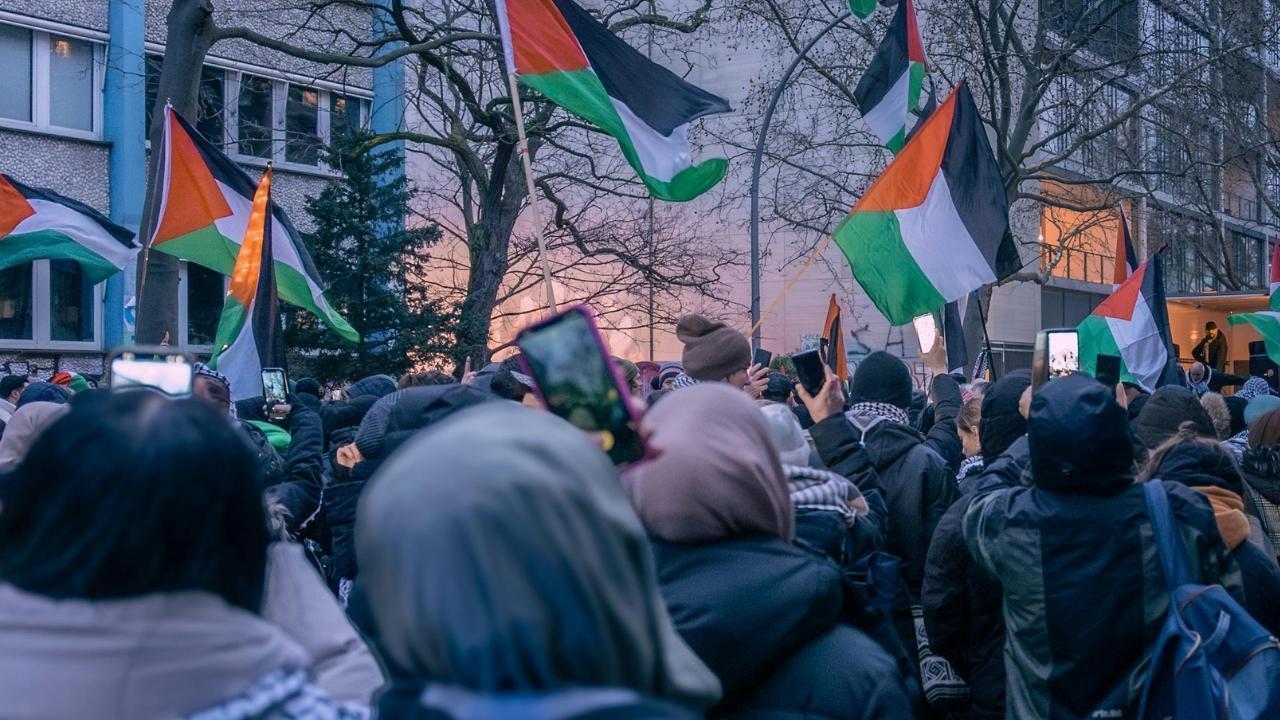
Canada's federal cabinet is expected to deliberate recognition of the State of Palestine during late July 2025, marking a potential shift in Canadian foreign policy after years of restraint. Driven by changing global dynamics, internal parliamentary pressure, and France’s upcoming recognition move, the decision carries significant geopolitical and ethical weight.
Political context and domestic pressures
A group of Liberal members of Parliament, especially MPs such as Salma Zahid and Fares Al Soud, have publicly urged the government to join France in recognizing Palestine. They claim that justice for the Palestinian people demands formal state acknowledgment. The Canadian Prime Minister’s office reaffirmed support for a two-state solution, but has not confirmed whether recognition is imminent .
Meanwhile, Palestinian Authority officials and the Palestinian Foreign Minister have intensified appeals for Canada to act, citing Canada’s influence as a supporter of international law and human rights. During meetings between Palestinian Foreign Minister Farsin Aghabekian Shahin and Canada’s representative, Ottawa was urged to cement the political horizon for peace through formal recognition .
International momentum toward recognition
France has announced it will formally recognize Palestine in September 2025, aiming to catalyze other Western countries to follow suit. Paris sought Canadian, British, and European backing at a U.N.-related conference on the two-state solution—only to encounter resistance, leaving France to move forward unilaterally .
Similarly, a recent joint statement (signed by 15 governments, including Canada and Australia) reaffirmed commitment to a two-state solution and signaled support for recognizing Palestinian statehood. That statement calls for an immediate ceasefire, humanitarian access in Gaza, and a roadmap toward Palestinian self-determination alongside Israel .
United Nations conference and diplomatic planning
Global Affairs Canada announced that Foreign Affairs Minister Anita Anand will attend the U.N. Conference for the Peaceful Settlement held in New York from July 28‑30, 2025, co-chaired by France and Saudi Arabia. The goal: advance a sustainable two-state solution, secure humanitarian aid access, and engage in cooperation to resolve the Gaza crisis. This landmark meeting is considered a potential venue for formal recognition announcements by multiple countries .
Historical precedent and Canada’s past positions
Canada has historically refrained from officially recognizing Palestine. As of early 2025, around 149 UN member states do recognize Palestinian statehood, but Canada remains aligned with other Western democracies that link recognition to the outcome of a negotiated two-state framework .
Previous attempts to legislate recognition (such as motions by the NDP in 2024) were weakened before passage and deemed symbolic. Government officials—such as Foreign Affairs Minister Melanie Joly at the time—cited sovereignty over foreign policy and concerns about upsetting diplomatic balances as key reasons for Canada’s reluctance .
Public statements from Palestinian officials
Palestinian officials have repeatedly underscored Canada’s proximity to formal recognition. Ambassador Mona Abuamara noted Canada had discussed recognition closely with France before the federal election in April 2025. She cited Canada’s increasingly assertive language—such as referring to Israeli operations in Gaza as "aggression" and calling for accountability—as signs Canada is moving toward recognition .
Government funding and broader diplomacy
Even while withholding recognition, Canada has committed further humanitarian and institutional aid: $30 million for Gaza and $10 million to support Palestinian Authority reform efforts. Foreign Affairs Minister Anita Anand stressed support for capacity-building in the Palestinian Authority to ensure more accountable and democratic governance, emphasizing Canada’s continued support for a lasting two-state outcome .
Implications of recognition by Canada
Should Canada decide to recognize Palestine, several consequences are likely:
-
It would join France and the UK (pending) among G7 nations taking this step, shifting more international pressure onto Israel.
-
The move would heighten diplomatic friction with Israel and possibly the United States, both of which have raised concerns over precedent and timing.
-
Canada’s recognition could strengthen the political agency and legitimacy of the Palestinian Authority, reinforcing the two-state framework.
-
It may encourage other nations (e.g. Italy, Greece, Malta, others) to follow during the U.N. General Assembly session in September .
Factors driving the shift
-
The growing humanitarian crisis in Gaza and stalemate in diplomatic negotiations have rallied global public pressure.
-
Domestic voices in Canada—especially within the Liberal caucus—view recognition as an ethical imperative and alignment with international values.
-
With France already proceeding independently, Canada risks appearing behind the curve unless it eventually joins fast-follow recognition.
-
International conferences, including the UN’s July 28‑30 meeting and upcoming G7 and General Assembly sessions, provide political pressure points for action .
Potential political risks and opposition
Within Canadian politics, recognition remains controversial. Some legislators caution against unilateral action that undermines Canada’s mediator role. Israel’s foreign responses may include diplomatic pushback or scale-back of cooperation in certain areas. Canada has historically emphasized that any recognition will be coordinated to support broader peace prospects, not symbolic gestures alone .
What to expect going forward
-
In late July, cabinet discussions may yield a formal decision or timeline for recognition.
-
Foreign Affairs Minister Anita Anand may address the issue publicly at the U.N. Conference. Any announcement may align with or follow France’s public recognition in September.
-
Canada may complement recognition with increased humanitarian assistance and multilateral diplomatic engagement.
-
Diplomatic relations between Canada and Israel, and with other allies, could be recalibrated based on the policy shift.