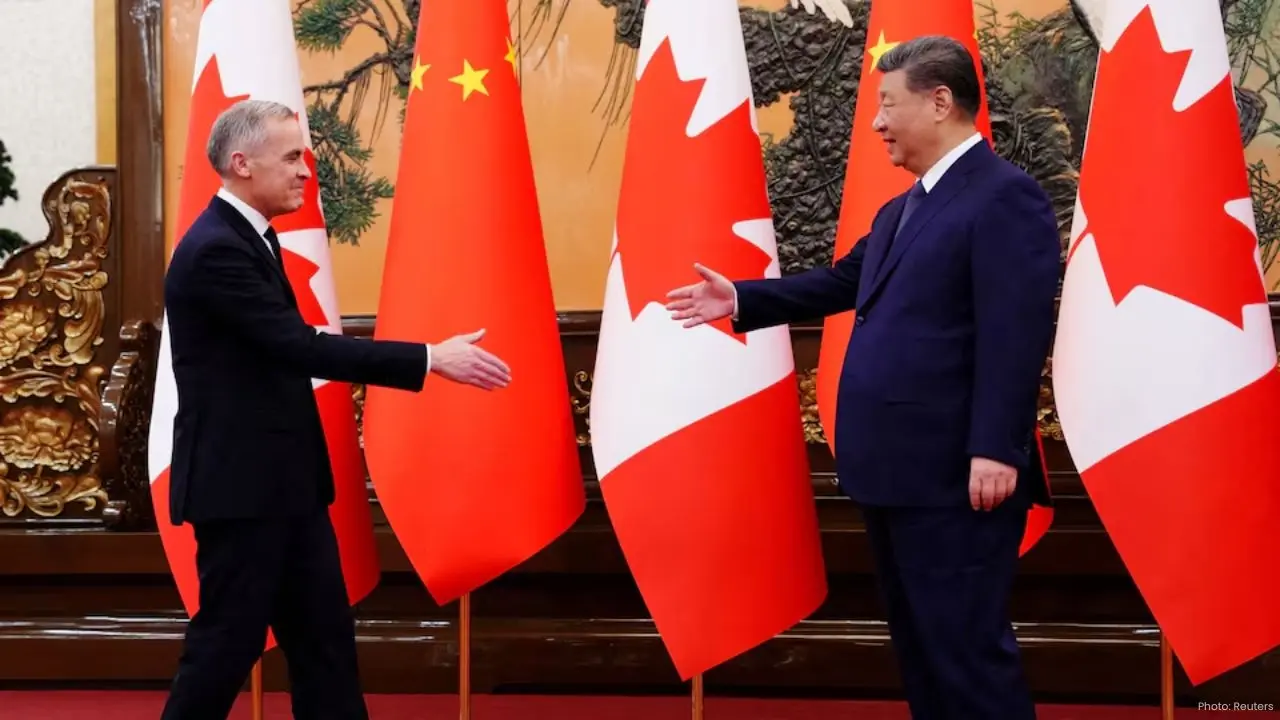
Candian and Chinese officials are moving towards more robust relations as Prime Minister Mark Carney engages in pivotal discussions with President Xi Jinping. This dialogue seeks to establish a strategic partnership that capitalizes on the unique strengths of both nations.
Carney's visit marks the first time a Canadian prime minister has visited China since 2017 and represents a tangible effort to mend ties after a period of strained relations. China ranks as Canada’s second-largest trading partner, following the United States, and both parties have acknowledged the need to restore trust and facilitate ongoing communication.
During their talks, Carney articulated that a deeper partnership could yield significant rewards, proposing a balanced and practical approach to collaboration. He emphasized that Canada's assets in natural resources, renewable energy, agriculture, education, and technological advancement could synergize effectively with China's vast market and manufacturing capabilities. The prime minister indicated that a rekindled partnership has the potential to spur long-term economic growth, broaden trade prospects, and foster innovation in both countries.
President Xi welcomed Carney’s visit, expressing China's openness to improving relations anchored in mutual respect and shared goals. He underscored the importance of stable and predictable ties, especially in light of the current global economic uncertainties and geopolitical challenges affecting trade. Xi noted that collaboration between key economies like China and Canada could bolster global economic stability and growth.
These talks follow a series of discreet diplomatic efforts aimed at reducing earlier tensions, as diplomatic interactions had faced hurdles due to political conflicts, trade disagreements, and national security concerns. Carney's trip signifies a clear intent to transcend these challenges and prioritize practical engagement.
Trade discussions were paramount, with Canadian representatives identifying vast opportunities for increased exports of agricultural goods, energy resources, and premium products to China. Concurrently, Canada is eager to entice more Chinese investments, particularly in clean technology, infrastructure, and research domains. Both countries acknowledged the necessity for clear regulations, transparency, and fairness to build business confidence.
Aside from trade, education, climate action, and global issues formed part of the conversations. Canada is keen to broaden academic partnerships and student exchanges, while China expressed its readiness for enhanced collaboration on environmental protection and emissions reduction. These areas are viewed as less contentious and could progressively rebuild trust.
Carney reiterated that improving ties with China would not compromise Canada’s fundamental values or alliances. He reaffirmed Canada’s commitment to safeguarding its national interests while nurturing its relationships with traditional allies, including the U.S. Nevertheless, he argued for the necessity of engaging constructively with China in an increasingly multipolar world.
Analysts suggest Carney's visit embodies a pragmatic approach, prioritizing dialogue over confrontation. While significant challenges exist, including human rights and security discrepancies, both nations appear inclined to address disagreements through engagement rather than isolation.
As the visit drew to a close, officials portrayed the discussions as positive and forward-thinking. Although no major agreements were made, both parties agreed to continue dialogue through established diplomatic routes. Working groups are anticipated to identify specific cooperative opportunities promptly.
While Carney's journey to China may not resolve all issues, it has certainly reopened a pathway that had previously remained largely shut. By choosing constructive engagement, Canada and China have demonstrated a unified desire to rebuild a cooperative framework that could influence future trade, diplomacy, and bilateral cooperation.