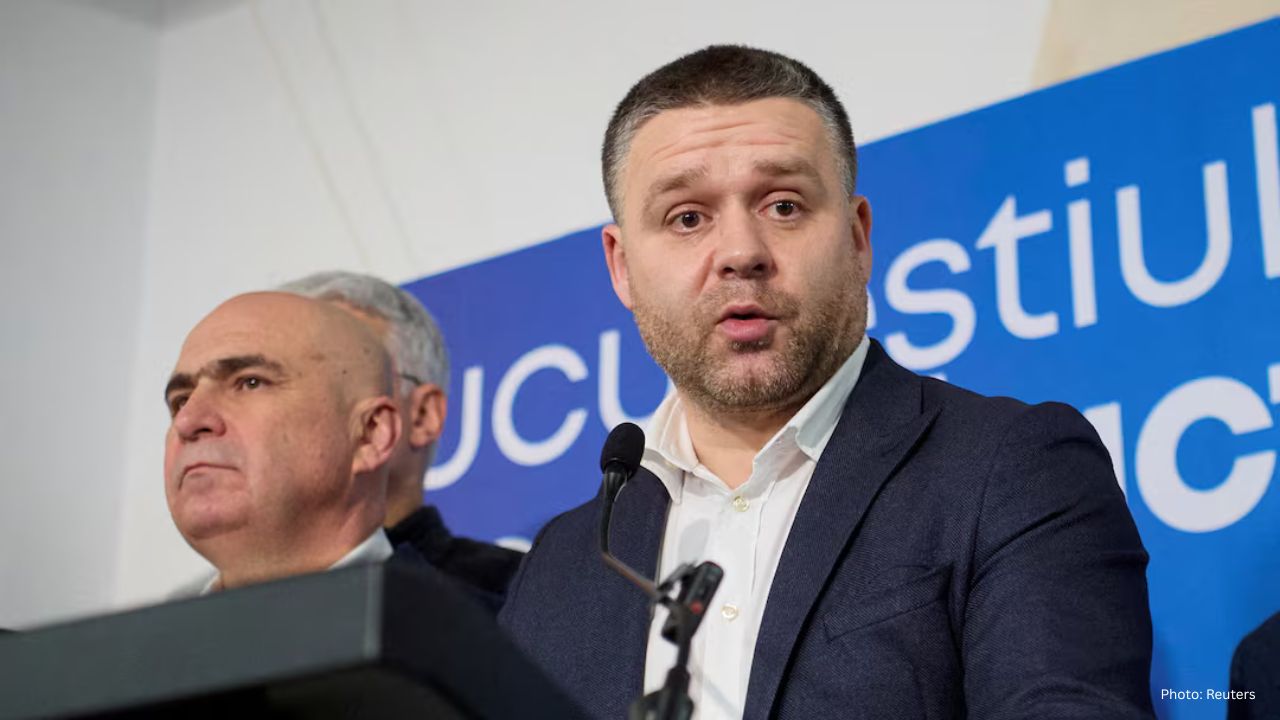
In a decisive local election, voters in Bucharest have opted for a liberal mayor, signaling a rebuff to the rise of hard right politics in Romania's capital. This election strengthens the current pro-European administration, providing a boost to their governance.
Ciprian Ciucu, aligned with Prime Minister Ilie Bolojan and representing the Liberal Party, emerged victorious with a notable margin. His success is particularly significant given concerns that Bucharest could become the first EU capital to be headed by a hard right leader.
Finishing in second place, the hard right candidate from the Alliance for Uniting Romanians showcased that their ideologies still garner support, even in urban centers historically seen as resistant.
The election carried weight as the mayoral role had been vacant for several months following the departure of Nicusor Dan, who transitioned to a presidential position, intensifying the political stakes.
The outcome alters the dynamics within Romania's delicate governing coalition, empowering the Liberal Party to pursue reforms aimed at reducing public expenditure and trimming public sector employment—initiatives facing pushback from coalition partner Social Democrats.
Analysts contend this victory could stabilize the government, enhancing its prospects against an impending no-confidence vote. It instills a renewed confidence in the Prime Minister to navigate challenging economic and judicial reforms.
This result also reflects voter apprehension regarding extreme political ideologies. Many constituents articulated their choice as a deterrent against a regressive trajectory, particularly in light of last year's political upheaval.
In 2022, Romania opted to cancel a presidential election due to concerns about foreign interference, leading to political and economic turmoil that fractured society and unsettled investors. Many voters were keen to avoid reverting to such chaos.
The newly elected mayor has committed to assisting the government with its reform agenda, asserting a shift from promises to actionable change. His leadership style in Bucharest will be scrutinized for both municipal governance and its broader political implications.
Meanwhile, the opposition persists in criticizing European institutions and military backing for Ukraine, a stance that raises concerns among many Romanians who prioritize their ties to the European Union and democratic structures.
This election transcends local implications; it indicates the shifting political landscape in Romania. Voters demonstrated a preference for stability and gradual reform in cooperation with Europe, over radical transformations.
The new mayor and government now face the responsibility to validate that moderate politics can yield tangible outcomes. Failure to do so could see a resurgence of hard right sentiments in future elections.
For the moment, Bucharest’s message is clear: Romanian voters favor measured progress and alliance over extremism and fear.