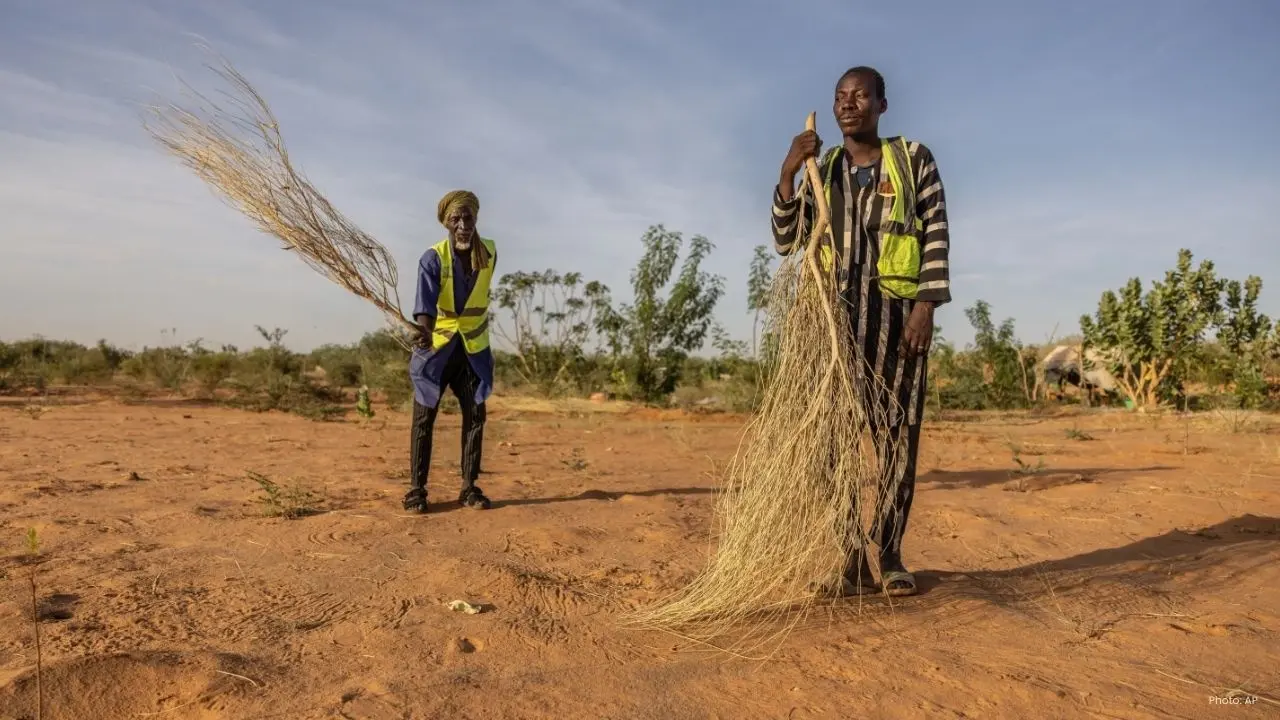
As twilight descends over the parched landscape of Mauritania, a dedicated team stands together. With rhythmic beats, they strike the ground with slender branches, the sound piercing the stillness. No fires blaze today, yet this volunteer unit perseveres, aware that a bushfire can ignite unexpectedly.
These volunteers hail from Mali, their efforts supported by the United Nations High Commissioner for Refugees (UNHCR). Together with local people, they aim to preserve the land essential for their survival by preventing fires that threaten homes, livestock, and crops.
Fires Amidst the Adverse Sands
Situated in West Africa, Mauritania is predominantly filled with the arid Sahara Desert. Its land is barren, and plants are sparse, making it vulnerable to bushfires that can swiftly devastate the area. These fires endanger the limited resources that both humans and animals rely on for sustenance.
Currently, over 250,000 Malian refugees reside in Mauritania, coexisting with local herders who also need the minimal grazing areas for their herds. A single fire can obliterate the food sources for scores of animals, leading to hunger and strife.
Heritage of Valor
Among the volunteers, Hantam Ag Ahmedou recounts his arrival in Mauritania at 11 years old, having fled the violence in Mali. Settling in Mbera camp near the border, he witnessed the rapid spread of wildfires and the helplessness of those affected.
Inspired by the generosity of Mauritanians, his father played a pivotal role in establishing a firefighting brigade composed of refugees. While local individuals had prior firefighting knowledge, the Malians introduced innovative techniques, using branches rather than relying solely on water.
Ag Ahmedou emphasizes the challenge of accessing water, as fires often ignite far from supply sources. Instead, they utilize branches, predominantly from acacia trees, to suppress the flames.
An Expanding Team of Heroes
Since 2018, the team has received formal backing from the UNHCR, with European Union funding aiding training, resources, and the construction of firebreaks—clear zones that impede the spread of flames.
Today, their brigade consists of more than 360 refugees working in tandem with local authorities and firefighters. When a fire erupts, swift teams respond, swiftly deploying to combat the blaze. A 20-member unit directly engages the fire while others remain on standby to replace fatigued workers.
Ag Ahmedou began his contributions at 13 by delivering supplies. At 18, he faced his first fire, and now, he has encountered countless blazes, driven by the necessity of the mission.
He recognizes the dangers but asserts that the mission must persist. A failure could mean flames reaching their camp or nearby villages, threatening lives and wrecking local economies.
Climate Change Exacerbates Fire Risks
Climate shifts have escalated heat and drought levels in Mauritania. With diminished rainfall and increasing dryness, fires spread more rapidly and last longer.
UNHCR representatives alert that even local Mauritanians struggle to nourish their livestock. The competition for dwindling resources between refugees and locals can incite tensions and discord.
Currently, Mbera camp houses over 150,000 refugees, with an equal number distributed across surrounding villages. In some regions, the refugee population surges to ten times that of locals, making cooperation crucial to prevent conflict.
Replanting for a Brighter Future
The firefighting volunteers are committed not just to extinguishing fires but also to rehabilitating the environment. People like Abderrahmane Maiga actively engage in tree planting efforts to recover the ecosystems lost to fires. They cultivate acacia trees for their resilience to heat and have begun cultivating lemons and mangoes, too.
Tree planting bolsters the ecosystem, providing shade, enriching the soil, and combating desertification. Maiga reflects on the necessity of this initiative, recognizing the support from the community as vital for their survival.
He vividly recalls the ferocious fires of 2014, when countless men battled flames for nearly two full days, many collapsing from fatigue, yet successfully safeguarding homes and livestock.
Commitment Amid Adversity
As conflict rages in Mali, returning home isn’t feasible for most refugees. They have forged new lives in the harsh desert of Mauritania, despite the challenges they face. Ag Ahmedou remarks that he has always known a life filled with sand, drought, and shortages. There’s no easy path out; they must protect the land that is now their home.
He harbors no aspirations of emigrating to Europe. Instead, he firmly believes that survival depends on resilience and collaboration.
“We must fight,” he asserts. “We are here to safeguard our home and honor those who embraced us.”
The refugee firefighters exemplify heroism and unity, risking everything to combat fires, protect livestock, and maintain peace. With assistance from the UN and the EU, their ongoing training and restorative work reflect a deep commitment to the land they depend on.
They serve as a shining example of how refugees can transition from victims of crisis to stewards of their newfound home. In the face of climate challenges and resource scarcity, their contributions are indispensable.
Their battle is not solely for grasses and trees but also for tranquility, dignity, and a sustainable future in one of the most unforgiving environments.