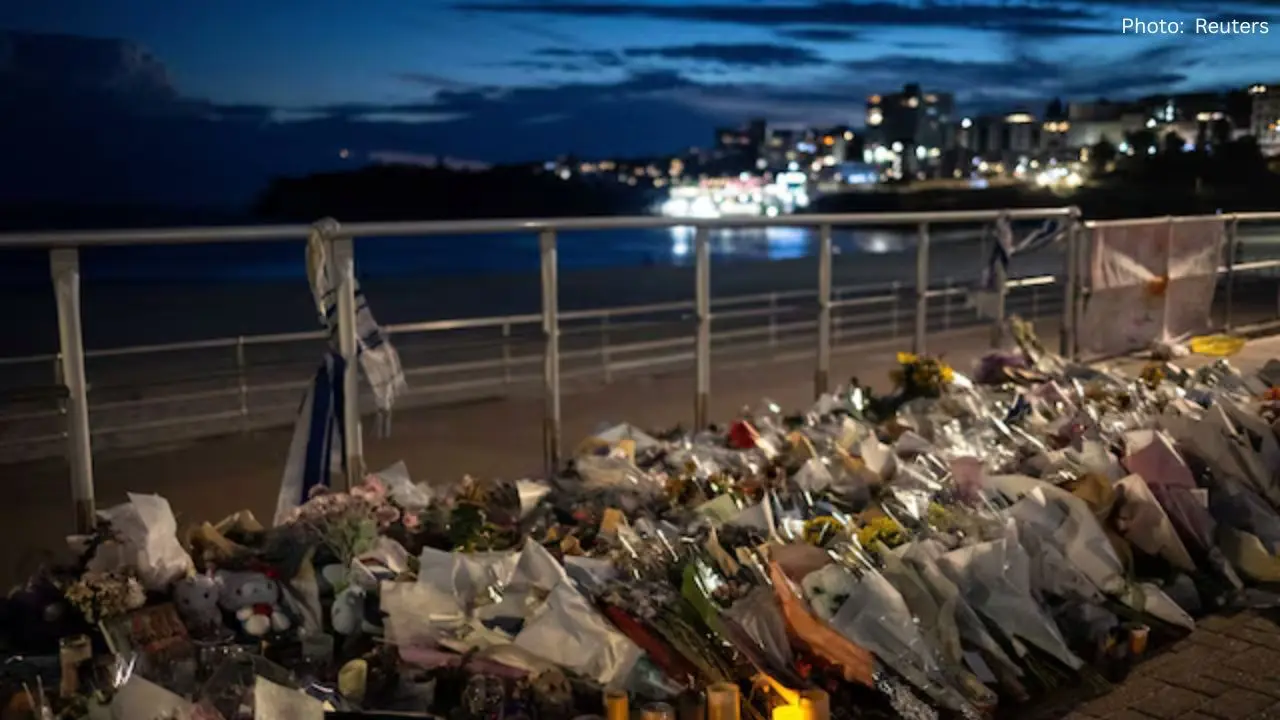
The cultural landscape in Australia is experiencing turbulence as a prominent arts festival has opted to exclude a Palestinian author from its lineup, post the devastating Bondi Beach attack. This decision has incited significant backlash, resulting in resignations, author withdrawals, and heightened fears regarding free speech and discrimination.
The issue unfolded when the Adelaide Festival announced that Dr. Randa Abdel-Fattah would not be participating in its Writers Week event set for February. The festival's board cited concerns about cultural sensitivity following the tragic mass shooting during a Jewish Hanukkah celebration, which claimed 15 lives.
The public reaction to the shooting has been profound, with calls for decisive actions against antisemitism gaining traction. Authorities indicated that the suspected gunmen were inspired by extremist ideologies, intensifying concerns about violent extremism and hate-fueled attacks.
Nonetheless, the festival's decision attracted considerable criticism. Dr. Abdel-Fattah, an Australian Palestinian scholar known for her research on Islamophobia, labeled the move as a manifestation of anti-Palestinian racism and censorship. Subsequently, her legal team dispatched a formal request to challenge the festival's decision.
In protest, approximately 50 writers have withdrawn from the festival, as reported by local media. Many expressed that the exclusion of Palestinian voices during crises sends a harmful message. Esteemed writer Kathy Lette remarked that this decision further divides society by silencing certain groups.
The controversy led to immediate consequences for the festival’s leadership, with the Adelaide Festival announcing the resignation of its chairperson and three board members. Executive director Julian Hobba acknowledged the challenging atmosphere and strong public sentiment affecting the organization.
This incident unfolds amidst extensive national discussions following the Bondi Beach attack. Jewish community groups and the Israeli government have criticized Prime Minister Anthony Albanese for his slow response to escalating antisemitism. Concurrently, protests against Israel's actions in Gaza have surged in Australia since 2023, further fueling social unrest.
In his response, Prime Minister Albanese declared that a Royal Commission would be established to investigate the Bondi shooting, antisemitism, and social unity in Australia. He also announced a parliamentary recall to implement more stringent hate speech legislation.
New South Wales Premier Chris Minns has introduced additional regulations enabling councils to cease utilities to illegally operating prayer spaces and impose steeper sanctions on what he labeled as 'hate preachers.' This initiative arose from challenges in closing a Muslim prayer hall in Sydney related to a cleric facing allegations of intimidating Jewish citizens.
However, these new regulations are not without concerns. Fairfield Mayor Frank Carbone, representing an area with a significant Muslim demographic, cautioned against empowering councils to arbitrarily determine hate speech. He stressed the need to uphold freedoms of expression, provided they are peaceful.
This situation exemplifies the intricate dynamics Australia currently grapples with. While battling hate and violence is paramount, silencing voices or singling out communities could foster new rifts. Arts festivals have traditionally served as venues for open dialogue and understanding in challenging times.
Ostracizing an author based on their identity rather than their actions or words establishes a precarious precedent. While sensitivity is warranted in wake of a tragedy, we cannot allow fairness and the principles of free expression to be compromised.
The ongoing developments surrounding the Adelaide Festival highlight how fear and grief can heavily influence decisions, often resulting in unintended repercussions. As Australia strives to mend the wounds from the Bondi attack, it is imperative that leaders in the cultural and political arenas advocate for unity through inclusivity, rather than exclusion.