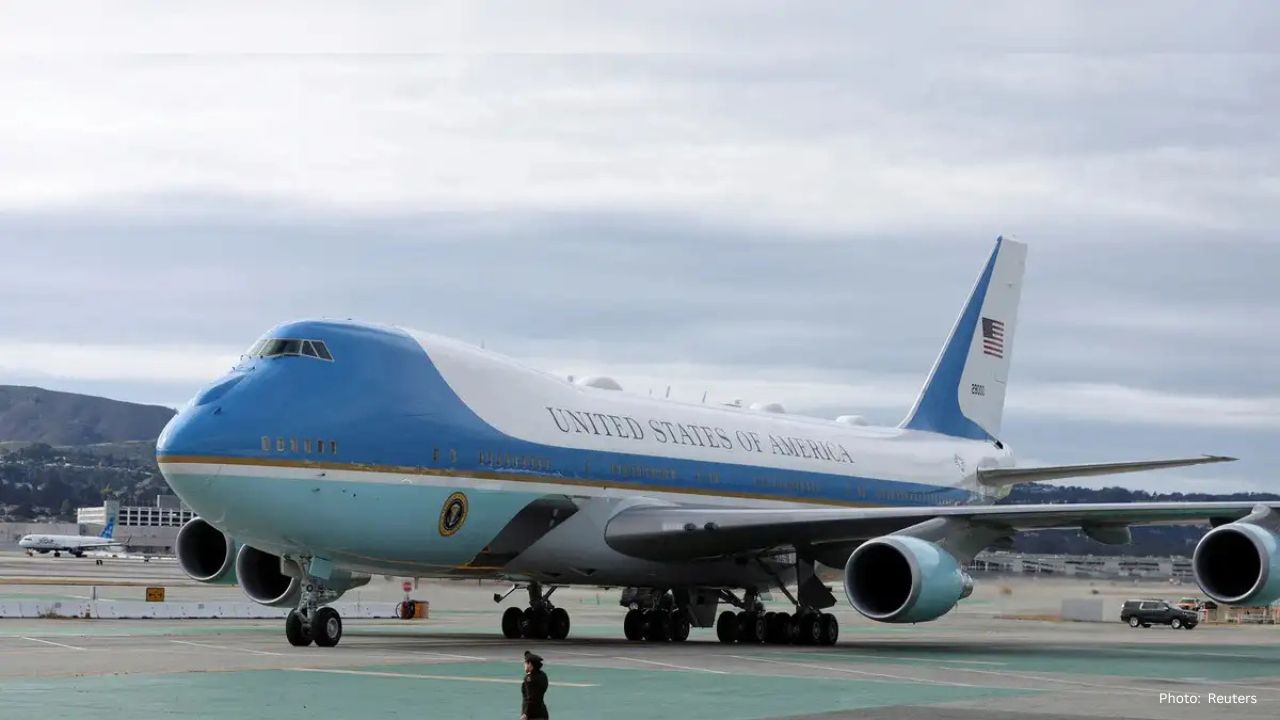
The U.S. Air Force has announced another delay in the delivery of the newly designed Air Force One aircraft. Now, the first of the two Boeing-built jets is anticipated to arrive in mid-2028, marking yet another setback in the scheduling of this crucial project.
This revised timeline may prove to be troubling for President Trump, who is keen on utilizing the new jets before his presidency concludes in January 2029. The shorter timeframe raises concerns about completing the necessary tests and modifications before his term ends.
Converting two Boeing 747-8 planes into dedicated aircraft for presidential travel is the objective of the Air Force One initiative. These new jets will boast advanced communication systems, elevated security measures, and state-of-the-art defensive capabilities, ensuring the president's safety worldwide.
The existing Air Force One jets have been operational since 1990. Despite numerous updates over the decades, officials highlight the urgent need for modernization to align with today’s security and technology standards.
A contract for the new Air Force One jets was awarded to Boeing in 2018, originally estimated at $3.9 billion. However, the expenses have surged beyond $5 billion, with Boeing already absorbing $2.4 billion in costs linked to production setbacks and rising prices.
Despite these hurdles, Boeing claims it is making progress and is committed to delivering both aircraft. The company has noted the intricate nature of the project, which must adhere to stringent government and military specifications.
As a temporary solution, a luxury Boeing 747 aircraft from Qatar has been accepted by the U.S. government. The White House has requested rapid modifications to enable its use as Air Force One if necessary. L3Harris Technologies has been tasked with implementing these upgrades.
President Trump has openly criticized Boeing for the recurring delays but has dismissed the option of seeking alternatives from Airbus. Company leaders have mentioned that Elon Musk, an adviser to Trump, is assisting in navigating the delivery complexities.
To enhance management of this project, Boeing appointed Steve Sullivan in June to oversee the Air Force One initiative. Sullivan has experience managing significant defense contracts at Northrop Grumman, notably the B-21 bomber program. He takes over from Gregg Coffey, who transitioned to another position within Boeing.
This latest delay underscores the challenges inherent in large-scale government aviation undertakings, where stringent security needs and technical intricacies frequently contribute to heightened costs and extended schedules. Meanwhile, the U.S. will rely on its current Air Force One fleet as it awaits the delayed new aircraft.