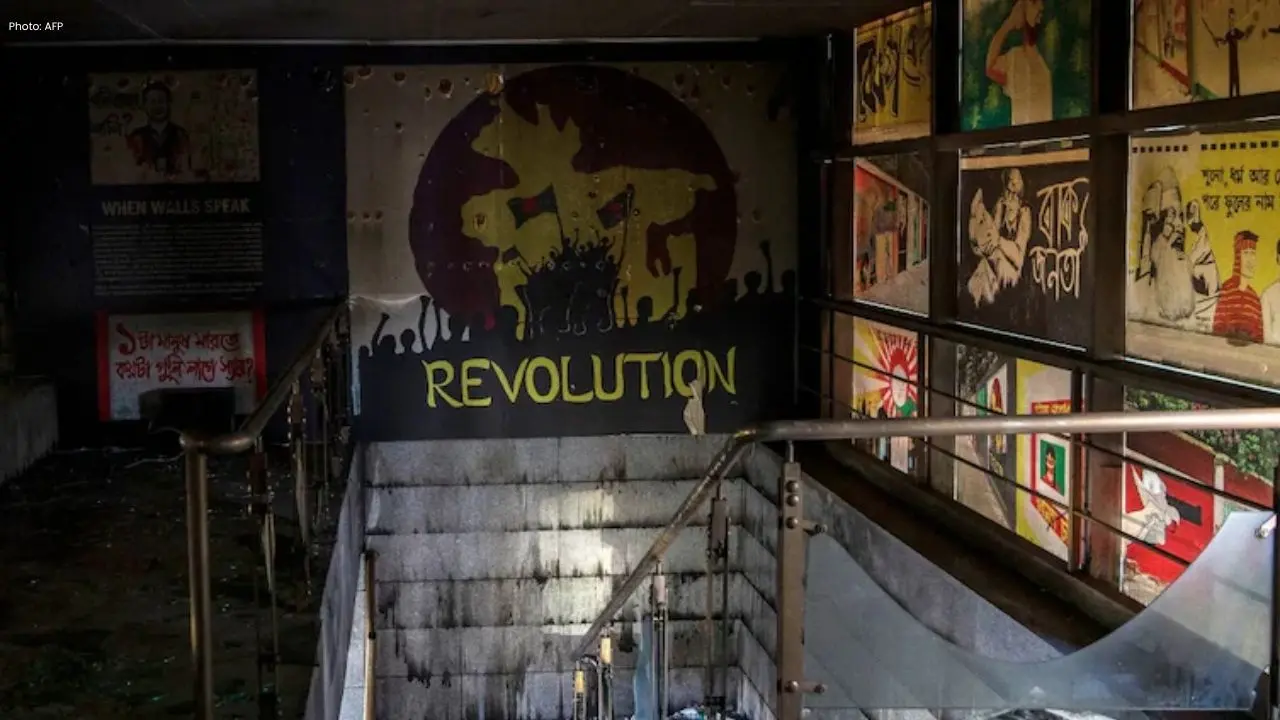
Bangladesh has plunged into renewed political turmoil as widespread protests erupted following the death of Sharif Osman Hadi, a prominent youth leader linked to the 2024 pro-democracy movement. The violence has prompted the Muhammad Yunus-led interim government to issue a strong appeal urging citizens to reject mob action and preserve the country’s fragile democratic transition.
Demonstrations broke out across Dhaka and several other cities, with thousands of protesters flooding major intersections and public squares. What began as protests quickly escalated into vandalism, arson and targeted attacks on institutions perceived as aligned with the former regime. Several buildings linked to ex-prime minister Sheikh Hasina and her family were damaged, including the historic residence at Dhanmondi.
The interim government, in an official statement, unequivocally condemned all forms of violence, intimidation and destruction of property. It warned that such actions threaten to derail Bangladesh at a critical moment when the nation is preparing for elections and a referendum aimed at restoring democratic governance.
Authorities also expressed deep concern over targeted attacks on journalists, calling them an assault on truth, free expression and democratic values. The government assured that those responsible for terrorising media workers would be brought to justice, stressing that a free press is essential for a new and inclusive Bangladesh.
Tensions were further inflamed by the lynching of a Hindu man in Mymensingh, an incident that drew strong condemnation from the interim administration. Officials said there is no place for communal or religious violence in the country’s future and vowed that perpetrators would face strict legal consequences.
Hadi, who was planning to contest upcoming national elections as an independent candidate, was described as a martyr by the government. It urged citizens to honour his sacrifice not through revenge or chaos, but through restraint, unity and commitment to peaceful democratic processes.
The unrest has also coincided with a surge in anti-India sentiment, fuelled by radical groups accusing the former government of being overly aligned with New Delhi. Attempts to link Hadi’s killing to foreign involvement have been rejected by India, while security forces in Bangladesh have been deployed to prevent marches toward diplomatic missions.
As Bangladesh navigates this volatile period, the interim government has appealed to citizens to resist incitement and hatred, warning that unchecked violence could undermine the nation’s path toward stability, justice and democratic renewal.